Sign Up My Profile
Prayers

Orthodox prayers for worry about the future

When the future feels uncertain and your mind keeps running ahead, these prayers hand tomorrow to God.

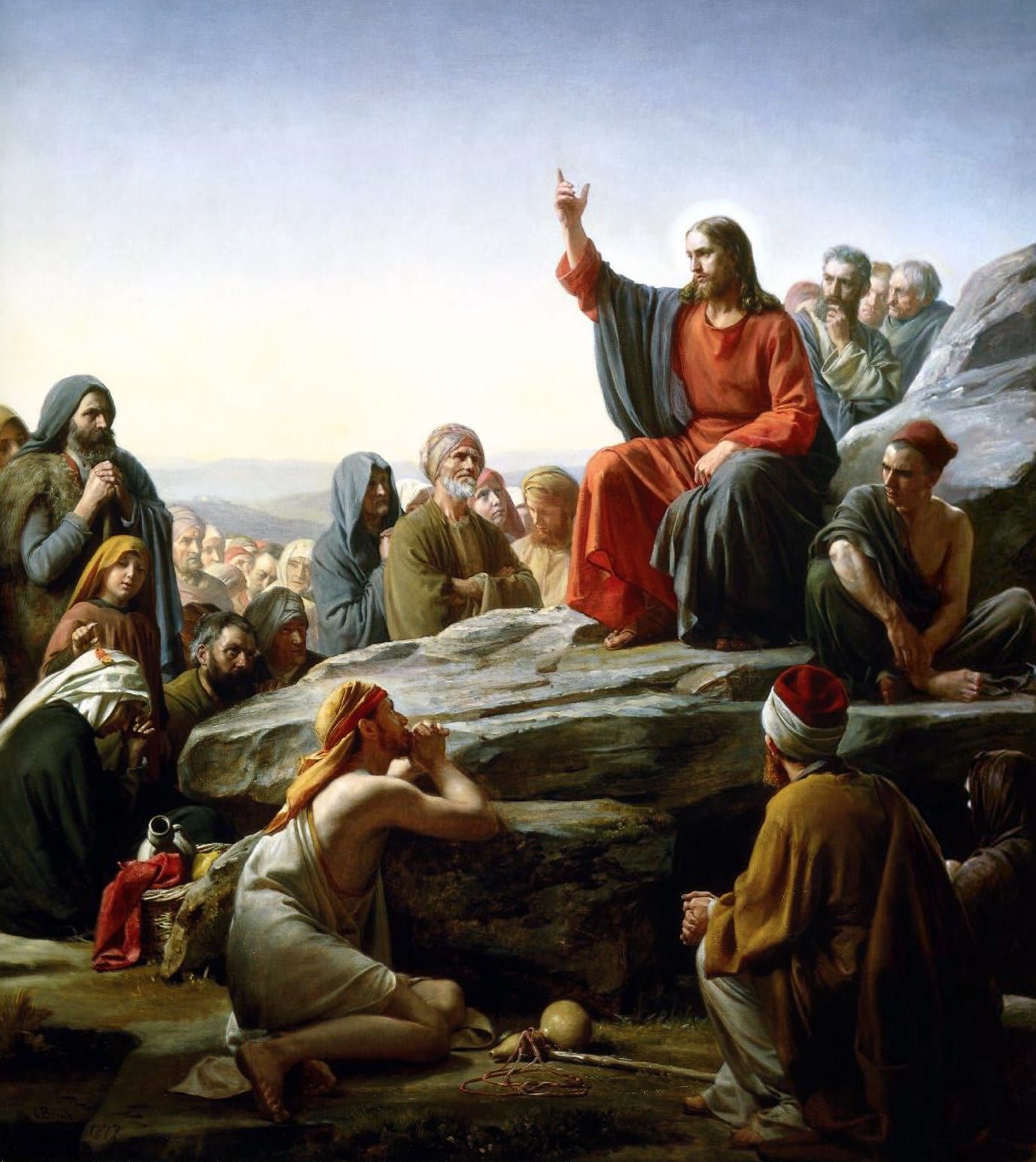
Picture: Carl Bloch, The Sermon on the Mount, 1877

5 prayers

When you cannot see ahead

O God, Whose providence never fails

O God, Your providence is never wrongin the way it orders things.

We humbly ask Youto take away all that is harmful,and to give us all that will do us good.

Through Jesus Christ our Lord.

Traditional wording, 1662

O God, Whose never-failing providenceordereth all things both in heaven and earth;

We humbly beseech Theeto put away from us all hurtful things,and to give us those things which be profitable for us;

through Jesus Christ our Lord.

It comes from a Roman service book copied about AD 750. It leaves the future to God, Whose providence is never wrong, and asks Him to take away what would harm us and give what will do us good.

Plain English by Wiser Walk, from the Latin of the Old Gelasian book (Wilson’s 1894 edition), with the Book of Common Prayer’s English beside it. How the wording is made. Traditional wording: The Church of England, The Book of Common Prayer, 1662.

The Prayer Book’s “ordereth all things both in heaven and earth” goes beyond the Latin, which says only that God’s providence is never wrong in its ordering.
Where it comes from, and the Latin

Leaving the outcome to God

Lord, as You will and as You know

Stretch out your handsLord, as You will,and as You know,have mercy.

When a struggle presses hardLord, help!

Traditional wording, 1936

Lord, as Thou wilt and as Thou knowest, have mercy upon me.

Help me.

The Egyptian monk St Macarius was asked how to pray. He said there was no need for many words. It is enough to ask God for mercy as He wills and as He knows, because He knows what we need.

Plain English by Wiser Walk, from the Greek. How the wording is made. Traditional wording: Helen Waddell, The Desert Fathers, 1936.

Helen Waddell translated the saying from its old Latin version, so her wording has “have mercy upon me” and “Help me” where the Greek has “have mercy” and “Lord, help”.

Where it comes from, and the Greek

When you overthink

When anxious thoughts are many (Psalm 94)

If the LORD had not been my help,my soul would soon have dweltin the silence of the grave.

When I said, “My foot is slipping,”Your mercy, O LORD, held me up.

When anxious thoughts are many within me,Your comfort delights my soul.

The LORD has become my stronghold,my God the Rock of my refuge.

Traditional wording, 1611

Unless the LORD had been my help, my soul had almost dwelt in silence.

When I said, My foot slippeth; Thy mercy, O LORD, held me up.

In the multitude of my thoughts within me Thy comforts delight my soul.

But the LORD is my defence; and my God is the rock of my refuge.

The psalmist felt his foot slipping and his anxious thoughts piling up. God’s mercy held him up, and His comfort brought joy to his soul.

Plain English by Wiser Walk, from the Hebrew (verses 17 to 19 and 22), with the King James Version beside it. How the wording is made. Traditional wording: The King James translators, The King James Version, 1611.

Where it comes from, and the original

When you don’t know what to do

Prayer of Jehoshaphat

O LORD, God of our fathers,are You not God in heaven?Do You not rule over all the kingdoms of the nations?Power and might are in Your hand,and no one can stand against You.

O our God,we have no strength to facethis great multitude that is coming against us.We do not know what to do,but our eyes are on You.

Traditional wording, 1611

O LORD God of our fathers, art not Thou God in heaven?and rulest not Thou over all the kingdoms of the heathen?and in Thine hand is there not power and might, so that none is able to withstand Thee?

O our God,we have no might against this great company that cometh against us;neither know we what to do: but our eyes are upon Thee.

King Jehoshaphat prayed it at the temple as a great army marched on Judah. He told God plainly that he did not know what to do, and God answered through a Levite that the battle was His, not Judah’s (2 Chronicles 20:15).

Plain English by Wiser Walk, from the Hebrew (verse 6 and most of verse 12), with the King James Version beside it. How the wording is made. Traditional wording: The King James translators, The King James Version, 1611.

Where it comes from, and the original

When you cannot find the words

Prayer of St Philaret

Lord, I do not know what to ask of You.You alone know what I need.You love me morethan I know how to love myself.

Father, give Your servantwhat I myself do not know how to ask.I dare not ask for a cross or for comfort.I only stand before You.My heart is open to You.You see needs that I do not know.See, and act according to Your mercy.Strike me and heal me,cast me down and lift me up.I stand in awe and silencebefore Your holy willand Your judgments, which are past my understanding.

I offer myself to You as a sacrifice.I have no other wishbut to do Your will.Teach me to pray.Pray in me Yourself.Amen.

Traditional wording, 2016

O Lord, I do not know what to ask of Thee.Thou alone knowest what I need.Thou lovest me more than I know how to love myself.

O Father, grant Thy servant what I myself do not know how to ask.I do not dare to ask a cross of Thee, nor consolation;I only stand before Thee with my heart open;Thou seest the needs that I myself do not know.Look, and work in me according to Thy mercy;smite and heal me, cast me down and raise me up!I am reverent and silent before Thy holy willand ways that are unfathomable to me.

I offer myself as a sacrifice to Thee;teach me to pray.Do Thou Thyself pray in me. Amen.

Its first words are “Lord, I do not know what to ask of You.” It asks God to see the needs we cannot see and ends with “Teach me to pray. Pray in me Yourself.”

Plain English by Wiser Walk, from the Russian of the Orthodox prayer book, with OrthoChristian.com’s 2016 wording beside it. How the wording is made. Traditional wording: OrthoChristian.com, St. Philaret of Moscow: Daily Prayer and Prayer of the Prisoner, 2016.

It leaves out one line of the Russian: “I have no other wish but to do Your will.”

Where it comes from, and the Russian

Scripture for this

Therefore do not worry about tomorrow, for tomorrow will worry about itself. Today has enough trouble of its own.

Matthew 6:34 Jesus ends His teaching on worry by turning His listeners back to today.

For I know the plans I have for you, declares the LORD, plans to prosper you and not to harm you, to give you a future and a hope.

Jeremiah 29:11 Jeremiah sent this promise in a letter to God’s people, who had been carried into exile in Babylon.

13Come now, you who say, “Today or tomorrow we will go to this or that city, spend a year there, carry on business, and make a profit.” 14You do not even know what will happen tomorrow! What is your life? You are a mist that appears for a little while and then vanishes. 15Instead, you ought to say, “If the Lord is willing, we will live and do this or that.”

James 4:13-15 James tells those planning a year ahead to say instead that they will do this or that if the Lord is willing.

A man’s heart plans his course, but the LORD determines his steps.

Proverbs 16:9 The proverb leaves room for planning and puts the outcome in the LORD’s hands.

14But I trust in You, O LORD; I say, “You are my God.” 15My times are in Your hands; deliver me from my enemies and from those who pursue me.

Psalm 31:14-15 David trusts the LORD and hands his days over to Him with the words “My times are in Your hands.”

Commit your way to the LORD; trust in Him, and He will do it.

Psalm 37:5 Psalm 37 opens with “Do not fret”, and this verse gives its answer, to commit your way to the LORD.

Bible text: Berean Standard Bible, public domain.

Close to this

All prayers

Quiz What prayer do you need right now? A few honest taps about where you are, and a prayer of the Church for exactly that. 8 questions, about 3 minutes. Start

Suggest a correction

Berean Standard Bible