
When it is said
The priest says it at the Liturgy of St Basil, after the bread and wine are consecrated.
That Liturgy is served 10 times a year. It falls on the Sundays of Lent except Palm Sunday, on Holy Thursday and Holy Saturday, on the eves of Christmas and Theophany, and on 1 January, St Basil’s day.
Anyone may pray these lines at home, for the poor, the sick, or a city in danger.
Where it comes from
Author by tradition
From the Liturgy of St Basil
These lines come near the end of the long prayer of remembrance the priest says at the Liturgy of St Basil. Just before them, the same prayer remembers “those who are mindful of the poor”. The oldest copy of this Liturgy is a Byzantine service book of the 700s. Scholars date the core of its great prayer to the 300s, Basil’s own century.
Isabel F. Hapgood, Service Book of the Holy Orthodox-Catholic Apostolic Church (1906), the Liturgy of St Basil; Wikipedia, Liturgy of Saint Basil
The bishop who fed the hungry
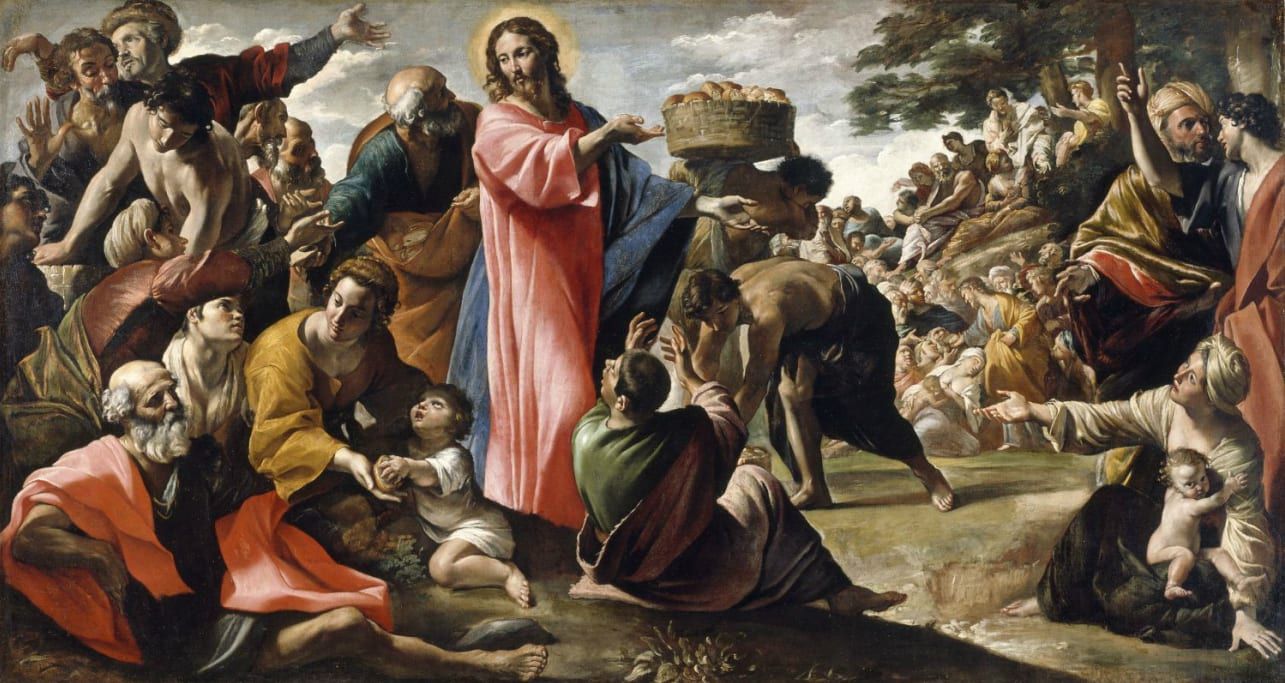
In his funeral speech for St Basil, St Gregory of Nazianzus told of a famine in Basil’s city. Basil gathered the starving: men and women, infants and old people. He set out basins of soup and what meat could be found, and served them himself, as Christ washed His disciples’ feet. Outside the city he built what Gregory called “the new city”, a storehouse for the poor.
St Gregory of Nazianzus, Funeral Oration on St Basil (Oration 43)
The Scripture in it
To the weak I became weak, to win the weak. I have become all things to all people so that by all possible means I might save some.
For You formed my inmost being; You knit me together in my mother’s womb.
Bible text: Berean Standard Bible, public domain.
In Greek
Τῶν ἐν βήμασι, καὶ μετάλλοις, καὶ ἐξορίαις, καὶ πικραῖς δουλείαις, καὶ πάσῃ θλίψει καὶ ἀνάγκῃ καὶ περιστάσει ὄντων, μνημόνευσον, ὁ Θεός, καὶ πάντων τῶν δεομένων τῆς μεγάλης Σου εὐσπλαγχνίας, καὶ τῶν ἀγαπώντων ἡμᾶς καὶ τῶν μισούντων, καὶ τῶν ἐντειλαμένων ἡμῖν τοῖς ἀναξίοις εὔχεσθαι ὑπὲρ αὐτῶν.
Καὶ παντὸς τοῦ Λαοῦ Σου μνήσθητι, Κύριε, ὁ Θεὸς ἡμῶν, καὶ ἐπὶ πάντας ἔκχεον τὸ πλούσιόν Σου ἔλεος, πᾶσι παρέχων τὰ πρὸς σωτηρίαν αἰτήματα.
Καὶ ὧν ἡμεῖς οὐκ ἐμνημονεύσαμεν, δι' ἄγνοιαν ἢ λήθην, ἢ πλῆθος ὀνομάτων, Αὐτὸς μνημόνευσον, ὁ Θεός, ὁ εἰδὼς ἑκάστου τὴν ἡλικίαν, καὶ τὴν προσηγορίαν, ὁ εἰδὼς ἕκαστον ἐκ κοιλίας μητρὸς αὐτοῦ.
Σὺ γὰρ εἶ, Κύριε, ἡ βοήθεια τῶν ἀβοηθήτων, ἡ ἐλπὶς τῶν ἀπηλπισμένων, ὁ τῶν χειμαζομένων σωτήρ, ὁ τῶν πλεόντων λιμήν, ὁ τῶν νοσούντων ἰατρός.
Αὐτὸς τοῖς πᾶσι τὰ πάντα γενοῦ, ὁ εἰδὼς ἕκαστον, καὶ τὸ αἴτημα αὐτοῦ, οἶκον, καὶ τὴν χρείαν αὐτοῦ.
Ῥῦσαι, Κύριε, τὴν πόλιν καὶ χώραν ταύτην, καὶ πᾶσαν πόλιν, καὶ χώραν, ἀπὸ λιμοῦ, λοιμοῦ, σεισμοῦ, καταποντισμοῦ, πυρός, μαχαίρας, ἐπιδρομῆς ἀλλοφύλων, καὶ ἐμφυλίου πολέμου.