Sign Up My Profile
Prayers

St Isaac the Syrian’s prayer before prayer

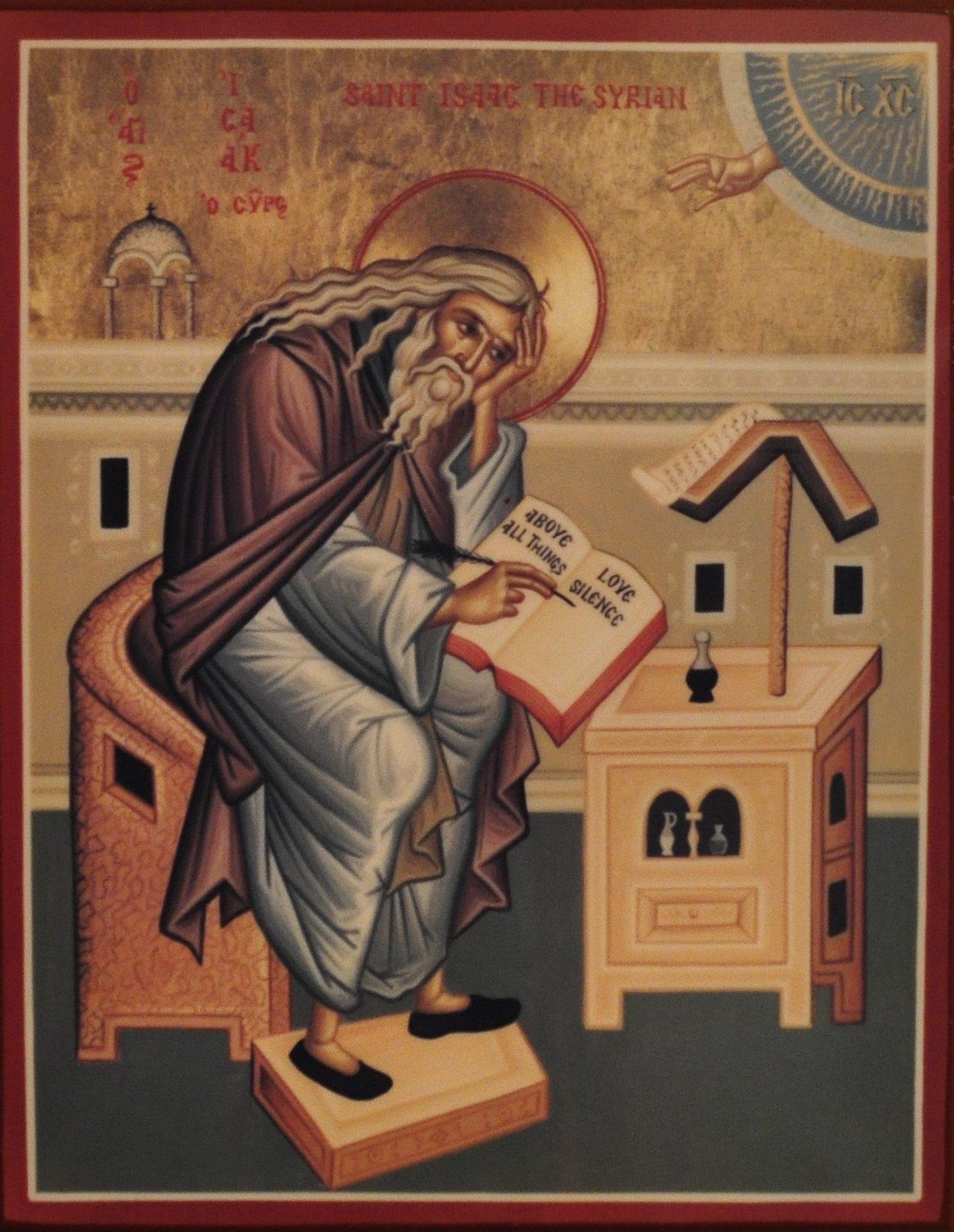
St Isaac the Syrian taught this prayer in the late 600s, to say silently before you begin to pray. It asks God to guard you from the turmoil of your thoughts.

Picture: Saint Isaac the Syrian, a modern icon. Photo: Ted (bobosh_t) on Flickr, CC BY-SA 2.0

The words of the prayer

Plain English

My Lord and my God, Maker of all creation,our passions are open before You,and so are the weakness of our natureand the strength of our enemy.Guard me against his malice,for his power is great,our nature is wretchedand our strength is weak.

You are kind.You know our weaknessand You bear the burden of our sickness.Guard me from the turmoil of thoughtsand the force of the passions,and make me worthy of this holy service,so that my passions do not spoil its sweetnessand I am not found brazen before You.

Let me stand before Youwith pure thoughts and a clear mind,as befits Your holiness.Its splendour is too greateven for the Seraphim around Your chariot,who hallow and praise the holiness of Your beingwith trembling, burning joy.

Traditional wording, 1923

My Lord and my God, Maker of Thy creation,to Whom our affections are revealedas well as the weakness of our nature and the strength of our fiend,do Thou guard me against his wickedness,for his power is strong and our nature is wretched and our strength is weak.

Thou art benignant Who art acquainted with our weaknessand bearest the difficulties of our illness;guard me from the disturbance of deliberations and the vehemence of affectionsand make me worthy of this holy service.Lest I spoil its taste by my affections and be found audacious before Thee.

But with pure deliberations and in clearness of thought let me stand before Thee,as is beautiful to Thy holiness,for the splendour of which the chariot with the Seraphs,who sanctify and praise the holiness of Thy beingwith vibrating hot emotions to their delight,are not sufficient.

Plain English by Wiser Walk, from A. J. Wensinck’s English of the Syriac (1923), checked against the Russian translation made from the Greek. How the wording is made. Traditional wording: A. J. Wensinck, Mystic Treatises by Isaac of Nineveh, 1923.

Wensinck’s “deliberations” are thoughts, his “affections” are passions and his “fiend” is the enemy.

When it is said

Isaac wrote it for the night prayers. He told the reader not to begin at once, but to kneel and rise, sign the heart with the cross and stand in silence for a short time until the senses were at rest. Then the reader was to look inwardly to the Lord and say this prayer silently in the heart.

It is not a service prayer. Anyone can say it before morning or evening prayers, after a moment of silence.

Where it comes from

Author known

From his treatise on the night prayers

Isaac was made bishop of Nineveh, near Mosul in Iraq, about AD 670. After only five months he gave up the office and went into the mountains to live with the hermits. He died about AD 700. This prayer stands in his treatise on keeping watch in prayer through the night, which he wrote in Syriac.

Encyclopaedia Britannica, Isaac of Nineveh; Orthodox Church in America, St Isaac the Syrian

What he said would follow

Isaac promised that the heart would suddenly be opened by grace, and that the thoughts would be made pure by remembering the Lord. With the mind gathered and pure, the one praying would begin without disturbance and keep on to the end with delight.

Wensinck, Mystic Treatises by Isaac of Nineveh, page 367

When a thought says hurry

In the same treatise Isaac warns of a thought that whispers in the middle of prayer, telling you to hurry up so that you will soon be finished. He told the reader not to look at it. If it kept pressing, he should stop reciting the psalms, kneel and pray instead.

Wensinck, Mystic Treatises by Isaac of Nineveh, page 367

What the words mean

The Russian version

Isaac’s homilies reached the Greek world early, and the Russian translation was made from the Greek. In that version the prayer opens “Lord Jesus, my God” and asks to be kept from the turmoil of thoughts and the flood of passions. It ends there, without the last lines about standing before God with a clear mind.

Isaac the Syrian, Ascetical Homilies, homily 52, in Russian (Azbyka)

The Scripture in it

For we do not have a high priest who is unable to sympathize with our weaknesses, but we have one Who was tempted in every way that we are, yet was without sin.

Hebrews 4:15 Echoed A God Who knows our weakness and bears with it.

Above Him stood seraphim, each having six wings: With two wings they covered their faces, with two they covered their feet, and with two they were flying. And they were calling out to one another: “Holy, holy, holy is the LORD of Hosts; all the earth is full of His glory.”

Isaiah 6:2-3 Echoed The Seraphim crying “Holy, holy, holy”.

Bible text: Berean Standard Bible, public domain.

Close to this

All prayers

Suggest a correction

Berean Standard Bible