Sign Up My Profile
Prayers

Psalm 41: Blessed is he who considers the poor

In these verses of Psalm 41 the psalmist blesses the one who considers the poor, then asks God’s mercy for himself.

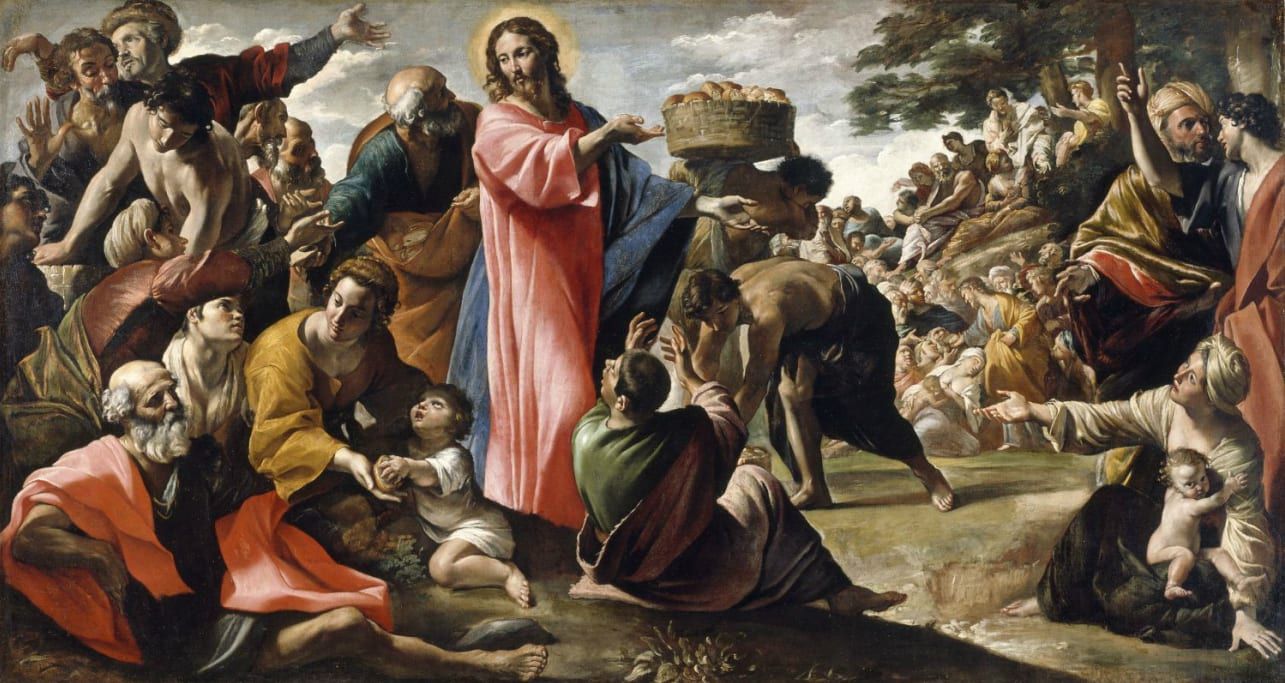
Picture: Giovanni Lanfranco, The Miracle of the Bread and Fish, 1620–23

The words of the prayer

Plain English

Blessed is the one who considers the poor;the LORD will rescue him in the day of trouble.

The LORD will guard him and keep him alive;he will be blessed in the land.You will not give him up to the will of his enemies.

The LORD will sustain him on his bed of illness;in his sickness You restore him from his bed.

As for me, I said, “LORD, have mercy on me;heal my soul, for I have sinned against You.”

Blessed be the LORD, the God of Israel,from everlasting to everlasting.Amen and amen.

Traditional wording, 1611

Blessed is he that considereth the poor:the LORD will deliver him in time of trouble.

The LORD will preserve him, and keep him alive;and he shall be blessed upon the earth:and Thou wilt not deliver him unto the will of his enemies.

The LORD will strengthen him upon the bed of languishing:Thou wilt make all his bed in his sickness.

I said, LORD, be merciful unto me:heal my soul; for I have sinned against Thee.

Blessed be the LORD God of Israelfrom everlasting, and to everlasting.Amen, and Amen.

Plain English by Wiser Walk, from the Hebrew (verses 1 to 4 and 13), with the King James Version beside it. How the wording is made. Traditional wording: The King James translators, The King James Version, 1611.

Where the plain wording says God restores him from his bed, the King James Version reads “make all his bed”. Its own margin gives the Hebrew word as “turn”.

When it is said

Pray it when you give to someone in need, or for the people who give to the poor.

The choir sings its fourth verse, the plea for mercy, in the Great Doxology at the All-Night Vigil.

Where it comes from

Author by tradition

St Athanasius’s advice

In his letter on the Psalms, St Athanasius of Alexandria gives this psalm to anyone who sees many poor people and wants them shown mercy. In his view its words let you praise those who have already shown mercy and urge the others to do the same.

St Athanasius, Letter to Marcellinus on the Psalms (the Greek, from the Thesaurus Linguae Graecae)

The verses left out

The prayer stops after the fourth verse and picks up again at the last. In between, the psalmist turns to his enemies, who wait for him to die, and to a close friend who shared his bread and then turned on him. At supper with His disciples, Jesus applied the verse about that friend to the one who would betray Him (John 13:18).

The King James Version, the whole psalm

What the words mean

The poor, or the weak

The King James translators printed “the poor” in the first verse, but their margin offers “the weak” or “sick” as other readings of the Hebrew word. The Greek version known as the Septuagint has “the poor and needy”.

The King James Version, with its margin; Brenton’s English of the Septuagint

The Scripture in it

Blessed is the one who cares for the poor; the LORD will deliver him in the day of trouble. The LORD will protect and preserve him; He will bless him in the land and refuse to give him over to the will of his foes. The LORD will sustain him on his bed of illness and restore him from his bed of sickness. I said, “O LORD, be gracious to me; heal me, for I have sinned against You.”

Psalm 41:1-4 Quoted The blessing on the one who considers the poor, and the psalmist’s plea for mercy.

Blessed be the LORD, the God of Israel, from everlasting to everlasting. Amen and Amen.

Psalm 41:13 Quoted The blessing of God that closes the psalm.

Bible text: Berean Standard Bible, public domain.

Close to this

All prayers

Suggest a correction

Berean Standard Bible