
Polycarp of Smyrna
The old bishop who had known John, and would not curse Christ to save his life.
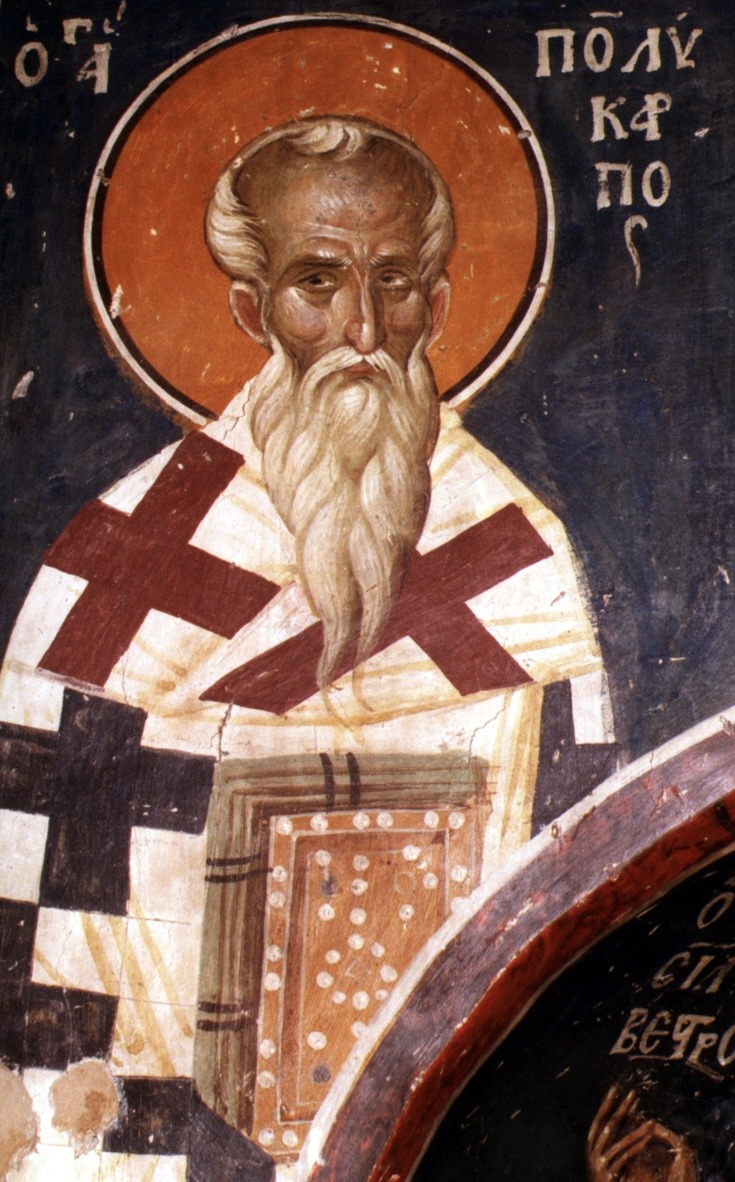
Picture: Saint Polycarp, a Byzantine fresco of the early 1300s, probably in the church of St George, Staro Nagoričane, North Macedonia. CC0.
Who was Polycarp?
Polycarp was bishop of Smyrna, today Izmir in Turkey, from early in the 100s until his death. He had known John and others who had seen Jesus. Irenaeus, later bishop of Lyons, heard him as a boy. One letter of his survives. Very old, he refused to curse Christ. He died for it in the stadium at Smyrna, about 155.
at a glance
His path, in order
- PupilOf John, and others who had seen the Lord
- BishopOf Smyrna, set there by apostles, says Irenaeus
- FriendOf Ignatius, who asked him to care for Antioch
- TeacherIrenaeus heard him as a boy
- VisitorTo Rome, to talk about Easter with its bishop, Anicetus
- MartyrIn the stadium at Smyrna, about 155
in numbers
- Years he had served Christ86
- What he told the governor at his trial
- His age, or his years since baptism
- Hours he prayed when arrested2
- He had asked his captors for one hour
- He had just set a meal before the police
- Martyrs at Smyrna, counting him12
- He was the twelfth to die
- Some of the twelve came from Philadelphia, in Asia Minor
did you know?
-
The words “the Catholic Church” first appear in a letter to Polycarp's own church: Ignatius's Letter to the Smyrnaeans. In most copies, the account of his death uses them four times.
Ignatius, Letter to the Smyrnaeans, chapter 8; McGiffert, note on Eusebius, Church History, Book 4, chapter 15 -
More than two centuries after he died, his Letter was still “read to the present day in the meetings in Asia”, says Jerome.
Jerome, Lives of Illustrious Men, chapter 17 -
Heinrich Biber's Sonata Sancti Polycarpi is written for eight trumpets and timpani. It most likely honoured a Salzburg churchman who bore the saint's name: Polykarp von Khüenburg, the archbishop's nephew. It may have been played on his name day.
McNaughtan Publishing, notes to Biber's Sonata Sancti Polycarpi
- Born
- About 69 or 70, counting back from the 86 years he spoke of at his trial. No early source says where.
- Bishop of
- Smyrna, today Izmir in Turkey, for decades. Ignatius wrote to him there as its bishop, early in the 100s.
- Died
- 23 February, a Saturday, most likely in 155. In the stadium at Smyrna. The church historian Eusebius put it about ten years later.
- Buried
- His body was burned. His church gathered the bones and laid them “in a fitting place”. Its account of his death does not say where.
- Also called
- Hieromartyr Polycarp, in the Orthodox churches: a martyr who was a priest or bishop. An Apostolic Father, one of the first Christian writers after the apostles.
- His name
- From the Greek πολύκαρπος: fruitful, or “rich in fruit”.
- Status
- A saint to Catholics, Orthodox, Copts and Anglicans. Lutherans remember him too.
- In art
- The Orthodox painters' guide of Dionysius of Fourna asks for an old man with a rounded beard. Older frescoes, like the one at the top of this page, give him a long white one. In the West he is shown as a bishop at the stake, with flames or a pile of wood, or being stabbed.
- Wrote
- One letter survives, the Letter to the Philippians. Irenaeus knew others, now lost.
- Pronounced
- POL-ih-karp of SMUR-nuh.
feast days
East and West, side by side
West
- Jan26
His day in the 1916 Roman Martyrology, and in the Roman calendar until 1969.
- Feb23
Catholic memorial, optional when it falls in Lent. Also the Church of England, the Episcopal Church, and Lutherans in the Missouri Synod and the ELCA.
East
- Feb23
The Orthodox Church in America, the Greek churches, and the Russian Church on the old calendar.
- Mar8
The Coptic Church, on 29 Amshir in its own calendar. In most years the Russian Church's 23 February falls on this day too.
Why 23 February? His church's letter on his death names the day. In Lightfoot's translation it is “the seventh before the kalends of March”. (The Ante-Nicene Fathers translation reads “May” here.) Rome kept him on 26 January until 1969. That was the day another Polycarp, of Nicaea, died. The new calendar moved him to the day he died. In the 1916 Roman Martyrology, 23 February belonged to yet another Polycarp, a Roman priest. Churches on the old calendar keep each date 13 days later, so 23 February falls on 8 March (7 March in a leap year).
what was he like?
+brave, but not reckless
A Phrygian named Quintus had pushed others to give themselves up with him. When he saw the beasts in the arena, he lost his nerve and offered sacrifice. The church of Smyrna drew the lesson: “we do not commend those who give themselves up [to suffering], seeing the Gospel does not teach so to do.” Polycarp was not afraid, but he left the city when his people asked. He moved again when men searching for him came near.
Martyrdom of Polycarp, chapters 4 to 6+kind to the men who came for him
When the police found him, he came downstairs and talked with them. Then he had food and drink set before them, “as much indeed as they cared for”. Many of them began to wish they had not come.
Martyrdom of Polycarp, chapter 7+blunt with false teachers
Marcion, a teacher who rejected the God of the Old Testament, once met him and asked, “Dost thou know me?” Polycarp answered, “I do know thee, the first-born of Satan.” His own Letter says the same of anyone who twists the Lord's words and denies the resurrection: “he is the first-born of Satan”. Irenaeus had heard Polycarp as a boy. He once told Florinus, who had known Polycarp too, what Polycarp would have done had he heard Florinus's teaching. He would have stopped his ears. He would have cried out, as was his custom, “O good God, unto what times hast Thou spared me that I should endure these things?”
Irenaeus, Against Heresies, Book 3, chapter 3; Letter to the Philippians, chapter 7; Irenaeus's letter to Florinus, in Eusebius, Church History, Book 5, chapter 20+a man of prayer
At the farm where he hid, he did nothing, night and day, but pray “for all men, and for the Churches throughout the world, according to his usual custom”. Years before, Ignatius, bishop of Antioch, had told him, “Give thyself to prayer without ceasing.”
Martyrdom of Polycarp, chapter 5; Ignatius, Letter to Polycarp, chapter 1+gentle with the fallen
Valens, once a presbyter at Philippi, had done wrong, most likely out of greed. Polycarp wrote, “I am deeply grieved, therefore, brethren, for him (Valens) and his wife; to whom may the Lord grant true repentance!” He told the church not to treat them as enemies, but to “call them back as suffering and straying members”.
Letter to the Philippians, chapter 11+true to what he was taught
He always taught what he had learned from the apostles, says Irenaeus, “and which the Church has handed down, and which alone are true”. His own Letter says the same: “let us return to the word which has been handed down to us from the beginning”.
Irenaeus, Against Heresies, Book 3, chapter 3; Letter to the Philippians, chapter 7+honoured by his own people
At the pyre he took off his own clothes, and tried to take off his own sandals. He was not used to doing it. The faithful always rushed to do it for him, each one “eager who should first touch his skin”. His church's letter says, in Lightfoot's translation, that he had been honoured for his holy life “even before his gray hairs came”.
Martyrdom of Polycarp, chapter 13; the last line in Lightfoot's translation (1891)+humble
He wrote to Philippi only because they had asked him to, he said. And he knew his place: “For neither I, nor any other such one, can come up to the wisdom of the blessed and glorified Paul.”
Letter to the Philippians, chapter 3what others said of him
We have a letter written to him by Ignatius, a letter of his own, his church's account of his death, and the memories of a boy who heard him teach.
Having obtained good proof that thy mind is fixed in God as upon an immoveable rock, I loudly glorify [His name] that I have been thought worthy [to behold] thy blameless face.
Stand firm, as does an anvil which is beaten. It is the part of a noble athlete to be wounded, and yet to conquer.
…a man who was of much greater weight, and a more stedfast witness of truth, than Valentinus, and Marcion, and the rest of the heretics.
For in Asia also great lights have fallen asleep, which shall rise again on the day of the Lord's coming, when He shall come with glory from heaven, and shall seek out all the saints. … And Polycarp in Smyrna, who was a bishop and martyr.
This is the teacher of Asia, the father of the Christians, and the overthrower of our gods, he who has been teaching many not to sacrifice, or to worship the gods.
…an apostolic and prophetic teacher, and bishop of the Catholic Church which is in Smyrna. For every word that went out of his mouth either has been or shall yet be accomplished.
his life in twelve moments
Asia
When John still livedTaught by those who saw Jesus
Polycarp learned from apostles, says Irenaeus, and “conversed with many who had seen Christ”. He used to tell what John and the others had told him of the Lord, His miracles and His teaching. Irenaeus says he told it all “in harmony with the Scriptures”.
Irenaeus, Against Heresies, Book 3, chapter 3; Eusebius, Church History, Book 5, chapter 20Ephesus
A story he toldJohn at the bath-house
Polycarp told a story about John. At Ephesus, John went to the public baths and saw Cerinthus inside, a teacher he held to be false. He rushed out without bathing. “Let us fly, lest even the bath-house fall down, because Cerinthus, the enemy of the truth, is within.” Irenaeus had the story from people who heard Polycarp tell it.
Irenaeus, Against Heresies, Book 3, chapter 3Smyrna
Early in the 100sA prisoner passes through
Ignatius, bishop of Antioch, was being taken under guard to Rome, to be thrown to the beasts. His guards stopped at Smyrna, where Polycarp was bishop. From there Ignatius wrote four letters. Later, from Troas, he wrote to the church of Smyrna and to Polycarp himself. He gave him a bishop's advice: “Bear with all, even as the Lord does with thee.” He asked him to write to the churches he had no time to reach. And, says Eusebius, he “commended to him, like a true and good shepherd, the flock at Antioch”.
Eusebius, Church History, Book 3, chapter 36; Ignatius, Letter to Polycarp, chapters 1 and 8Smyrna, writing to Philippi
Soon afterHis one surviving letter
The church at Philippi asked him for a letter of advice, and for copies of Ignatius's letters. He sent both. “The Epistles of Ignatius written by him to us, and all the rest [of his Epistles] which we have by us, we have sent to you, as you requested.” He asked them for any news of Ignatius and the men with him. The collection he sent is probably how Ignatius's letters survive at all. Some scholars have thought these lines about Ignatius a later addition. The letter's Victorian translators, Roberts and Donaldson, saw “considerable force” in their case. The historian Arthur McGiffert called rejecting these lines “quite arbitrary”.
Letter to the Philippians, chapter 13; Ante-Nicene Fathers, volume 1, introductory note; McGiffert, note on Eusebius, Church History, Book 4, chapter 14; Lightfoot, The Apostolic Fathers, Part 2, volume 1 (1889)Lower Asia
Late in his lifeA boy in the audience
Irenaeus heard Polycarp as a boy, and later became bishop of Lyons. Decades on, he wrote that he remembered those days better than recent years: “I am able to describe the very place in which the blessed Polycarp sat as he discoursed, and his goings out and his comings in, and the manner of his life, and his physical appearance.” He had kept Polycarp's words “not on paper, but in my heart”.
Letter to Florinus, in Eusebius, Church History, Book 5, chapter 20Rome
About 154Agreeing to differ
Near the end of his life, Polycarp was in Rome while Anicetus was its bishop. Jerome says he came “on account of certain questions concerning the day of the Passover”. The two also “disagreed a little about certain other things”. Polycarp kept Easter as he had kept it “with John the disciple of our Lord, and the other apostles”. Anicetus followed “the presbyters that had preceded him” in Rome. Neither could persuade the other. They stayed in communion anyway. As a mark of respect, Anicetus let Polycarp celebrate the Eucharist in his own church. Then they “parted from each other in peace”. While in Rome, says Irenaeus, Polycarp turned many followers of Valentinus and Marcion back to the Church.
Irenaeus's letter to Victor, in Eusebius, Church History, Book 5, chapter 24; Jerome, Lives of Illustrious Men, chapter 17; Against Heresies, Book 3, chapter 3Smyrna
February, about 155The crowd calls for him
There were games at Smyrna, and Christians were being put to death in the arena. A young man named Germanicus faced the beasts so bravely that he drew one toward himself. The crowd marvelled at the Christians' courage. Then it turned on their old bishop: “Away with the Atheists; let Polycarp be sought out!” Christians were called atheists because they would not honour the gods.
Martyrdom of Polycarp, chapter 3Farms near Smyrna
The days beforeHidden, then betrayed
He meant to stay in the city, but his people persuaded him to leave. He stayed at a farm nearby with a few friends. When men searching for him came near, he moved to another. They seized two young servants, and one of them gave him away under torture. “It was thus impossible that he should continue hid, since those that betrayed him were of his own household.”
Martyrdom of Polycarp, chapters 5 and 6A small house
Friday eveningTwo hours of prayer
Police and horsemen came for him on the Friday evening. He was in an upper room, and he could have slipped away. He would not. “The will of God be done,” he said, and went down to them. They marvelled at his age. He asked for an hour to pray, and then stood and prayed for two full hours. He named everyone who had ever come his way, “both small and great, illustrious and obscure, as well as the whole Catholic Church throughout the world”.
Martyrdom of Polycarp, chapters 7 and 8The road into Smyrna
Saturday, 23 FebruaryIn Herod's carriage
The police set him on a donkey and led him into the city, on the day of “the great Sabbath”. The police captain was named Herod. He and his father Nicetes took him into their carriage and tried to talk him round. “What harm is there in saying, Lord Cæsar, and in sacrificing, with the other ceremonies observed on such occasions, and so make sure of safety?” At first he said nothing. Then: “I shall not do as you advise me.” They threw him out so roughly that he hurt his shin. He walked on quickly, “as if suffering nothing”.
Martyrdom of Polycarp, chapter 8The stadium
Saturday afternoonBefore the proconsul
The noise in the stadium was so great that no one could be heard. The proconsul, Statius Quadratus, urged him to deny Christ. Think of your age, he said. Swear by the fortune of Caesar. Say, “Away with the Atheists.” Polycarp looked at the crowd, waved his hand at them and groaned. Then he looked up to heaven and said it of them: “Away with the Atheists.” Curse Christ, said the proconsul, and I will set you free. Polycarp answered that he had served Christ eighty-six years, and Christ had never done him wrong.
Martyrdom of Polycarp, chapters 8, 9 and 21The stadium
Saturday afternoonBeasts, or fire
Pressed again, he told the proconsul to stop pretending not to know him: “I am a Christian. And if you wish to learn what the doctrines of Christianity are, appoint me a day, and thou shalt hear them.” The proconsul threatened him with wild beasts. Call them, said Polycarp. Then he threatened fire. “Thou threatenest me with fire which burneth for an hour, and after a little is extinguished, but art ignorant of the fire of the coming judgment and of eternal punishment, reserved for the ungodly. But why tarriest thou? Bring forth what thou wilt.” His face was “full of grace”. The herald cried three times, “Polycarp has confessed that he is a Christian.” The crowd asked for a lion. The games were over, so they shouted for fire.
Martyrdom of Polycarp, chapters 10 to 12
his miracles
The letter from his church tells of wonders in the stadium. Its writers say they saw and heard them for themselves:
…we, to whom it was given to witness it, beheld a great miracle, and have been preserved that we might report to others what then took place.
4 wonders in the stadium
-
The stadium
As he came inA voice from heaven
As he entered the stadium, a voice came from heaven. No one saw who spoke. But the Christians who were there heard it.
“Be strong, Polycarp, and play the man.”
“Those of our people who were present heard the voice.”
Martyrdom of Polycarp, chapter 9, in Lightfoot's translation (1891) -
The pyre
When the fire was litA wall of fire
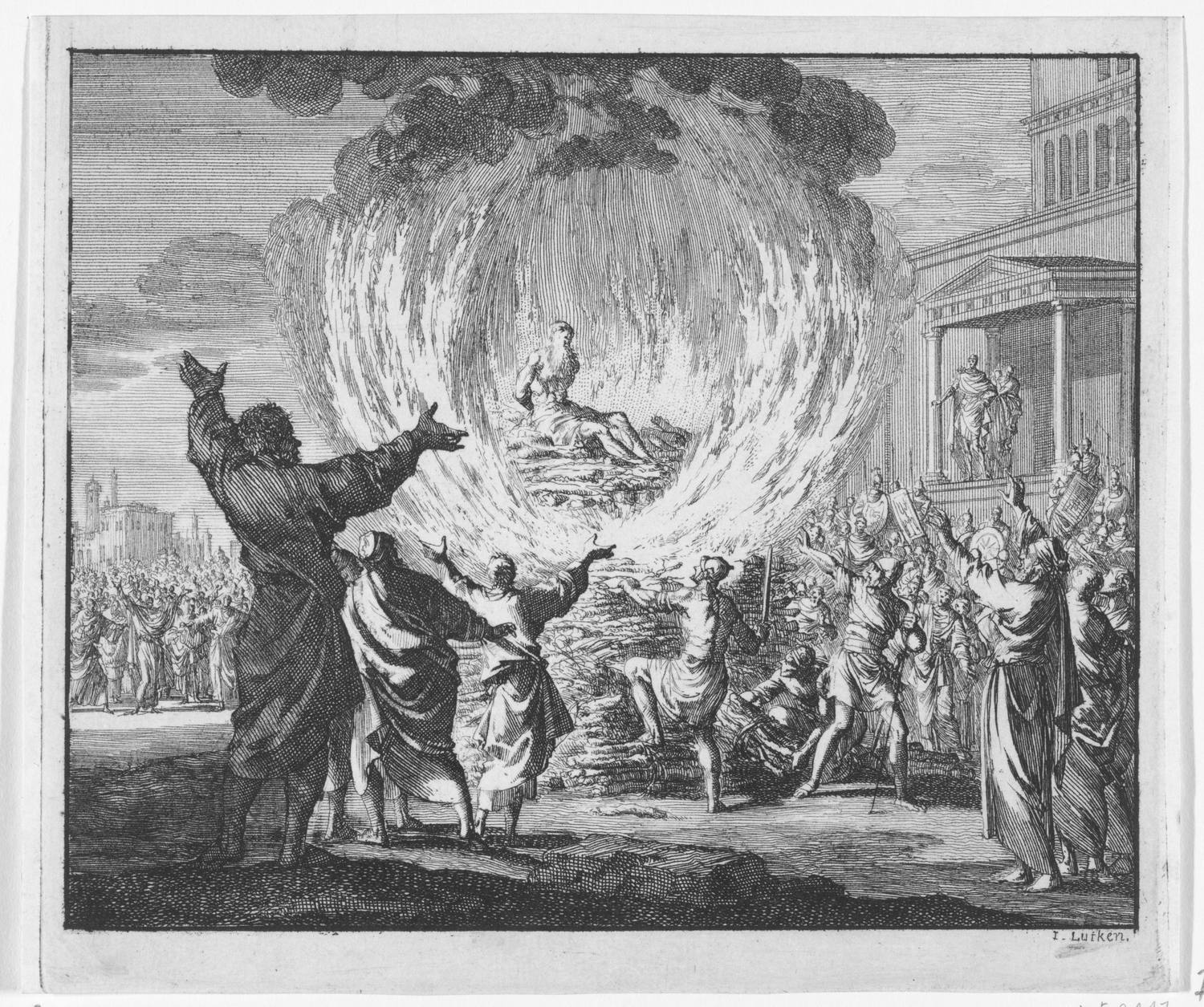
The fire rose round him like a ship's sail filled with wind, and made a wall around his body. He was in the middle of it, his church's letter says, not like flesh burning, but like bread baking, or gold and silver glowing in a furnace.
“For the fire, shaping itself into the form of an arch, like the sail of a ship when filled with the wind, encompassed as by a circle the body of the martyr.”
The writers of his church's letter, who stood watching.
Martyrdom of Polycarp, chapter 15 -
The pyre
In the flamesA sweet smell
Instead of the smell of burning, those watching caught a scent like incense.
“Moreover, we perceived such a sweet odour [coming from the pile], as if frankincense or some such precious spices had been smoking there.”
Martyrdom of Polycarp, chapter 15 -
The pyre
The endThe dove and the blood
His body would not burn. So an executioner was ordered to go close and stab him with a dagger. Out came a dove, his church's letter says, and so much blood that it put out the fire. The whole crowd wondered at the difference between unbelievers and the chosen.
“there came forth a dove, and a great quantity of blood, so that the fire was extinguished”
Martyrdom of Polycarp, chapter 16
The church historian Eusebius copied the letter from Smyrna about 300. His copy has the voice, the fire like a sail, the sweet smell and the blood. It has no dove, and no bread. Eusebius, Church History, Book 4, chapter 15
The burning pillow
Three days before his arrest, praying at the farm where he hid, he saw his pillow on fire. He turned to those with him and said, “I must be burnt alive.” His church's letter says the vision came true when the crowd shouted for fire.
“the pillow under his head seemed to him on fire”Martyrdom of Polycarp, chapters 5 and 12
A later legend: his Life
A Life of Polycarp under the name of Pionius was written two centuries or more after his death. It is full of wonders. As a young man, it says, he gave away to the poor the stores of Callisto, the lady who raised him. Her empty storerooms filled again. When the bishops gathered to choose him, one of the brethren saw a white dove over his head. Later his prayer put out a great fire in Smyrna, and brought rain in a drought.
“One saw hovering over Polycarp's head a white dove encircled in light.”Life of Polycarp ascribed to Pionius, chapters 4, 5, 21 and 28 to 32, tr. Lightfoot (1889)
A later legend: a voice in Rome
One manuscript, kept at Moscow, adds a note to the end of his church's letter. It says his old pupil Irenaeus was in Rome when Polycarp died, and heard “a voice as of a trumpet” saying that Polycarp was martyred. The note says Irenaeus wrote this himself. No work of his that survives tells it, and the other manuscripts and Eusebius do not have it. The scholar J. B. Lightfoot still would not “dismiss the story at once as a pure fiction”.
“on the very day and hour when Polycarp was martyred in Smyrna”Martyrdom of Polycarp, chapter 22, as the Moscow manuscript reads it, tr. Lightfoot (1889); Lightfoot, The Apostolic Fathers, Part 2, volume 1 (1889)
the letter from his church
Almost everything about his death comes from one document: a letter his church sent out after it. Eusebius knew no older account of a martyr. Roberts and Donaldson, its Victorian translators, called it “the earliest of all the Martyria”, the accounts of the martyrs.
A letter to pass on
The church of Smyrna wrote to the church at Philomelium, in Phrygia, which had asked what happened. The letter greets “all the congregations of the Holy and Catholic Church in every place”. A man named Evarestus wrote it. A brother carried it: Marcus in some copies, Marcianus or Marcion in others. Eusebius thought it went to Pontus, on the Black Sea. His translator guessed he misread the words “in every place” in the greeting.
“When, therefore, ye have yourselves read this Epistle, be pleased to send it to the brethren at a greater distance, that they also may glorify the Lord, Who makes such choice of His own servants.”Martyrdom of Polycarp, greeting and chapter 20; Lightfoot (1891); Lake (1913); McGiffert, note on Eusebius, Church History, Book 4, chapter 15
A death like the Lord's
The writers of his church's letter say the Lord meant to show them “a martyrdom becoming the Gospel”. So they point out how his death was like Christ's. His betrayers, they say, would suffer “the punishment of Judas himself”. The police captain “chanced to have the very name” of Herod. Readers have noticed more. He was taken on a Friday, by police who came “as if going out against a robber”. He rode into the city on a donkey.
“For he waited to be delivered up, even as the Lord had done, that we also might become his followers.”Martyrdom of Polycarp, chapters 1, 6, 7 and 8; the line on Herod in Lightfoot's translation (1891)
How it reached us
Notes at the end of the letter say a man named Gaius copied it from the papers of Irenaeus. A man named Socrates copied Gaius's copy at Corinth, and a Pionius copied that. The letter's translators say these notes are “no part of the original Epistle”. Eusebius copied most of the letter into his Church History about 300. His is the only copy older than the one with these notes.
“These things Caius transcribed from the copy of Irenæus (who was a disciple of Polycarp), having himself been intimate with Irenæus.”Martyrdom of Polycarp, chapter 22, with the translators' note; Lightfoot, The Apostolic Fathers, Part 2, volume 1 (1889)
his words
One letter of his survives, the Letter to the Philippians. His other words were written down by his church, in the Martyrdom, and by Irenaeus, who heard him. Unless marked, they are in the English of Alexander Roberts and James Donaldson, as printed in the Ante-Nicene Fathers of 1885.
In the stadium at Smyrna
Fourscore and six years have I been His servant, and He hath done me no wrong. How then can I blaspheme my King Who saved me?
To the proconsul, who had said, “Swear the oath, and I will release thee; revile the Christ.” In J. B. Lightfoot's translation of 1891. Polycarp's Greek verb, δουλεύω, is a slave's word: to serve as a slave serves.
Martyrdom of Polycarp, chapter 9To thee I have thought it right to offer an account [of my faith]; for we are taught to give all due honour (which entails no injury upon ourselves) to the powers and authorities which are ordained of God. But as for these, I do not deem them worthy of receiving any account from me.
…knowing that “by grace ye are saved, not of works,” but by the will of God through Jesus Christ.
But He Who raised Him up from the dead will raise up us also, if we do His will, and walk in His commandments, and love what He loved.
For whosoever does not confess that Jesus Christ has come in the flesh, is antichrist.
…not quickly crediting [an evil report] against any one, not severe in judgment, as knowing that we are all under a debt of sin. If then we entreat the Lord to forgive us, we ought also ourselves to forgive.
Let us then be imitators of His patience; and if we suffer for His name's sake, let us glorify Him.
often misquoted
He was 86 when he died.
What the sources sayProbably close, but it is not what he said. He counted years of serving Christ: “Fourscore and six years have I been His servant”. Lightfoot read it as his age, “the more natural interpretation”, so born about 69 or 70. McGiffert said “we cannot tell”. But he leaned toward counting from baptism, because Polycarp spoke of serving Christ, not God.
Martyrdom of Polycarp, chapter 9; Lightfoot (1889); McGiffert, note on Eusebius, Church History, Book 4, chapter 15He was burned at the stake.
What the sources sayHe was tied to a stake, and the fire was lit. His church's letter says the fire would not burn him. So an executioner stabbed him, and only then was his body burned. Jerome's short notice says simply “he was burned”. The Coptic synaxarium, read on his day, tells it another way: the governor “ordered to cut off his head”.
Martyrdom of Polycarp, chapters 15, 16 and 18; Jerome, Lives of Illustrious Men, chapter 17; Coptic synaxarium, 29 AmshirHe died with twelve companions.
What the sources sayHe was the twelfth martyr of Smyrna, “reckoning those also of Philadelphia”, a city of Asia Minor. The others died before him, and he died alone. The Roman Martyrology of 1916 has “twelve others from Philadelphia”. Most copies of Eusebius, and Rufinus's old Latin translation, also count twelve besides him. McGiffert thought a copyist had changed the word for twelfth into twelve.
Martyrdom of Polycarp, chapter 19; Roman Martyrology (1916), 26 January; McGiffert, note on Eusebius, Church History, Book 4, chapter 15As a boy he was a slave, bought and raised by a devout lady named Callisto.
What the sources sayThis comes from the Life of Polycarp under the name of Pionius, written in the late 300s or later. McGiffert called it “manifestly spurious and entirely untrustworthy”. No early source says where he was born, or how he grew up.
Life of Polycarp ascribed to Pionius, chapters 3 to 5; McGiffert, note on Eusebius, Church History, Book 4, chapter 15“For 86 years I have served Jesus Christ and He has never abandoned me.”
What the sources sayA paraphrase that changes his point. He did not say Christ never left him. He said Christ never wronged him: “He hath done me no wrong”. That is why he would not curse Him.
Martyrdom of Polycarp, chapter 9; QuoteFancy“I exhort you, press on in your course, and exhort all men that they may be saved.”
What the sources sayNot his words. Ignatius wrote them to him: “I entreat thee, by the grace with which thou art clothed, to press forward in thy course, and to exhort all that they may be saved.” Quote sites list the line under Polycarp's name.
Ignatius, Letter to Polycarp, chapter 1; AZQuotesHe is the “angel of the church in Smyrna” in Revelation.
What the sources sayA guess, not an early record. No early writer says so, and Revelation names no one. Archbishop Ussher suggested it in the 1600s. The editor of the Ante-Nicene Fathers saw “nothing improbable” in it. The Coptic synaxarium, read on his day, states it as fact.
Ante-Nicene Fathers, volume 1, introductory note to the Letter to the Philippians; Revelation 2:8-11; Coptic synaxarium, 29 AmshirHe sent Benignus and other missionaries to Gaul.
What the sources sayA legend. The 1916 Roman Martyrology still tells it of Benignus of Dijon, of Andochius, Thyrsus and Felix of Autun, and of Andeol. The Catholic Encyclopedia traces the Benignus story, and others like it from Autun and nearby cities, to the early 500s. It calls them falsifications that “possess no historical value”.
Roman Martyrology (1916); Catholic Encyclopedia (1907), “St. Benignus of Dijon”where the story is argued over
Three questions about the Martyrdom are still argued over. Here they are in the words of both sides.
The Jews in the crowd
His church's letter names Jews four times. They are in the crowd that shouts for his death. They gather wood for the pyre, “especially, according to custom”. They press Nicetes, the police captain's father, to ask the governor not to give up the body. They watch as the Christians try to take it from the fire, and their quarrelling leads the centurion to burn it. All four lines are in Eusebius's copy too, so they are older than the notes a later editor added at the end. Older scholars took them at their word. Lightfoot, in 1889, wrote that it was a feast day, and that “the Jews were keeping holiday and busied themselves actively in the persecution”. Some scholars now doubt that this is history. The letter sets out to show a death like Christ's, and its crowd echoes the crowds of the Gospels. In the words of the Judaism and Rome project, after Lloyd Gaston, “the Jews are simply added to the crowd alongside the Gentiles”. The same commentary says the words “according to custom” give them “a direct role in his death”, as the Gospels give the crowd a role in Christ's. Bart Ehrman reads the letter as making the Jews “the enemy, more than the governor”.
“the whole multitude both of the heathen and Jews, who dwelt at Smyrna, cried out with uncontrollable fury”Martyrdom of Polycarp, chapters 12, 13, 17 and 18; Eusebius, Church History, Book 4, chapter 15; Lightfoot (1889); Judaism and Rome, commentary; Ehrman, Forgery and Counterforgery (2013)
155, or ten years later?
His church's letter names the proconsul, Statius Quadratus, and the day. Eusebius put the death under Marcus Aurelius, about 166, and Jerome followed him. In 1867 W. H. Waddington worked out when Quadratus governed Asia, from a sick man's diary. The orator Aelius Aristides had noted who governed Asia during his long illness. That gave 155. Lightfoot agreed. By 1890 McGiffert called the date “now almost universally accepted”. Two German scholars, Wieseler and Keim, still held out for 167. The churches agree on the day but not the year. Rome's calendar of 1969 says about 156. The Church of England says about 155. The Episcopal Church and the ELCA say 156. The Greek Archdiocese of America says about 163. The Coptic synaxarium says 167.
“Now the blessed Polycarp was martyred on the second day of the first part of the month Xanthicus, on the seventh before the kalends of March, on a great sabbath, at the eighth hour.”Martyrdom of Polycarp, chapter 21, in Lightfoot's translation (1891); McGiffert, note on Eusebius, Church History, Book 4, chapter 15; Lightfoot, Part 2, volume 1 (1889); Calendarium Romanum (1969)
Was the letter added to?
All our Greek copies come through a later editor, who added his own notes at the end. Eusebius's older copy is shorter in places. In 1885 the American editor of the Ante-Nicene Fathers wrote, “That this Epistle has been interpolated can hardly be doubted, when we compare it with the unvarnished specimen, in Eusebius.” Some scholars go further. Candida Moss, in 2010, argued that it is not an eyewitness account. The fuller text, she said, was written long after the events, perhaps as late as the middle of the 200s. Bart Ehrman, in 2013, called it a forgery: “a legendary account written simply as if by eyewitnesses”, at least fifty years later. Others hold that it is what it says it is. McGiffert, in 1890, called its genuineness “too well established to admit of doubt”. Against the critics of his day, George Salmon wrote:
“The whole narrative of the martyrdom bears so plainly the mark of an eye-witness, that to imagine, as Lipsius and Keim have done, some one capable of inventing it a century after the death of Polycarp, seems to require great critical credulity.”Ante-Nicene Fathers, volume 1, introductory note; Moss, Early Christianity (2010); Ehrman, Forgery and Counterforgery (2013); McGiffert, note on Eusebius, Church History, Book 4, chapter 15; Salmon, Dictionary of Christian Biography
friends, family and rivals
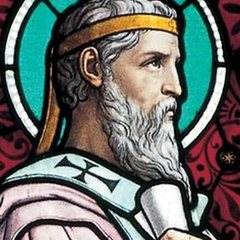 Irenaeus of Lyons
 Heard him as a boy in Asia, and remembered him all his life. After the letter on Polycarp's death, he is our main witness to him.
Eusebius, Church History, Book 5, chapter 20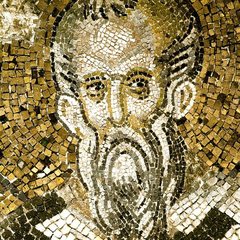 Ignatius of Antioch
 The bishop of Antioch, taken through Smyrna on his way to die in Rome. He wrote Polycarp the only letter to him that survives. Polycarp gathered his letters and sent them on.
Ignatius, Letter to Polycarp; Letter to the Philippians, chapter 13Irenaeus calls him “John, the disciple of the Lord”. Polycarp spoke of his time with John and passed on John's words. Tertullian, about 200, says the church of Smyrna “records that Polycarp was placed therein by John”. Jerome agrees. Irenaeus says only that apostles appointed Polycarp.
Irenaeus, Against Heresies, Book 3, chapter 3; Eusebius, Church History, Book 5, chapter 20; Tertullian, Prescription against Heretics, chapter 32; Jerome, Lives of Illustrious Men, chapter 17Another bishop in Asia, who wrote five books. Irenaeus calls him “the hearer of John, and a companion of Polycarp”.
Irenaeus, Against Heresies, Book 5, chapter 33Irenaeus, as a boy, saw him “in lower Asia with Polycarp”. He was then a man of the royal court, trying to win the old bishop's approval. He later lost his place as a presbyter at Rome, over his teaching. In a letter to him, Irenaeus set down his best memories of Polycarp.
Eusebius, Church History, Book 5, chapters 15 and 20Bishop of Rome. He and Polycarp could not agree about Easter. He still let Polycarp celebrate the Eucharist in his church.
Eusebius, Church History, Book 5, chapter 24A teacher who rejected the God of the Old Testament. In Rome, Irenaeus says, Polycarp turned many of his followers back to the Church. When the two met, Polycarp called him “the first-born of Satan”.
Irenaeus, Against Heresies, Book 3, chapter 3A young Christian who faced the beasts bravely, days before Polycarp died. After his death the crowd began shouting for the old bishop.
Martyrdom of Polycarp, chapter 3The police captain who arrested Polycarp, and his father. They took him into their carriage and tried to talk him round. Nicetes later asked the governor to keep his body from the Christians.
Martyrdom of Polycarp, chapters 6, 8 and 17The Asiarch, high priest of Asia, who ran the games. The crowd asked him to set a lion on Polycarp. He refused, because the games were over. Lightfoot matched him with a Philip named on inscriptions of Tralles. His “renown had already procured for him a monument at Olympia”.
Martyrdom of Polycarp, chapters 12 and 21; Lightfoot, The Apostolic Fathers, Part 2, volume 1 (1889)A Christian woman of Smyrna whom Ignatius greeted in two letters, as “my well-beloved” and “my dearly beloved”. The Martyrdom calls Nicetes “brother of Alce”. Lightfoot and McGiffert think she was the same woman.
Ignatius, Letter to the Smyrnaeans, chapter 13, and Letter to Polycarp, chapter 8; Martyrdom of Polycarp, chapter 17; McGiffert, note on Eusebius, Church History, Book 4, chapter 15how he died
He was tied to a stake in the stadium at Smyrna on a Saturday, 23 February, most likely in 155. The fire did not burn him, so an executioner stabbed him.
The crowd ran to the workshops and baths for wood. He took off his clothes and his belt. When they came to nail him to the stake, he asked them not to, and they only tied him. He put his hands behind him, bound “like a distinguished ram [taken] out of a great flock for sacrifice”. Then he looked up to heaven and prayed.
The Christians wanted his body. But Nicetes, the police captain's father, asked the governor not to give it up, “lest, forsaking Him that was crucified, they begin to worship this one”. His church's letter answers him: “For Him indeed, as being the Son of God, we adore; but the martyrs, as disciples and followers of the Lord, we worthily love.”
A centurion had the body burned. Afterwards the Christians gathered his bones, “as being more precious than the most exquisite jewels, and more purified than gold”.
To the men with the nails
Leave me as I am; for He that giveth me strength to endure the fire, will also enable me, without your securing me by nails, to remain without moving in the pile.
his prayer at the stake
His church gives the prayer in full. When he came to the Amen, the men at the pyre lit the fire.
The whole prayer, as the letter from Smyrna gives it.
“O Lord God Almighty, the Father of Thy beloved and blessed Son Jesus Christ, by Whom we have received the knowledge of Thee, the God of angels and powers, and of every creature, and of the whole race of the righteous who live before Thee, I give Thee thanks that Thou hast counted me worthy of this day and this hour, that I should have a part in the number of Thy martyrs, in the cup of Thy Christ, to the resurrection of eternal life, both of soul and body, through the incorruption [imparted] by the Holy Ghost. Among whom may I be accepted this day before Thee as a fat and acceptable sacrifice, according as Thou, the ever-truthful God, hast foreordained, hast revealed beforehand to me, and now hast fulfilled. Wherefore also I praise Thee for all things, I bless Thee, I glorify Thee, along with the everlasting and heavenly Jesus Christ, Thy beloved Son, with Whom, to Thee, and the Holy Ghost, be glory both now and to all coming ages. Amen.”Martyrdom of Polycarp, chapters 14 and 15
is he a saint?
Yes. Catholics, Orthodox, Copts and Anglicans count him a saint, and Lutherans remember him too.
- CatholicSaintA memorial on 23 February
- OrthodoxSaintA hieromartyr, 23 February
- CopticSaint29 Amshir, which is 8 March
- AnglicanSaintA Lesser Festival in the Church of England
- LutheranRememberedMissouri Synod and ELCA, 23 February
When Rome cut back its calendar in 1969, it kept only some of the martyrs from outside Rome. The first group it kept was the famous martyrs of the early Church, martyres clariores antiqui. The group held three names: Polycarp, Perpetua and Felicity, and Cyprian.
He was honoured from the day he died. His church laid his bones in a place where it meant to meet each year, “in gladness and joy”, on the day of his death. It called that day his birthday.
The historian Arthur McGiffert called the letter's mention of a yearly feast “the earliest notice of the annual celebration of the day of a martyr's death”. The Roman calendar of 1969 quotes the same passage, to explain why saints are kept on the day they died. In the words of the letter:
…to celebrate the birth-day of his martyrdom for the commemoration of those that have already fought in the contest, and for the training and preparation of those that shall do so hereafter.
At Smyrna, the birthday of St. Polycarp, a disciple of the Apostle St. John, who consecrated him bishop of that city and Primate of all Asia.
a letter he wrote
Near the end of his Letter he blessed the church at Philippi. Then he told them to pray, even for their persecutors.
But may the God and Father of our Lord Jesus Christ, and Jesus Christ Himself, Who is the Son of God, and our everlasting High Priest, build you up in faith and truth, and in all meekness, gentleness, patience, long-suffering, forbearance, and purity; and may He bestow on you a lot and portion among His saints, and on us with you, and on all that are under heaven, who shall believe in our Lord Jesus Christ, and in His Father, Who “raised Him from the dead.” Pray for all the saints. Pray also for kings, and potentates, and princes, and for those that persecute and hate you, and for the enemies of the cross, that your fruit may be manifest to all, and that ye may be perfect in Him.
what to read first
The Letter to the Philippians
Polycarp
His only surviving writing. It is short and warm, and stitched together from Scripture. About twenty minutes.
Read it freeThe Martyrdom of Polycarp
The church at Smyrna
The letter his church wrote about his death: the arrest, the trial in the stadium and the fire.
Read it freeThe Letter to Polycarp
Ignatius of Antioch
Advice from one bishop to another, written on the way to his own death. Eight short chapters.
Read it freeChurch History, Book 5, chapter 20
Eusebius, quoting Irenaeus
Irenaeus remembers hearing Polycarp as a boy: where he sat, and how he spoke of John.
Read it freetake the quizzes
 Quiz Which early Christian thinks like you? And which would argue with you? Start
  Quiz Christian Personality Test Which of eight types are you? Find your own. Start
 sources
His life, and his words
- The Martyrdom of Polycarp. Tr. Alexander Roberts and James Donaldson. Ante-Nicene Fathers, volume 1, 1885.
- Polycarp, Letter to the Philippians. Same edition.
- Ignatius, Letter to Polycarp. Same edition. Also his Letter to the Smyrnaeans.
- Irenaeus, Against Heresies, Book 3, chapter 3. Tr. Alexander Roberts and W. H. Rambaut. Same edition.
- J. B. Lightfoot and J. R. Harmer, The Apostolic Fathers, 1891. Lightfoot's translation of the Martyrdom, and his introductions.
- J. B. Lightfoot, The Apostolic Fathers, Part 2, volume 1, 1889. His life of Polycarp, and the date of his death.
- J. B. Lightfoot, The Apostolic Fathers, Part 2, volume 3, 1889. The Moscow manuscript, and the Life ascribed to Pionius in English.
- Kirsopp Lake, The Apostolic Fathers, volume 2, first printed 1913 (the linked copy is the 1917 reprint). The Greek text, with his translation.
- Eusebius, Church History, Book 4, chapters 14 and 15. Tr. Arthur McGiffert, 1890, with his notes.
- Eusebius, Church History, Book 5, chapters 20 and 24. Same edition.
- Eusebius, Church History, Book 3, chapter 36. Same edition.
- Jerome, Lives of Illustrious Men, chapter 17. Tr. Ernest Richardson, 1892.
- Tertullian, Prescription against Heretics, chapter 32. Tr. Peter Holmes. Ante-Nicene Fathers, volume 3.
Reference
- George Salmon, “Polycarpus”, Dictionary of Christian Biography, 1911 edition
- Catholic Encyclopedia, 1911, “St. Polycarp”
- Catholic Encyclopedia, 1907, “St. Benignus of Dijon”
- Britannica, “St. Polycarp”
- Judaism and Rome, commentary on the Martyrdom of Polycarp, after Lloyd Gaston
- Candida R. Moss, “On the Dating of Polycarp”, Early Christianity 1, 2010 (the publisher's summary)
- Bart D. Ehrman, from Forgery and Counterforgery, 2013
- Liddell, Scott and Jones, Greek-English Lexicon, “πολύκαρπος”
- F. C. Husenbeth, Emblems of Saints, 1882, for how the West shows him
- Dionysius of Fourna, the painter's guide, in Didron's French edition, 1845, for how icons show him
- Merriam-Webster, “Polycarp” and “Smyrna”, for how to say them
- McNaughtan Publishing, on Biber's Sonata Sancti Polycarpi
- QuoteFancy and
- AZQuotes, for the lines wrongly given to him
Calendars
- USCCB, Memorial of Saint Polycarp, Bishop and Martyr
- USCCB, Liturgical Calendar 2026, 23 February on a Lenten weekday
- Calendarium Romanum, 1969, on the move from 26 January, and the martyrs it kept
- The Roman Martyrology, 1916 edition
- OCA, Hieromartyr Polycarp, Bishop of Smyrna
- Greek Orthodox Archdiocese of America, Polycarp the Holy Martyr and Bishop of Smyrna
- Great Synaxaristes, Greek, 23 February
- saint.gr, Greek
- azbyka.ru, Russian
- CopticChurch.net, the Coptic synaxarium, 29 Amshir
- Church of England, Common Worship calendar
- The Episcopal Church, Lesser Feasts and Fasts 2022
- The Lutheran Church–Missouri Synod, Commemorations
- Evangelical Lutheran Worship, ELCA, the church year (final draft, 2006)
- Grand Canyon Synod of the ELCA, February 2024
Pictures
- Saint Polycarp, a Byzantine fresco of the early 1300s, probably in the church of St George, Staro Nagoričane, North Macedonia. CC0.
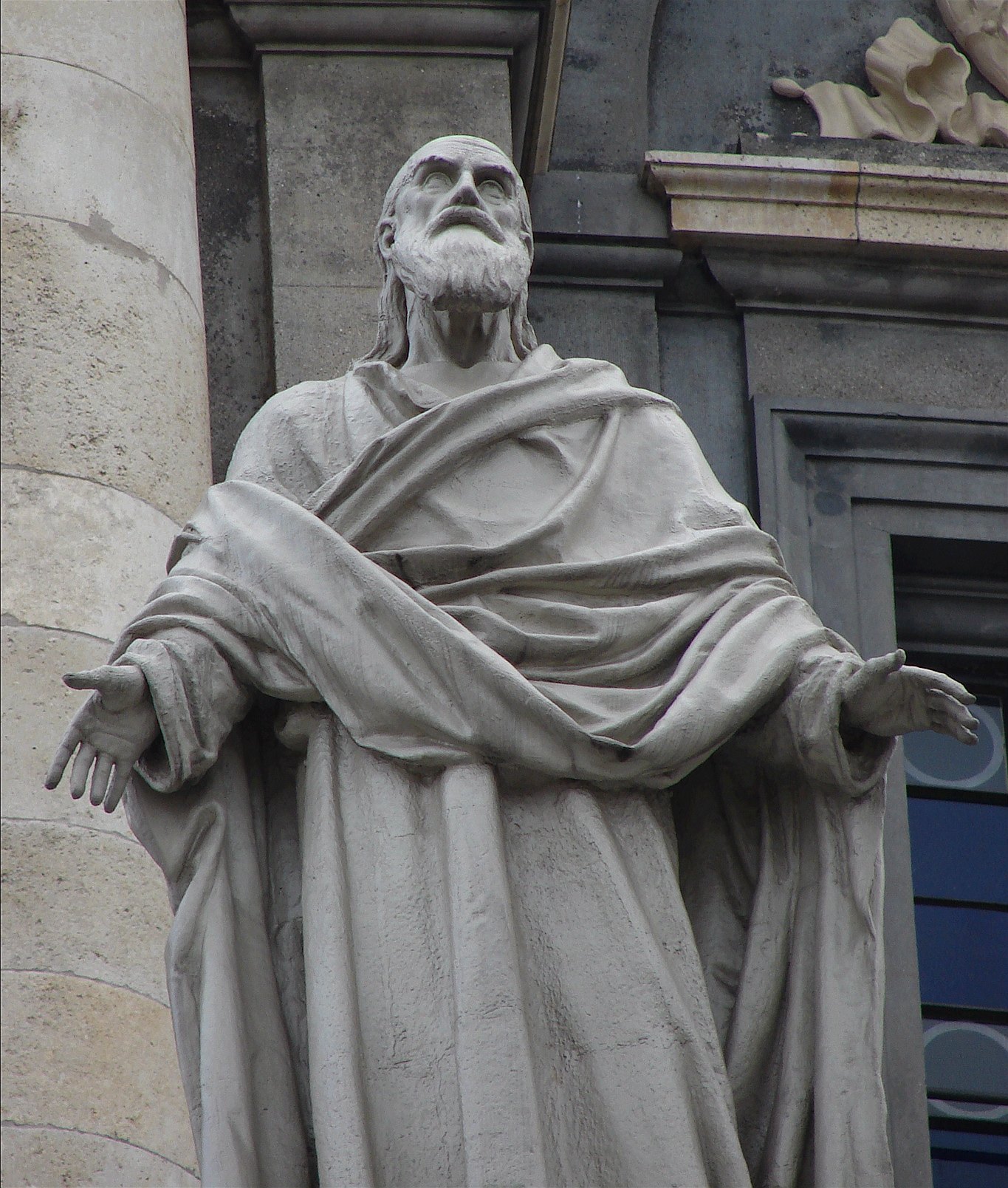
- Polykarp, a statue by Ferdinand Edvard Ring, 1884. Frederik's Church, Copenhagen. Photo: Orf3us, public domain.
- H. Polycarpus wordt op een brandstapel gezet maar de vlammen verbranden hem niet, Jan Luyken, 1701. Rijksmuseum, Amsterdam. CC0.
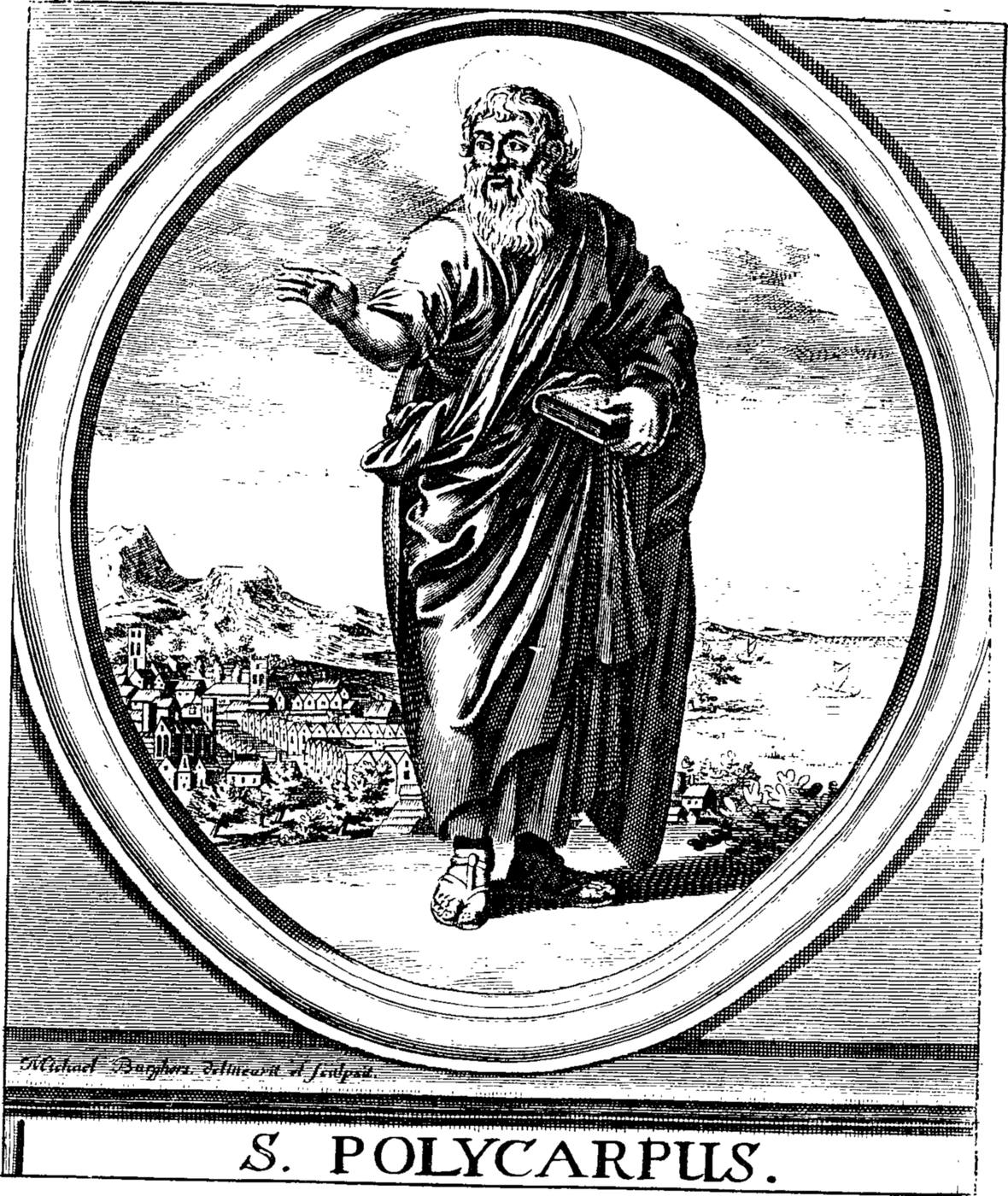
- S. Polycarpus, Michael Burghers, for William Cave's Apostolici, 1716 edition. Public domain.