
Ignatius of Antioch
The bishop in chains who wrote seven letters on the road to the lions, and begged Rome not to save him.
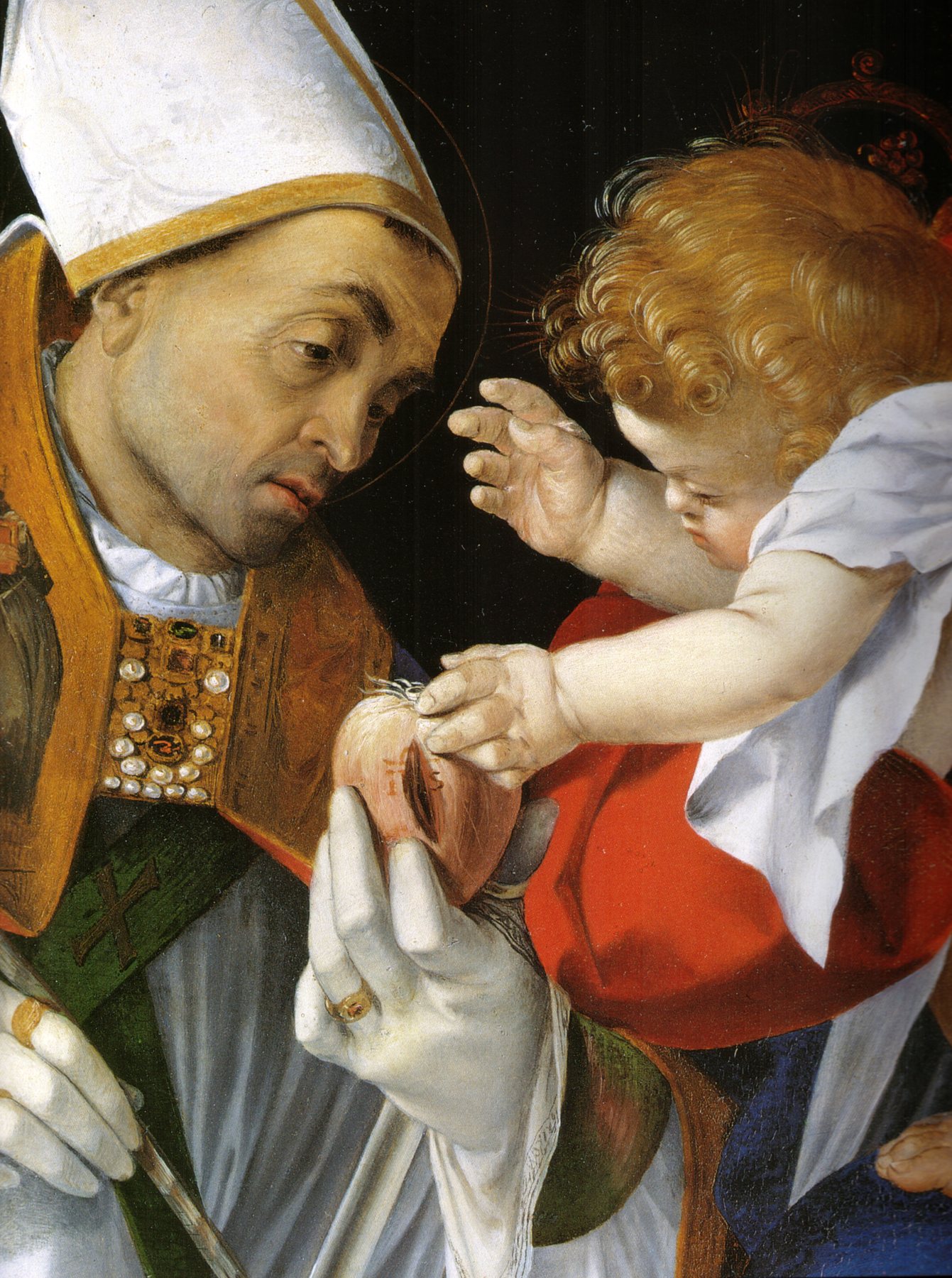
Picture: Saint Ignatius offers his heart to the Christ Child: a detail of Lorenzo Lotto's Madonna and Child with Saints Ignatius of Antioch and Onuphrius, 1508. Galleria Borghese, Rome. Public domain.
Who was Ignatius?
Ignatius was bishop of Antioch in Syria in the early 100s. Condemned to the wild beasts, he was taken under guard to Rome. On the way he wrote seven letters, to six churches and to Polycarp. He begged the Christians of Rome not to save him. He died in Rome, most likely about 110.
at a glance
His path, in order
- BishopOf Antioch, after Evodius, says Eusebius
- PrisonerCondemned to the beasts, chained to ten soldiers
- GuestOf Polycarp, at Smyrna
- WriterSeven letters, from Smyrna and Troas
- MartyrThrown to the wild beasts at Rome
in numbers
- Letters he wrote on the road7
- Four from Smyrna, three from Troas
- All that survives of his writing
- Soldiers who guarded him10
- He called them “ten leopards”
- Kindness only made them worse
- Letters that bear his name15
- At most seven are his
- The other eight are forgeries
did you know?
-
He called his ten guards “ten leopards”. It is the oldest use of the word leopard in any writing that survives, notes Arthur McGiffert, the translator of Eusebius.
McGiffert, note on Eusebius, Church History, Book 3, chapter 36 -
He may have coined the Greek word for “Christianity”, says the scholar Maia Kotrosits. He sets it beside the word for “Judaism” in his letters to the Magnesians and the Philadelphians.
Maia Kotrosits, in Philip A. Harland, Ethnic Relations and Migration in the Ancient World -
For centuries the Syriac Orthodox patriarchs of Antioch, once called Jacobites, have taken the name Ignatius when they come to office, noted the Anglican scholar J. B. Lightfoot in 1889.
Lightfoot, The Apostolic Fathers, Part 2, volume 1 (1889) -
In Lotto's painting at the top of this page, he offers the Christ Child his heart, marked with Christ's monogram. The Borghese inventory of 1693 took the heart for a loaf of bread.
Galleria Borghese, catalogue entry for Lotto's Madonna and Child with Saints Ignatius of Antioch and Onuphrius
- Born
- Nothing is known of his birth or family. J. B. Lightfoot, the Anglican bishop and scholar who edited his letters, thought he was raised a pagan and came to Christ as a grown man.
- Bishop of
- Antioch in Syria, today Antakya in Turkey. Eusebius counts him its second bishop, after Evodius. Counting Peter, he was the third.
- Died
- At Rome, thrown to the wild beasts, under the emperor Trajan. Eusebius's Chronicle says 107. The scholar Lightfoot put it “within a few years of A.D. 110, before or after”.
- Buried
- Jerome says his remains lay at Antioch, in the cemetery outside the gate to Daphne. The Roman Martyrology says they were later brought to the church of St Clement in Rome.
- Also called
- Theophorus, “the God-bearer”: a second name, as Saul was also called Paul. Hieromartyr Ignatius the God-Bearer, in the Orthodox churches, which call a martyred bishop a hieromartyr. An Apostolic Father, one of the first Christian writers after the apostles.
- His name
- Latin. Severus, a patriarch of Antioch in the 500s, linked it to ignis, fire, for the love that burned in him. The scholar Lightfoot called that derivation “altogether false”.
- Status
- A saint to Catholics, Orthodox, Copts and Anglicans. Lutherans remember him too.
- In art
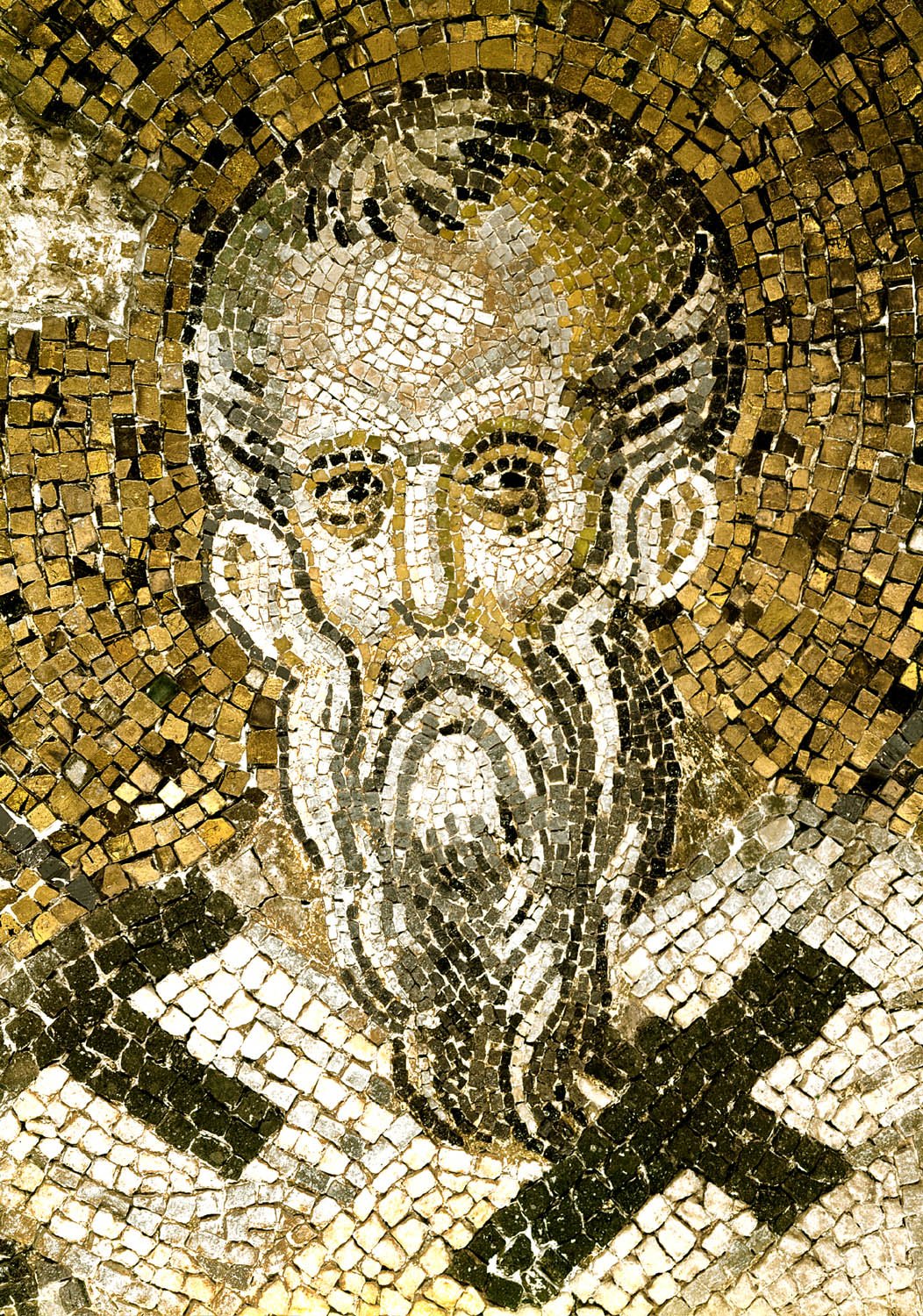
- A bishop, often between two lions. In the West he may hold a heart marked with the name of Jesus, from a medieval legend.
- Wrote
- Seven letters: to the churches of Ephesus, Magnesia, Tralles, Rome, Philadelphia and Smyrna, and to Polycarp.
- Pronounced
- ig-NAY-shus of AN-tee-ok.
feast days
East and West, side by side
West
- Feb1
His day in Rome from the 1100s until 1969, and in the 1916 Roman Martyrology.
- Oct17
Catholic memorial. Also the Church of England, the Episcopal Church, and Lutherans in the Missouri Synod and the ELCA.
- Dec17
The bringing of his relics to Antioch, in the 1916 Roman Martyrology.
East
- Jan2
The Coptic Church, on 24 Kiahk in its own calendar. Its book of saints gives him two days. This one tells of his martyrdom without naming a place. Churches on the old calendar keep his 20 December feast on this day too.
- Jan29
The bringing of his relics to Antioch, in the Orthodox calendar, as the OCA keeps it.
- Jul14
The Coptic Church, on 7 Epip in its own calendar. Its book of saints gives him two days. This one tells of his death in Rome.
- Dec20
His chief day in the Orthodox churches, as in the OCA. The Greeks kept it “to this day”, noted the Ante-Nicene Fathers in 1885.
Why so many days? The oldest is 17 October. A Syriac calendar of the late 300s already has him there. Rome kept him on 1 February from the 1100s, and in 1969 moved him back to his old Syrian day. The later Martyrdom of Ignatius says he died on 20 December. The Anglican scholar J. B. Lightfoot thought 20 December was really the day his relics were laid in Antioch's old Temple of Fortune, in the 400s. Churches on the old calendar keep each date 13 days later: 20 December falls on 2 January, and 29 January on 11 February.
what was he like?
+on fire to die for Christ
He asked the Christians of Rome not to rescue him, and he meant it. The beasts in the arena had been known to shy away from some prisoners. If they shied from him, he would make them come: “But if they be unwilling to assail me, I will compel them to do so. Pardon me [in this]: I know what is for my benefit.” And then: “Now I begin to be a disciple.”
Letter to the Romans, chapter 5+wary of praise
He feared his own pride. “I have great knowledge in God, but I restrain myself, lest, I should perish through boasting.” Kind words hurt him: “For they that speak to me [in the way of commendation] scourge me.”
Letter to the Trallians, chapter 4+sure he was the least
He called himself a condemned man, never an apostle. Of the church in Syria he wrote, “I am ashamed to be counted one of them; for indeed I am not worthy, as being the very last of them, and one born out of due time.” The Anglican scholar J. B. Lightfoot read such lines as the words of a late convert, troubled by his past. He was one of those “broken” natures, Lightfoot wrote, out of which “God's heroes are made”.
Letter to the Romans, chapter 9; Lightfoot, The Apostolic Fathers, Part 2, volume 1 (1889)+loud for unity
At Philadelphia he cried out in church: “I cried, I spoke with a loud voice: Give heed to the bishop, and to the presbytery and deacons.” Some thought someone had told him of a split there. No one had, he said: the Spirit had. He called himself “a man devoted to unity”.
Letter to the Philadelphians, chapters 7 and 8+gentle in deed, fierce in word
He told the Ephesians to meet hatred with kindness: “Be ye meek in response to their wrath, humble in opposition to their boasting: to their blasphemies return your prayers”. Yet he called false teachers “ravening dogs, who bite secretly” and “beasts in the shape of men”. Even so, he asked the church to pray for them, “if by any means they may be brought to repentance”.
Letter to the Ephesians, chapters 7 and 10; Letter to the Smyrnaeans, chapter 4+a pastor's eye
His advice to Polycarp, the bishop of Smyrna, is plain and practical. “Every kind of wound is not healed with the same plaster.” Anyone can love the easy people in his care: “seek by meekness to subdue the more troublesome.” And: “Let not widows be neglected.”
Letter to Polycarp, chapters 2 and 4+warm to his friends
He names his friends one by one. Writing to Smyrna, he greets “Alce, my well-beloved, and the incomparable Daphnus”. To Rome he sends word of Crocus, “one dearly beloved by me”. Of Burrhus, the deacon who travelled with him, he wrote: “And I would that all may imitate him, as being a pattern of a minister of God.”
Letter to the Smyrnaeans, chapters 12 and 13; Letter to the Romans, chapter 10what others said of him
We have the letter of a friend who met him in chains, a line quoted two generations later, and a sermon preached in his own city. Later readers still argue over him.
…by them ye may be greatly profited; for they treat of faith and patience, and all things that tend to edification in our Lord.
As a certain man of ours said, when he was condemned to the wild beasts because of his testimony with respect to God: “I am the wheat of Christ, and am ground by the teeth of the wild beasts, that I may be found the pure bread of God.”
…Ignatius, who was chosen bishop of Antioch, second in succession to Peter, and whose fame is still celebrated by a great many.
Ye sent forth a Bishop, and received a martyr; ye sent him forth with prayers, and ye received him with crowns.
In him, indeed, the lions encountered a lion, one truly begotten of “the Lion of the tribe of Judah.”
…the whole system of Catholic doctrine may be discovered, at least in outline, not to say in parts filled up, in the course of his seven epistles.
He is the incarnation, as it were, of the three closely connected ideas: the glory of martyrdom, the omnipotence of episcopacy, and the hatred of heresy and schism.
his life in eight moments
Antioch
Before 110Bishop of a great city
Antioch was one of the great cities of the empire, and its church was old. It was there that the disciples were first called Christians. Ignatius was its second bishop, after Evodius, says Eusebius. Chrysostom said “the hands of the blessed apostles touched his sacred head”. In the 400s the bishop and historian Theodoret said Peter ordained him. The Anglican scholar J. B. Lightfoot called such stories “excrescences on the earliest tradition”. That tradition calls him only an apostolic man.
Acts 11:26; Eusebius, Church History, Book 3, chapter 22; John Chrysostom, Homily on Saint Ignatius; Theodoret, Letter 151; Lightfoot (1889)Antioch
Under TrajanCondemned
We know nothing of his arrest and trial beyond what his letters say. The church at Antioch was in trouble. He was sentenced to the beasts, and sent to Rome to die in the arena. Again and again he calls himself “a condemned man”. He did not appeal, and did not want to. As the scholar Lightfoot put it, “He goes to Rome therefore for the execution of his sentence.”
Letter to the Ephesians, chapter 12; Letter to the Romans, chapter 4; Lightfoot, The Apostolic Fathers, Part 2, volume 1 (1889)The road west
The summerTen leopards
He travelled chained to a guard of ten soldiers. The road itself was a fight: “From Syria even unto Rome I fight with beasts, both by land and sea, both by night and day, being bound to ten leopards, I mean a band of soldiers, who, even when they receive benefits, show themselves all the worse.” The gifts his friends gave them, the scholar Lightfoot thought, only made them greedier.
Letter to the Romans, chapter 5; Lightfoot (1889)Philadelphia
On the way“That remains to be proved”
At Philadelphia, in Asia, he met a divided church. Some said, “If I do not find it in the ancient Scriptures, I will not believe the Gospel.” When he answered, “It is written”, they said, “That remains to be proved.” His reply: “But to me Jesus Christ is in the place of all that is ancient: His cross, and death, and resurrection, and the faith which is by Him, are undefiled monuments of antiquity”.
Letter to the Philadelphians, chapter 8Smyrna
The summerA guest of Polycarp
At Smyrna he stayed with Polycarp, its bishop. Word had gone ahead down the southern road, and three churches sent men to meet him. From Ephesus came its bishop Onesimus, “a man of inexpressible love”, with the deacon Burrhus, Crocus, Euplus and Fronto. From Magnesia came its young bishop Damas, two presbyters and a deacon. From Tralles came its bishop Polybius. In them, he wrote, he saw their whole churches. He wrote four letters from Smyrna.
Letter to the Ephesians, chapters 1 and 2; Letter to the Magnesians, chapter 2; Letter to the Trallians, chapter 1; Eusebius, Church History, Book 3, chapter 36; Lightfoot (1889)Smyrna
Late AugustDo not save me
One letter went ahead of him to Rome. The Christians there had friends of influence, who might win him a pardon. He begged them not to try: “For I am afraid of your love, lest it should do me an injury.” And: “Suffer me to become food for the wild beasts, through whose instrumentality it will be granted me to attain to God.” Then comes his most famous line, about the wheat of God.
Letter to the Romans, chapters 1 and 4Troas
Soon afterGood news from home
At Troas he heard that the church at Antioch was at peace. He wrote three more letters, to Philadelphia, to Smyrna and to Polycarp. He asked each church to send a messenger to Antioch to share its joy. Then the guards set sail with no warning: “I have not been able to write to all the Churches, because I must suddenly sail from Troas to Neapolis”. He asked Polycarp to write to the rest for him.
Letter to the Philadelphians, chapter 10; Letter to Polycarp, chapters 7 and 8Philippi
The last newsThe curtain drops
From Neapolis the prisoners went on to Philippi. The church there welcomed them and walked with them, “those who were bound in chains, the fitting ornaments of saints”, Polycarp wrote. The Philippians then asked Polycarp for copies of Ignatius's letters, and any news of him. Polycarp sent the letters, but had no news to give. “Here the curtain drops on the career of the martyr,” wrote the scholar Lightfoot.
Polycarp, Letter to the Philippians, chapters 1, 9 and 13; Lightfoot, The Apostolic Fathers, Part 2, volume 1 (1889)
his words
Seven letters survive, all written in a few weeks on the road. This page quotes them only in their shorter Greek form, which scholars call the middle recension. The translation is by Alexander Roberts and James Donaldson, printed in the Ante-Nicene Fathers of 1885. Why that matters is told below.
To the Christians of Rome
I am the wheat of God, and let me be ground by the teeth of the wild beasts, that I may be found the pure bread of Christ.
Written from Smyrna, weeks before he reached Rome. It is the first line of his that anyone is known to have quoted: Irenaeus used it about 180, without naming Ignatius.
Letter to the Romans, chapter 4It is better for a man to be silent and be [a Christian], than to talk and not to be one. It is good to teach, if he who speaks also acts.
For the beginning is faith, and the end is love.
My love has been crucified, and there is no fire in me desiring to be fed; but there is within me a water that liveth and speaketh, saying to me inwardly, Come to the Father.
…breaking one and the same bread, which is the medicine of immortality, and the antidote to prevent us from dying, but [which causes] that we should live for ever in Jesus Christ.
They abstain from the Eucharist and from prayer, because they confess not the Eucharist to be the flesh of our Saviour Jesus Christ, which suffered for our sins, and which the Father, of His goodness, raised up again.
He was truly persecuted under Pontius Pilate; He was truly crucified, and [truly] died, in the sight of beings in heaven, and on earth, and under the earth.
There is one Physician Who is possessed both of flesh and spirit; both made and not made; God existing in flesh; true life in death; both of Mary and of God; first possible and then impossible, even Jesus Christ our Lord.
Look for Him Who is above all time, eternal and invisible, yet Who became visible for our sakes.
A Christian has not power over himself, but must always be ready for the service of God.
Nothing is more precious than peace, by which all war, both in heaven and earth, is brought to an end.
which letters are his?
Fifteen letters carry his name. Which ones are really his has been argued over for four hundred years. Here is where it stands, in the words of both sides.
Eight forgeries
Three letters exist only in Latin: two to the apostle John and one to the Virgin Mary. Five more are in Greek: to Tarsus, to Antioch, to Hero, to Philippi and to Mary of Cassobola. Neither Eusebius nor Jerome mentions them. No one defends them now.
“It is now the universal opinion of critics, that the first eight of these professedly Ignatian letters are spurious.”Ante-Nicene Fathers, volume 1, introductory note to the Epistles of Ignatius
The long version
The seven real letters also survive in a padded form, with lines added and six forged letters bound in: five in his name, and one to him from Mary of Cassobola. The Catholic Encyclopedia dates it to about 400, the work of one writer who padded them “to lend weight to the personal views of its author”. Until 1644 this was the form most readers knew. John Calvin, writing before then, called the letters under Ignatius's name “absurdities”: “Nothing can be more nauseating, than the absurdities which have been published under the name of Ignatius”. Then Archbishop James Ussher found an old Latin copy of the shorter text.
“Ussher had rediscovered the middle recension.”William R. Schoedel, Anchor Bible Dictionary (1992), as given by Early Christian Writings; Catholic Encyclopedia (1910); Calvin, Institutes, Book 1, chapter 13
Only three?
In the 1840s William Cureton found three of the letters in Syriac, shorter still: to Polycarp, to the Ephesians and to the Romans. He was sure these three alone were real, and hoped the world would soon agree. The Anglican bishop J. B. Lightfoot and the German scholar Theodor Zahn answered him at length. Arthur McGiffert, the translator of Eusebius, wrote that their defence of the seven may be “regarded as finally settling the matter”. The scholar Schoedel calls the Syriac “merely an abridgment of a Syriac version of the middle recension”.
“…the only true and genuine letters of the venerable Bishop of Antioch that have either come down to our times, or were ever known in the earliest ages of the Christian Church.”William Cureton (1849), as quoted in the Ante-Nicene Fathers, volume 1; McGiffert, note on Eusebius, Church History, Book 3, chapter 36; Schoedel (1992)
Are even the seven his?
A minority of scholars doubt it. McGiffert, who did not share their doubts, named the two main reasons in 1890: “the highly developed form of church government which they reveal; and secondly, the attacks upon heresy contained in them.” Both looked too late for Trajan's day. Robert Joly argued in 1979 that the seven are not his. Others move Ignatius himself later: Timothy Barnes argued in 2008 that “the letters were probably written in the 140s”. Most still side with the old defenders. In Schoedel's words, “the researches of Zahn (1873) and Lightfoot (1885, 1889) and their followers continue to dominate the scholarship.”
“I must own I have found it a very difficult question.”Nathaniel Lardner (1743), as quoted in the Ante-Nicene Fathers, volume 1; McGiffert (1890); Schoedel (1992); Timothy D. Barnes, “The Date of Ignatius”, Expository Times (2008)
often misquoted
“Where the bishop is present, there is the Catholic Church.”
What the sources sayA shortened line from quote sites. He wrote: “Wherever the bishop shall appear, there let the multitude [of the people] also be; even as, wherever Jesus Christ is, there is the Catholic Church.” In the reading of the Anglican scholar J. B. Lightfoot, “Jesus Christ is here said to stand to the universal Church, in the same relation as the bishop to the particular Church.”
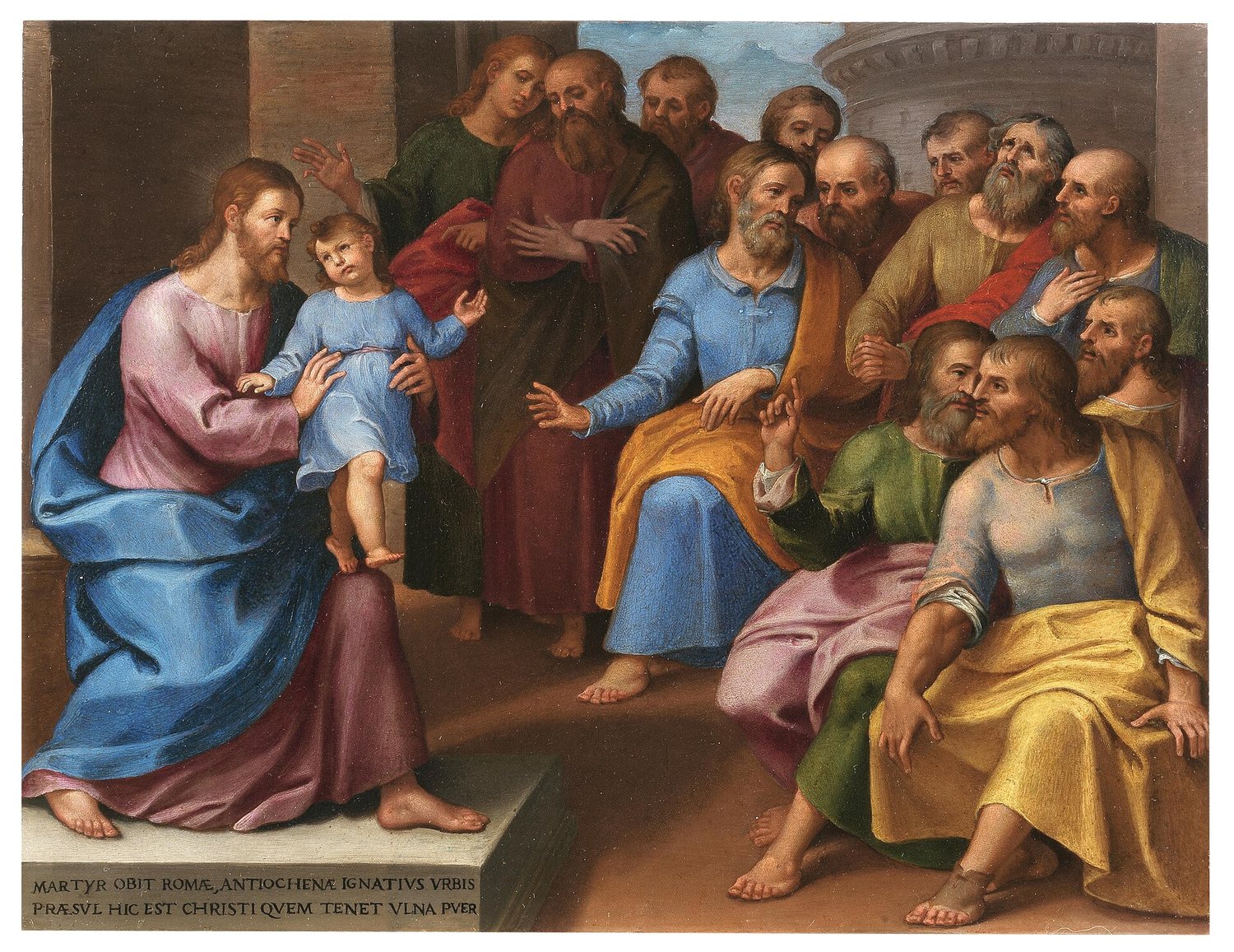
Letter to the Smyrnaeans, chapter 8; Lightfoot (1889); QuoteFancyHe was the child Jesus took in His arms and set among the disciples.
What the sources sayA late legend, built on his second name, Theophorus, read as God-borne. It first appears at the end of the 800s, in Anastasius the Librarian, says the scholar Lightfoot. Chrysostom, preaching in Antioch, said the opposite: Ignatius was one “who had not even seen Him, nor enjoyed His companionship”. Orthodox accounts of his life still tell it, as tradition.
Lightfoot, The Apostolic Fathers, Part 2, volume 1 (1889); John Chrysostom, Homily on Saint Ignatius, chapter 4; OCA, 20 December“My dear Jesus, my Savior, is so deeply written in my heart, that I feel confident, that if my heart were to be cut open and chopped to pieces, the name of Jesus would be found written on every piece.”
What the sources sayNot in his letters. It comes from a medieval legend that his heart, cut open, showed the name of Jesus in gold letters. The scholar Lightfoot found it in Vincent of Beauvais, in the 1200s, and said it “seems never to have gained any wide currency”. Quote sites give him the line anyway, and Orthodox accounts of his life tell the story as tradition.
QuoteFancy; Lightfoot (1889); OCA, 20 DecemberHe stood before the emperor Trajan at Antioch and called himself “He who has Christ within his breast”.
What the sources sayThat scene comes from the Martyrdom of Ignatius, which claims to be by his friends. The scholar Lightfoot dated it to the 400s or 500s. He wrote that “the Martyrologies of Ignatius cannot be accepted as authentic history.” Its own translators noted that “no reference to this narrative is to be traced during the first six centuries”.
Martyrdom of Ignatius, chapter 2; Lightfoot (1889); Ante-Nicene Fathers, volume 1, introductory note to the MartyrdomHe was a disciple of the apostle John, with Polycarp.
What the sources sayPossible, but it comes late. The Martyrdom of Ignatius says so, and so do Orthodox and Coptic accounts of his life. The earliest writers say only that he was the second bishop of Antioch. The scholar Lightfoot traced the link to John to later forms of Eusebius's Chronicle. He thought it could be true, but worthless as evidence.
Martyrdom of Ignatius, chapter 3; Lightfoot (1889); OCA, 20 December; Coptic synaxarium, 24 KiahkHe brought antiphonal singing into the Church, after a vision of angels.
What the sources sayThe story is first told by the historian Socrates, about 440: Ignatius “saw a vision of angels hymning in alternate chants the Holy Trinity”. The scholar Lightfoot answered that “Antiphonal singing did not need to be suggested by a heavenly Vision.” The Greek chorus and the Jewish psalms had it already.
Socrates, Church History, Book 6, chapter 8; Lightfoot, quoted in Nicene and Post-Nicene Fathers, second series, volume 3He died on 20 December 107.
What the sources sayBoth come from later sources. The 107 is from Eusebius's Chronicle. The 20 December is from the later Martyrdom of Ignatius. The scholar Lightfoot wrote: “His martyrdom may with a high degree of probability be placed within a few years of A.D. 110, before or after.” He thought 20 December was the day his relics came to rest in Antioch's old Temple of Fortune.
McGiffert, note on Eusebius, Church History, Book 3, chapter 36; Martyrdom of Ignatius, chapter 7; Lightfoot (1889)“Let no man's place, or dignity, or riches, puff him up; and let no man's low condition or poverty abase him.”
What the sources sayFrom the padded long version of his letter to the Smyrnaeans, not the real one. The real letter says less: “Let not [high] place puff any one up: for that which is worth all is faith and love, to which nothing is to be preferred.”
Letter to the Smyrnaeans, chapter 6, in both versions; QuoteFancy“If any one says that the Lord is a mere man, he is a Jew, a murderer of Christ.”
What the sources sayNot from his seven real letters. It comes from a letter to Hero, a deacon of Antioch, forged in his name centuries later. Another forged letter, to the Philippians, gives the rule that anyone who fasts on the Lord's Day or the Sabbath “is a murderer of Christ”. His real words on the Jewish law are under Hard questions.
The spurious Letter to Hero, chapter 2, and Letter to the Philippians, chapter 13, Ante-Nicene Fathers, volume 1hard questions
Three things in his letters divide or trouble readers. Here they are, in the words of those who defend him and those who question him.
“Do nothing without the bishop”
No early writer presses the bishop's place harder. “See that ye all follow the bishop, even as Jesus Christ does the Father, and the presbytery as ye would the apostles”. Catholic and Orthodox readers see here the Church's order from the start. The Catholic Encyclopedia found in him “the threefold character of the hierarchy” and even “the primacy of the See of Rome”. Lutherans of the Missouri Synod honour his stress on “the unity of the Church found in her bishops”. Protestant critics read him otherwise. Philip Schaff called him “the earliest advocate of the hierarchical principle in both its good and its evil points”. The American editor of the Ante-Nicene Fathers, A. Cleveland Coxe, found his letter to Rome “utterly inconsistent” with a bishop of Rome set over Ignatius.
“Wherever the bishop shall appear, there let the multitude [of the people] also be; even as, wherever Jesus Christ is, there is the Catholic Church.”Letter to the Smyrnaeans, chapter 8; Catholic Encyclopedia (1910); Lutheran Church–Missouri Synod, Commemorations; Schaff, quoted by McGiffert (1890); Ante-Nicene Fathers, volume 1, introductory note
“It is absurd to profess Christ Jesus, and to Judaize”
He wrote hard words about keeping the Jewish law. “For if we still live according to the Jewish law, we acknowledge that we have not received grace.” He praised those who lived “no longer observing the Sabbath, but living in the observance of the Lord's Day”. Some who pressed the Jewish law on others were not Jews at all, as he says: “it is better to hearken to Christian doctrine from a man who has been circumcised, than to Judaism from one uncircumcised.” And he honoured the prophets: “let us also love the prophets”. The Catholic Encyclopedia counts “the Judaizing heresies” among the errors he condemned. The scholar Maia Kotrosits reads his words for Christianity and Judaism as linked, not as two rival religions. She warns that “These complex factors surrounding Ignatius' language later get erased”, as his words came to be read as Christianity replacing Judaism.
“It is absurd to profess Christ Jesus, and to Judaize. For Christianity did not embrace Judaism, but Judaism Christianity, that so every tongue which believeth might be gathered together to God.”Letter to the Magnesians, chapters 8 to 10; Letter to the Philadelphians, chapters 5 and 6; Catholic Encyclopedia (1910); Maia Kotrosits, in Philip A. Harland's Ethnic Relations and Migration in the Ancient World
Did he want to die?
His letter to Rome can shock. He will coax the beasts, and force them if they hang back. Critics call it a craving for death. The historian Philip Schaff wrote that Ignatius's temper “carries him beyond the bounds of sobriety”. His defenders answer that the sentence was already passed. The American editor of the Ante-Nicene Fathers wrote that “he was already condemned, in law a dead man, and felt himself at liberty to glory in his tribulations.” The Anglican bishop J. B. Lightfoot went further: “It is a cheap wisdom which at the study table or over the pulpit desk declaims against the extravagance of the feelings and language of Ignatius, as the vision of martyrdom rose up before him.”
“Let fire and the cross; let the crowds of wild beasts; let tearings, breakings, and dislocations of bones; let cutting off of members; let shatterings of the whole body; and let all the dreadful torments of the devil come upon me: only let me attain to Jesus Christ.”Letter to the Romans, chapter 5; Schaff, quoted by McGiffert (1890); Ante-Nicene Fathers, volume 1, introductory note; Lightfoot (1889)
friends, family and rivals
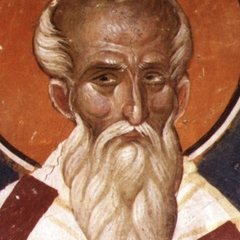 Polycarp of Smyrna
 His host at Smyrna. Ignatius wrote him the only one of the seven letters addressed to a single person. Polycarp gathered the letters and sent them to Philippi.
Letter to Polycarp; Polycarp, Letter to the Philippians, chapter 13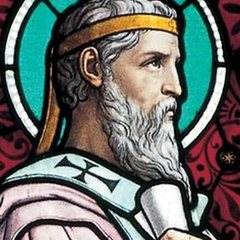 Irenaeus of Lyons
 Polycarp's pupil. About 180 he quoted the line about the wheat of God, the first writer known to quote Ignatius.
Irenaeus, Against Heresies, Book 5, chapter 28; Lightfoot (1889)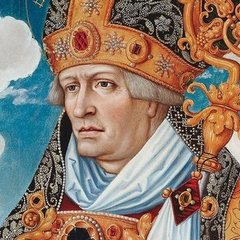 John Chrysostom
 As a priest of Antioch in the late 300s, he preached on Ignatius's feast, at the martyr's chapel outside the city.
John Chrysostom, Homily on Saint Ignatius; Lightfoot (1889)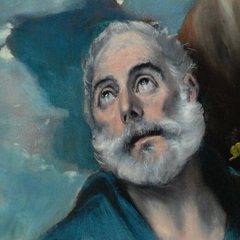 Peter
Peter Antioch counted him its first leader. Chrysostom said Ignatius took the office after him. Theodoret, a bishop and historian of the 400s, said Peter ordained him. Ignatius wrote to Rome, “I do not, as Peter and Paul, issue commandments unto you.”
John Chrysostom, Homily on Saint Ignatius; Theodoret, Letter 151; Letter to the Romans, chapter 4 Paul
Paul Like Paul, Ignatius went to Rome in chains. He called Paul the martyr “at whose feet may I be found, when I shall attain to God”.
Letter to the Ephesians, chapter 12Bishop of Ephesus. He came to Smyrna to meet Ignatius, who called him “a man of inexpressible love”.
Letter to the Ephesians, chapter 1A deacon of Ephesus. He stayed with Ignatius as far as Troas, and wrote at least two of his letters down for him.
Letter to the Philadelphians, chapter 11; Letter to the Smyrnaeans, chapter 12; Lightfoot (1889)The young bishop of Magnesia. Ignatius told his church not to look down on him for his youth.
Letter to the Magnesians, chapters 2 and 3Bishop of Tralles, who came to Smyrna to see Ignatius. In Polybius, Ignatius wrote, “I beheld your whole multitude”.
Letter to the Trallians, chapter 1Two deacons, from Cilicia and from Syria, who followed him on the road as far as Troas and served him there.
Letter to the Philadelphians, chapter 11; Letter to the Smyrnaeans, chapter 10A Christian woman of Smyrna he greeted in two letters. Half a century later, says the scholar Lightfoot, her brother Nicetes and her nephew Herod helped put Polycarp to death.
Letter to the Smyrnaeans, chapter 13; Letter to Polycarp, chapter 8; Lightfoot (1889)Named by Polycarp beside “the blessed Ignatius”, perhaps prisoners on the same road. Nothing more is known of them.
Polycarp, Letter to the Philippians, chapter 9; McGiffert, note on Eusebius, Church History, Book 3, chapter 36The bishops of Antioch before and after him, as Eusebius names them. Nothing else is known of either.
Eusebius, Church History, Book 3, chapters 22 and 36how he died
He was thrown to the wild beasts at Rome, under the emperor Trajan, most likely within a few years of 110.
No one who saw his death wrote it down, as far as we know. Polycarp, writing soon after, asked the Philippians for news. Eusebius, about 300, had only this: “Report says that he was sent from Syria to Rome, and became food for wild beasts on account of his testimony to Christ.”
Chrysostom, preaching at Antioch in the late 300s, pictured his death in the arena, “while the whole city was seated above him”. He told of the cities on the road carrying the martyr's remains home, “bearing him upon their shoulders as far as this city”.
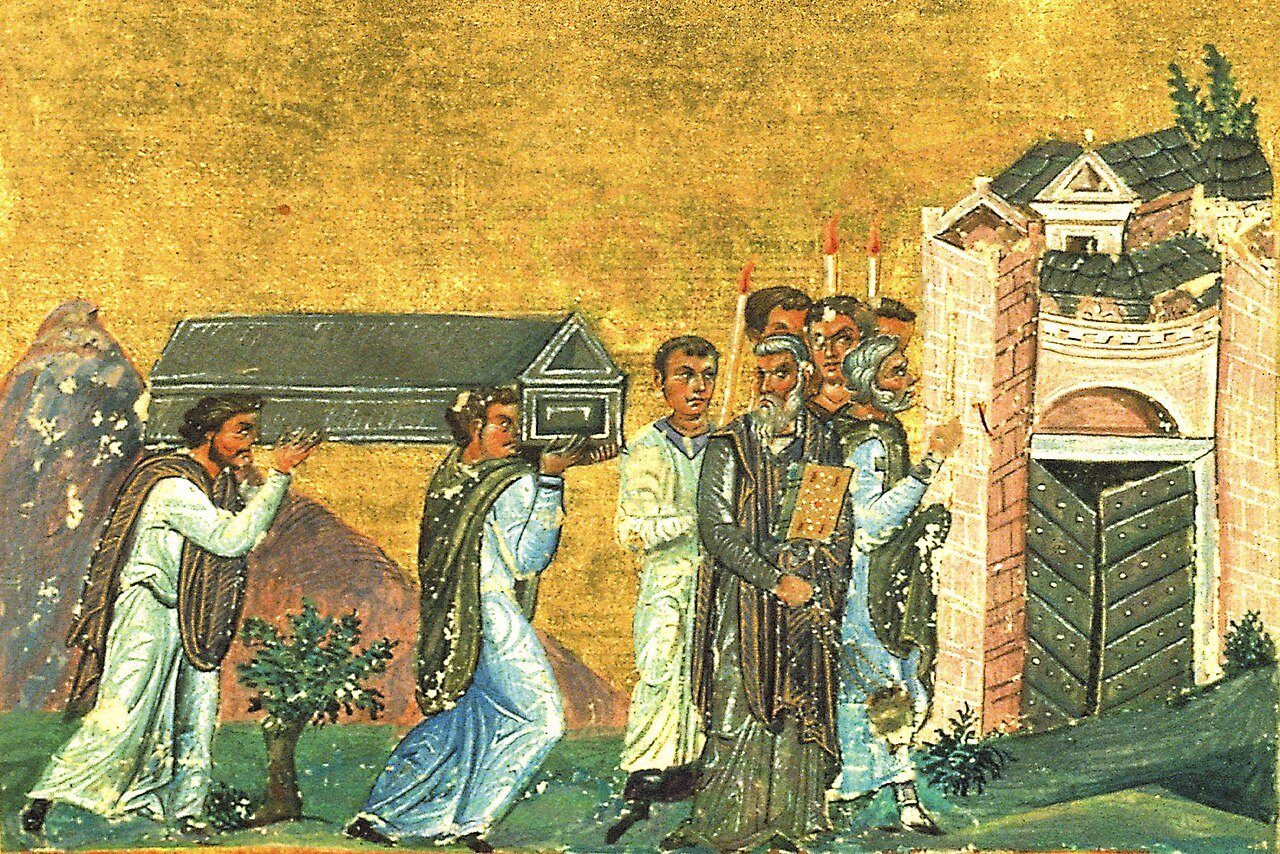
By the late 300s his grave was shown outside Antioch, by the gate to Daphne. Jerome writes that “the remains of his body lie in Antioch outside the Daphnitic gate in the cemetery”. The Anglican scholar J. B. Lightfoot doubted they had ever left Rome. In the 400s the emperor Theodosius II had the relics carried into the city, to the old Temple of Fortune, which became the Church of Ignatius. Rome's martyrology says they were later brought back to Rome, to the church of St Clement.
His wish for his body
Rather entice the wild beasts, that they may become my tomb, and may leave nothing of my body; so that when I have fallen asleep [in death], I may be no trouble to any one.
His farewell to the world
It is good to set from the world unto God, that I may rise again to Him.
is he a saint?
Yes. Catholics, Orthodox, Copts and Anglicans count him a saint, and Lutherans remember him too.
- CatholicSaintA memorial on 17 October
- OrthodoxSaintA hieromartyr (a martyred bishop), 20 December
- CopticSaint24 Kiahk, which is 2 January
- AnglicanSaintA Lesser Festival in the Church of England
- LutheranRememberedMissouri Synod and ELCA, 17 October
He was honoured early. By the late 300s Antioch kept his day, 17 October, and showed his grave outside the city. Chrysostom preached there on his feast.
When Rome cut back its calendar in 1969, it weighed the old martyrs honoured at Rome. Of most, little more than a name is known. Only four stayed as memorials that every church must keep: Agnes, Justin, Cornelius with Cyprian, and Ignatius. Rome also moved him from 1 February to 17 October, the day of the old Syrian calendar.
The later Martyrdom of Ignatius ends by asking its readers to keep his day:
…assembling ourselves together according to the time of his martyrdom, we may have fellowship with the champion and noble martyr of Christ, who trod under foot the devil, and perfected the course which, out of love to Christ, he had desired, in Christ Jesus our Lord.
from his letter to rome
In the middle of his letter to Rome, he tells the Romans what he wants, and why.
All the pleasures of the world, and all the kingdoms of this earth, shall profit me nothing. It is better for me to die in behalf of Jesus Christ, than to reign over all the ends of the earth. “For what shall a man be profited, if he gain the whole world, but lose his own soul?” Him I seek, Who died for us: Him I desire, Who rose again for our sake. This is the gain which is laid up for me. Pardon me, brethren: do not hinder me from living, do not wish to keep me in a state of death; and while I desire to belong to God, do not ye give me over to the world. Suffer me to obtain pure light: when I have gone thither, I shall indeed be a man of God. Permit me to be an imitator of the passion of my God. If any one has Him within himself, let him consider what I desire, and let him have sympathy with me, as knowing how I am straitened.
what to read first
The Letter to the Romans
Ignatius
The one to read first: ten short chapters, written in chains. In the shorter text, translated by the scholar J. B. Lightfoot.
Read it freeThe Letter to Polycarp
Ignatius
Advice from one bishop to another, short and practical. Eight chapters.
Read it freeThe Letter to the Smyrnaeans
Ignatius
On Christ's real body, the Eucharist and the bishop, with the first use of the words “the Catholic Church”.
Read it freeHomily on Saint Ignatius
John Chrysostom
Preached in Antioch on his feast, nearly three centuries after him. A sermon of five short parts.
Read it freetake the quizzes
 Quiz Which early Christian thinks like you? And which would argue with you? Start
  Quiz Christian Personality Test Which of eight types are you? Find your own. Start
 sources
His life, and his words
- The Epistles of Ignatius, shorter and longer versions. Tr. Alexander Roberts and James Donaldson. Ante-Nicene Fathers, volume 1, 1885. This page quotes the shorter version only.
- Introductory note to the Epistles of Ignatius, by A. Cleveland Coxe and the translators. Same edition.
- The Martyrdom of Ignatius, with its introductory note. Same edition.
- The spurious Epistles of Ignatius. Same edition.
- Polycarp, Letter to the Philippians. Same edition.
- Irenaeus, Against Heresies, Book 5, chapter 28. Same edition.
- Eusebius, Church History, Book 3, chapters 22 and 36. Tr. Arthur McGiffert, 1890, with his notes.
- Jerome, Lives of Illustrious Men, chapter 16. Tr. Ernest Richardson, 1892.
- Theodoret, Letter 151. Tr. Blomfield Jackson, 1892, as revised for New Advent.
- John Chrysostom, Homily on Saint Ignatius. Tr. W. R. W. Stephens, 1889, with his introduction.
- Socrates, Church History, Book 6, chapter 8. Tr. A. C. Zenos, 1890.
- J. B. Lightfoot, The Apostolic Fathers, Part 2, volume 1, 1889. His life of Ignatius, the Theophorus legends, the relics, and his defence of the seven letters.
- J. B. Lightfoot and J. R. Harmer, The Apostolic Fathers, 1891. Lightfoot's translation of the seven letters.
Reference
- Catholic Encyclopedia, 1910, “St. Ignatius of Antioch”
- William R. Schoedel, on the recensions of Ignatius, from the Anchor Bible Dictionary, 1992, as given by Early Christian Writings
- Timothy D. Barnes, “The Date of Ignatius”, The Expository Times 120, 2008 (the publisher's abstract)
- Jonathon Lookadoo, “The Date and Authenticity of the Ignatian Letters”, Currents in Biblical Research, 2020 (the publisher's abstract): a survey of the debate since 1997
- Maia Kotrosits, comments in Philip A. Harland, “Judeans: Ignatius on Judaizing and Christianizing”, Ethnic Relations and Migration in the Ancient World
- John Calvin, Institutes of the Christian Religion, Book 1, chapter 13. Tr. Henry Beveridge, 1845.
- Galleria Borghese, catalogue entry for Lotto's painting (Italian)
- Merriam-Webster, “Ignatius” and “Antioch”, for how to say them
- QuoteFancy, for the lines wrongly given to him
Calendars
- USCCB, Liturgical Calendar 2026, 17 October
- Calendarium Romanum, 1969, on the move from 1 February and the martyrs it kept
- The Roman Martyrology, 1916 edition, 1 February and 17 December
- OCA, Hieromartyr Ignatius the God-Bearer, Bishop of Antioch, 20 December
- OCA, Translation of the relics, 29 January
- CopticChurch.net, the Coptic synaxarium, 24 Kiahk
- CopticChurch.net, the Coptic synaxarium, 7 Epip
- Church of England, Common Worship calendar
- The Episcopal Church, Lesser Feasts and Fasts 2022
- The Lutheran Church–Missouri Synod, Commemorations
- Evangelical Lutheran Worship, ELCA, the church year (final draft, 2006)
Pictures
- Lotto, Madonna and Child with Saints Ignatius of Antioch and Onuphrius (detail), 1508. Galleria Borghese, Rome. Public domain.
- Fethiye Camii, parekklesion, Vault, St. Ignatius, detail of head. Byzantine Institute, 1949 to 1963. Dumbarton Oaks, CC0.
- Jesus stellt den Jüngern den hl. Ignatius vor, Roman school, around 1600. Dorotheum. Public domain.
- Ignatius of Antioch (Menologion of Basil II), Constantinople, about 985. Vatican Library. Public domain.