Humility is the one virtue you cannot check on directly. The moment you notice you have it, something has gone wrong. That makes advice awkward. Scripture’s way round it is to command actions rather than feelings. “Humble yourselves before the Lord, and He will exalt you” (James 4:10). Peter tells his readers to “clothe yourselves with humility toward one another” (1 Peter 5:5), and clothing is something you put on in the morning whether or not you are in the mood.
What it is not
Humility is not a low opinion of yourself. Paul’s instruction in Romans 12:3 is “Do not think of yourself more highly than you ought, but think of yourself with sober judgment.” The standard is sober, not low. The next verses say that people have different gifts and should use them (Romans 12:4–6). Someone who denies a real ability is no nearer to sober judgment than someone who inflates it.
Paul also warns the Colossians twice about “false humility” (Colossians 2:18, 23), and says the person who delights in it is “puffed up.” Running yourself down is still talking about yourself.
The comparison is the problem
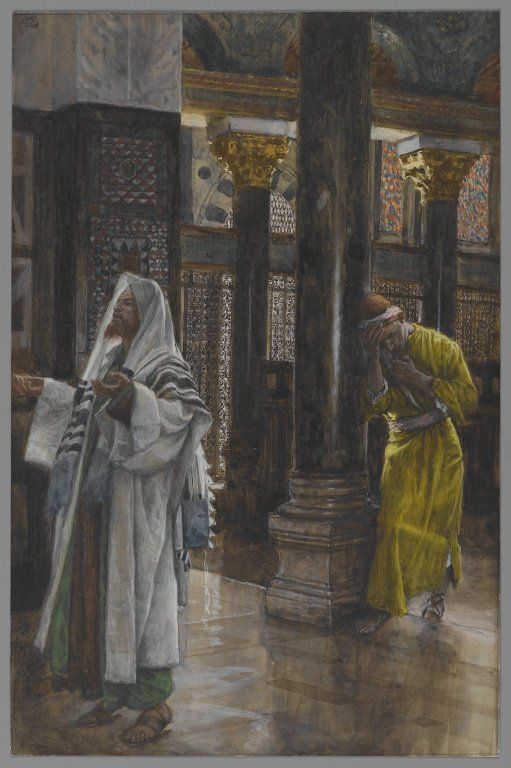
Jesus told the parable of the Pharisee and the tax collector, Luke says, to people who “trusted in their own righteousness and viewed others with contempt” (Luke 18:9). The Pharisee thanks God, and nothing suggests his list is false. What is wrong is the measuring: “I am not like other men” (Luke 18:11). The tax collector measures himself against nobody. He says, “God, have mercy on me, a sinner!” (Luke 18:13), and he is the one who goes home justified.
Paul asks the Corinthians, who were taking pride in one teacher over another: “What do you have that you did not receive?” (1 Corinthians 4:7). If it was received, the ranking has no basis.
Humility is not winning the comparison in reverse. It is putting the ruler down.
Four practices
Take the lower seat. Jesus watched dinner guests pick the best places and told them a parable about a wedding banquet: “go and sit in the last place” (Luke 14:10). On a Tuesday the best place is the credit in the meeting, the better parking space, the last word. Let someone else have it. Paul puts the principle as “in humility consider others more important than yourselves” (Philippians 2:3), and rests it on Christ, Who “humbled Himself and became obedient to death” (Philippians 2:8).
Do the job beneath your position. When Jesus washes the disciples’ feet He does not pretend to have no rank. “You call Me Teacher and Lord, and rightly so, because I am” (John 13:13). Then: “I have set you an example so that you should do as I have done for you” (John 13:15). Humility is not denying your standing; it is what you do with it. Find the task nobody at your level does, and do it unannounced.
Leave some good unreported. Jesus tells those who give to the needy to give “in secret” (Matthew 6:4), and Proverbs 27:2 says, “Let another praise you, and not your own mouth.” Once a week, do something useful that can never be traced to you. The itch to mention it afterwards is a fair measure.
Say your faults aloud to someone. James 5:16 says to “confess your sins to each other and pray for each other.” Traditions practise this differently. Catholic and Orthodox Christians confess to a priest in the sacrament of confession. Most Protestants confess to God directly and, where it helps, to a trusted believer or pastor; some Lutheran and Anglican churches also keep private confession with a minister. Whichever is yours, use it. A fault spoken to another person is harder to keep flattering than one kept in your head.
What to expect
Do not expect to feel humble, and be suspicious if you do. What changes is duller and better: being overlooked stings less, and you spend less of the day managing how you come across.
Peter sets two commands side by side: “Humble yourselves, therefore, under God’s mighty hand, so that in due time He may exalt you. Cast all your anxiety on Him, because He cares for you” (1 Peter 5:6–7). Much anxiety is the labour of holding up a position, and someone who has stopped defending one has less to carry. Note “in due time.” In the parable it is the host who moves the guest up, and here it is God. The timing is not yours.
Where this connects
Pride comes first in the traditional list of seven capital vices. The seven deadly sins quiz shows which of them has the most pull on you. The article on being Christ-like spends longer on Philippians 2:5–8, where every verb moves downward.