
Philip Neri
A priest of Rome who went out with half his beard shaved off, skipping and dancing, so that people would take him for a fool instead of a saint.
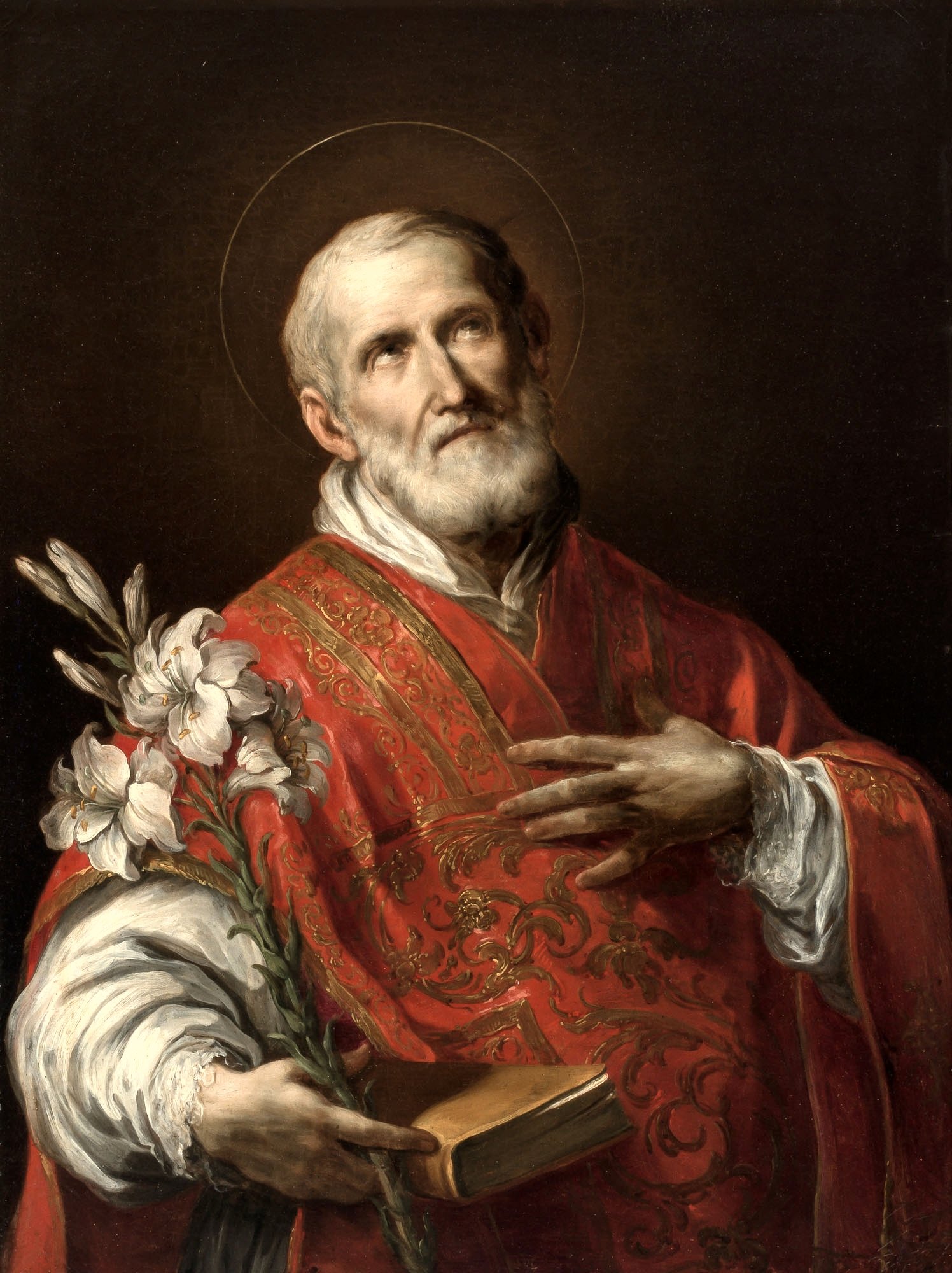
Picture: Saint Philip Neri, Sebastiano Conca, 18th century. Private collection.
Who was Philip?
Philip Neri (1515 to 1595) was a priest from Florence who founded the Oratory, a community of priests in Rome who live together without vows. It took its name from the prayer hall (an oratory) where his followers met to talk, pray and sing. Handel’s Messiah is an oratorio, a kind of sacred music most likely named after that hall.
at a glance
His path, in order
- Cousin’s heirWalked away from a fortune of 22,000 crowns to serve God
- Layman in RomeA tutor who talked of God in the shops
- PriestOrdained in 1551 because his confessor insisted
- Would-be missionaryHoped to die a martyr in the Indies, but was told to stay in Rome
- FounderFounded the Oratory and built its church on gifts
- Friend of popesRefused a cardinal’s cap from two of them
in numbers
- years in Rome62
- He came in 1533 and never again went beyond its gates except to reach the great churches outside its walls
- confessions before dawn40
- heard in his own room on most mornings
- He left the key under his door so people could let themselves in
- men on his walk round Rome’s seven churches2,000
- At first only 25 or 30 went with him
- It soon grew as all kinds of people joined
- The Dominicans sometimes sent all their novices
did you know?
-
A courtier’s big dog kept running away to Philip until its owner gave up. For 14 years Philip had his followers, men of rank among them, carry it in their arms through the streets of Rome, to keep them humble.
Bacci, Life of St Philip Neri, Book II, chapter 19 -
Before Mass he had a light or amusing book read to him, so that he could get through the Mass without falling into a trance of prayer.
Bacci, Life of St Philip Neri, Book II, chapter 1 -
He told a young widow troubled by temptation to say to the devil, “I will accuse you to that dull ass of a Philip.” She did, and the temptation left her.
Bacci, Life of St Philip Neri, Book II, chapter 13
- Born
- In Florence on 21 July 1515
- Died
- In Rome on 26 May 1595, two months short of turning 80 years old
- Buried
- Under the altar of his chapel in the Chiesa Nuova (New Church), Rome
- Also called
- Filippo Neri; Good Pippo as a boy; the Apostle of Rome
- Grew up
- In Florence, where the Dominican friars of San Marco taught him his faith
- Family
- His father Francesco was a lawyer. His mother Lucrezia died when he was small.
- Priest
- Ordained on 23 May 1551, after 18 years in Rome as a layman
- Founded
- The Congregation of the Oratory (1575), priests who live together without vows
- His Life
- By Pietro Giacomo Bacci of the Roman Oratory, published in 1622
- Wrote
- Almost nothing. Out of humility he had his papers burned a few days before he died. Only a few letters and poems survive.
- Made a saint
- By Pope Gregory XV, on 12 March 1622
- Feast day
- 26 May
- Looked like
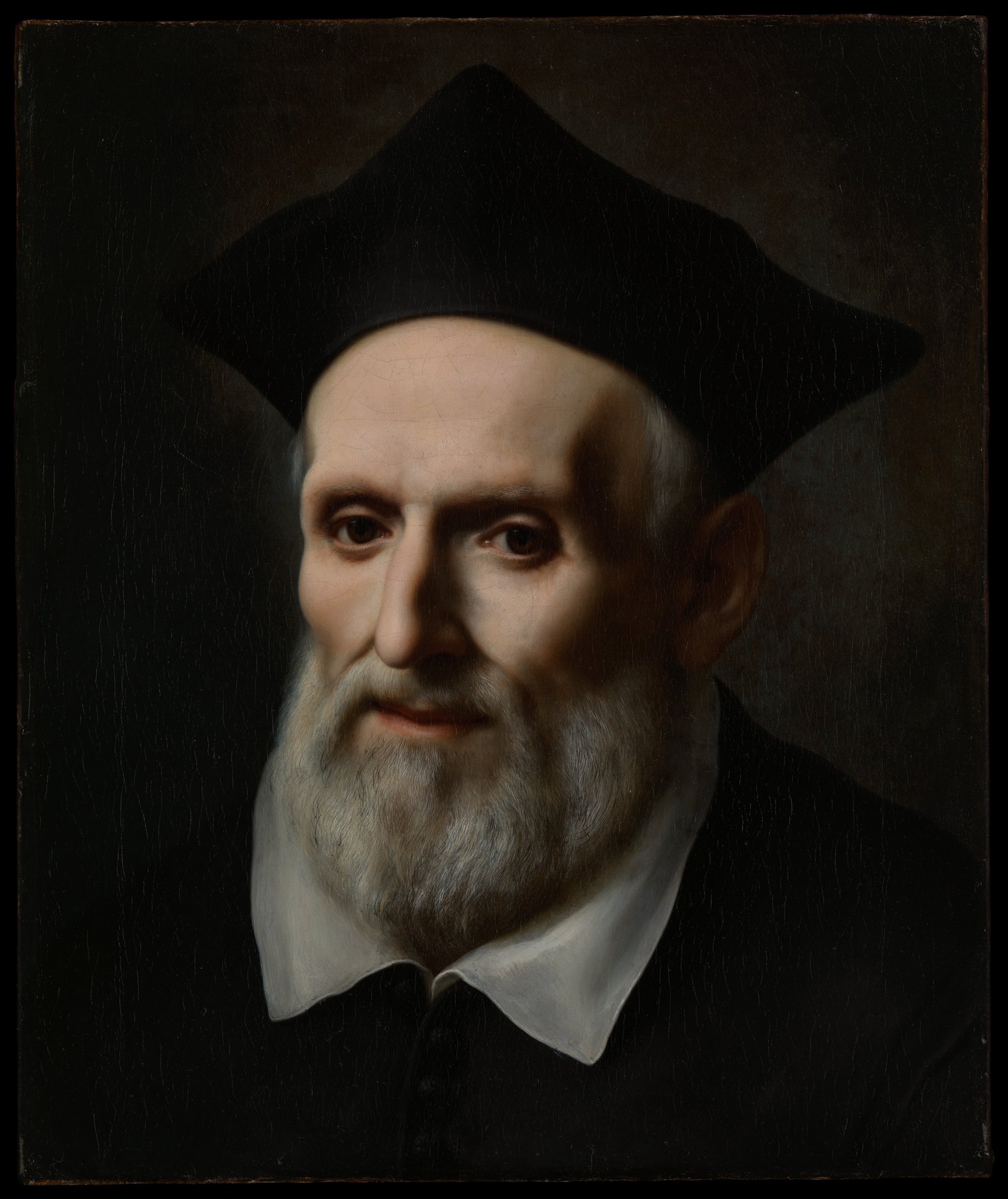
- Middle height and fair, with small, lively blue eyes and a hooked nose. His black beard turned white in his last years.
 The Spark
His personality type
Light-hearted, and at his best when there is something to do.
In Pope Gregory the Great's terms
- Cheerful
- Restless mind
Our reading, from the Christian Personality Test. Philip was cheerful, lively by nature and never gloomy. He was restless too, and hated idleness so much that no one ever found him with nothing to do. He kept the young men around him busy as well, sweeping, threading rosaries and plaiting garlands.
See The Sparkfeast days
West
- Mar16
In 1583 Philip called 14-year-old Paolo Massimo back from death to confess a forgotten sin. The Massimo family keeps the day in its palace chapel.
- May26
Catholic memorial, on the day he died in 1595. The Church of England remembers him on the same day.
No Orthodox calendar keeps his day.
what was he like?
+Cheerful, and wanted
others to be
He let the young men who came to him play ball and shout under his window, even when the other priests complained. A gentleman asked how he could stand the noise. “So long as they do not sin they may chop firewood upon my back,” Philip answered.
If he saw one of them looking glum, he would ask why, and sometimes give him a slap on the ear and say, “Be merry.”
Bacci, Life of St Philip Neri, Book II, chapter 7+Gentle with sinners
He thought harsh confessors drove people away, and he let small vanities be. Asked by a lady whether very high heels were a sin, he only said, “Take care you don’t fall.”
One man who confessed to him wore a huge frilled collar. Philip patted the man’s neck and said he would do it more often if the stiff collar did not scratch his hands. The lady gave up her heels and the man his collar.
Bacci, Life of St Philip Neri, Book II, chapter 6+Gave few orders
The priests of his Oratory took no vows, because Philip wanted them to serve God freely, held together by nothing but love for one another.
Archbishop Charles Borromeo of Milan once asked him how he was obeyed so readily. “Because I command little,” Philip answered. He seldom told anyone to do a thing, and would say instead, “I should like you to do this, but if it seems hard I will do it for you.”
Bacci, Life of St Philip Neri, Book I, chapter 19+Kept no hour for himself
His door stood open to anyone at any time, and even after he had gone to bed in the evening he saw everyone who came. Once his young disciple Antonio Gallonio turned a visitor away because the hour seemed too late, and Philip rebuked him sharply: “Have I not told you that I wish to have no time or hour for my own?”
Bacci, Life of St Philip Neri, Book II, chapter 6+Found clever ways to help
Two old French watchmakers with daughters to provide for could not sell their work, so Philip ordered a great many watches from them and talked rich men into buying them. A follower who saw him pressing watches on a nobleman was shocked, until he realised what Philip was doing.
When rain kept a poor chicory seller at the Oratory one evening, Philip bought some of his chicory and got others to buy the rest.
Bacci, Life of St Philip Neri, Book II, chapter 12+Wary of visions, even his own
Because false visions so often led people astray, he told his followers to push away any vision with all their might. He used to say that “there is less danger in rejecting true visions, than in putting faith in false ones.”
Once he was preaching against trust in visions when he felt a trance coming on. He fought it with all his strength, and the struggle left him unable to go on with his sermon. He struck his knee, cried, “He who wishes for ecstasies and visions, does not know what he desires,” and left the pulpit in tears.
Bacci, Life of St Philip Neri, Book III, chapter 2why he played the fool
Philip did all he could to be thought a man of no worth. He covered his good deeds with a joke or some childish trick. Even when he prayed over the sick he acted as if he were joking, so that if they got better the people watching thought little of it. At home he challenged his own priests to races and jumps, yet none of it ever lessened their reverence for him.
Half a beard
Priests then wore their beards long, so Philip sometimes had one side of his cut off and went out like that, “jumping and dancing as if he had gained some great triumph,” delighted to be called a silly old fool.
Another time he began to jump about in front of the crowd that filled the square of San Pietro in Vincoli on the church’s feast day, 1 August. Someone was heard to say, “Look at that old fool there,” which was exactly what Philip had hoped to hear.
Bacci, Life of St Philip Neri, Book II, chapter 18; Capecelatro, Life of Saint Philip Neri, volumes 1 and 2The lords from Poland
Pope Clement VIII once sent some great lords from Poland to meet Philip and see for themselves how holy he was. Before they came upstairs, Philip had Father Pietro Consolini start reading aloud from a joke book.
He asked the lords to wait until the story was finished, and kept saying, “You see what capital books I keep, and what important matters I have read to me!” He never said a word to them about God. The lords looked at one another and at last left, bewildered. Philip had the book put away and said, “We have done all that was wanted.”
Bacci, Life of St Philip Neri, Book II, chapter 18Worse than ever
The doctor Angelo da Bagnarea talked a Roman noble named Lorenzo Altieri into visiting Philip. Altieri came away and told Angelo he was shocked to find a priest so merry and outspoken. Angelo answered that Philip did it to hide his holiness, which made Altieri want to go back. Meanwhile Angelo told Philip about the visit and begged him to be more serious if the man came again.
Philip refused: “Do you want me to be on my good behaviour, and look grave, that they may say, ‘This is Father Philip,’ and then begin to spout fine words! Let me tell you, if he comes again, I shall behave worse than ever.” Altieri did come again. This time he saw the holiness under Philip’s strange ways, and instead of being shocked he began to learn from him.
Bacci, Life of St Philip Neri, Book II, chapter 18Two saints in the street
Philip met the Capuchin friar Felix of Cantalice in a busy street and told him he was thirsty. Felix held out the flask that hung round his neck, to see whether Philip was humble enough to drink from a begging friar’s flask in a public street. As Philip drank, a crowd gathered. Instead of laughing, the people said, “Here is one Saint giving drink to another.”
Then Philip tested Felix in turn. He put his own priest’s hat on the friar’s head and told him to walk off in it, to see whether Felix would let himself look ridiculous. Felix went some way down the street before Philip sent for the hat. Nobody could tell which of the two was the humbler.
Bacci, Life of St Philip Neri, Book II, chapter 18what others said of him
Ah! my father, though I am greater than you in dignity, you are greater than me in sanctity.
my Father Philip has countless times come to my house loaded with bread concealed under his cloak, and supplied my parents with wine and oil, and money, and help of every kind!
You may say or do what you like to Father Philip and insult him as you please, but you cannot put him out of temper.
It was his mission to save men, not from, but in, the world.
Philip Neri is held at once in high esteem and joyous remembrance.
his life in twelve moments
San Germano
About 1531 to 1533The fortune he walked away from
At about 16 Philip was sent to San Germano to learn trade from his father’s rich cousin Romolo. Romolo had made more than 22,000 crowns and meant to leave it all to Philip, his nearest kin. Praying in a little chapel in a mountain cleft near Gaeta, Philip came to feel that trade and riches would keep him from giving his life wholly to God.
Romolo reminded him of all his own kindness and begged him to stay. Philip answered that he would never forget the kindness but was “more pleased with his affection than with his advice.” In 1533 he set out for Rome with nothing, and without a word even to his father.
Bacci, Life of St Philip Neri, Book I, chapters 2 and 3Rome
From 1533A roll by the well
In Rome a Florentine named Galeotto Caccia saw how poor Philip was and gave him a tiny room and a yearly allowance of grain. In return Philip taught Caccia’s two little boys. He usually ate once a day, a roll and water by the courtyard well, sometimes with a few olives.
After a few years of philosophy and theology, he sold all his books and gave the money away. From then on he spent his nights praying in Rome’s great churches and the catacombs of San Sebastiano, carrying only a roll and one religious book. If he found a church locked, he read in its porch by moonlight, because he could not afford a candle.
Bacci, Life of St Philip Neri, Book I, chapters 3 to 5Rome’s shops and banks
From about 1538When shall we begin to do good?
Philip was still a layman when he began going round the squares, shops and even the banks of Rome in about 1538, talking with anyone about the things of God. To the young men working in the warehouses he would say, “Well! my brothers, when shall we begin to do good?”
He sent so many into religious orders that Ignatius of Loyola called him “The Bell”. A bell calls people into church but stays in the belfry itself, and Philip sent others into the orders while he stayed in the world. Ignatius tried several times to bring him into the Jesuits, the order he had founded, but Philip never joined.
Bacci, Life of St Philip Neri, Book I, chapter 7Rome
1548 to 1550Beds for the pilgrims
In 1548 Philip and his confessor Persiano Rosa gathered about 15 poor but fervent men into a brotherhood that met to pray and talk about God. In the holy year of 1550 crowds of poor pilgrims came to Rome with nowhere to stay, so the brothers rented a small house for them and then a bigger one. They fed the pilgrims, made their beds and washed their feet.
Later they also took in the sick as they left the hospitals, because so many fell ill again while they were still weak. The house took in 270,000 pilgrims in the holy year of 1600, five years after Philip’s death.
Bacci, Life of St Philip Neri, Book I, chapter 8San Girolamo della Carità
1551 to 1558A priest at his confessor’s word
Philip wanted to serve God as a layman, but Persiano Rosa pressed him to become a priest so that he could hear confessions, and in 1551 he gave way. He went to live at the church of San Girolamo della Carità with a few priests whose only rule was their love for one another.
Every afternoon the people who confessed to him crowded into his small room to talk about a virtue or a saint’s life. So many came that in 1558 he fitted up a prayer hall (an oratory) over one side of the church, and his Congregation of the Oratory later took its name from it.
Bacci, Life of St Philip Neri, Book I, chapters 9, 10 and 14Three Fountains
1557His Indies were to be in Rome
His followers sometimes read aloud letters from the Jesuit missionaries in the Indies (India and the lands beyond it). In 1557 Philip decided to go there himself, ready to shed his blood for Christ. About 20 of his followers meant to go with him.
He prayed over it for a long while, then took advice. A Benedictine monk sent him to Agostino Ghettini, prior of the Cistercian monks at the Three Fountains and known for foretelling the future. After some days Ghettini told him that John the Evangelist had appeared with a message: “his Indies were to be in Rome”. Philip believed him and stayed in Rome for the rest of his life.
Bacci, Life of St Philip Neri, Book I, chapter 12Rome’s seven great churches
Every CarnivalThe walk of the Seven Churches
To keep young men away from the sins of Carnival, Philip led them on foot round the seven great churches of Rome, a walk of about 12 miles. They set off from St Peter’s early in the morning and sang psalms and hymns with musicians on the way, and at most of the churches someone preached a short sermon.
At midday they sat on the grass in a garden, where each was given bread and wine, an egg, a little cheese and some fruit while the musicians played. Many who first came only out of curiosity began going to confession and Communion and took Philip as their guide.
Bacci, Life of St Philip Neri, Book I, chapters 5 and 14San Girolamo, Rome
1558 to 1588Baronius and the history of the Church
In 1558 Philip had the young law student Cesare Baronius give talks in the new prayer hall at San Girolamo. Baronius preached on death and hell until Philip told him to tell the history of the Church instead, year by year. Philip wanted an answer to the Magdeburg Centuries, a Lutheran history meant to show how far Rome had strayed from the early Church.
Baronius dreaded the task until he dreamed he was begging the historian Onofrio Panvinio to write the history in his place, since Panvinio had already begun one. Then he heard Philip’s voice: “it is you, and not Onofrio, who has to write the history of the Church.” Over 30 years Baronius told the whole history in his talks seven times, and in 1588 its first volume came out as a book, the Annals, which gave Philip the credit.
Bacci, Life of St Philip Neri, Book I, chapter 13; Catholic Encyclopedia (1907), on BaroniusRome
1559Called before the Pope’s deputy
By 1559 the crowds on his Seven Churches walk had Rome talking. Some called it pride, and others claimed he was gathering a following that might riot. The Pope’s deputy for Rome summoned him, accused him of seeking to lead a faction, and banned him for a fortnight from hearing confessions or going about with his followers.
Philip turned to a crucifix: “Lord, Thou knowest if what I do is to make myself head of a party, or for Thy service.” Then he obeyed. Pope Paul IV looked into the matter and sent Philip two gilded candles from his Candlemas service as a sign of goodwill, with leave to go on as before.
Bacci, Life of St Philip Neri, Book I, chapter 16Santa Maria in Vallicella
1575 to 1577Draw it farther
Pope Gregory XIII advised Philip to take over Santa Maria in Vallicella, a small, run-down church. He founded the Congregation of the Oratory there in 1575 as a community of priests. Though there was no money, he ordered the old church pulled down and a big new one built.
When the architect marked out its length, Philip told him to draw the line farther, then farther still, and a third time, until he cried, “Stop there, and dig.” The diggers struck an old wall nobody had known of, longer than the whole new church, and one side wall was built on it. Philip never asked anyone for money, yet gifts kept coming, and in 1577 the church that Rome still calls the New Church opened.
Bacci, Life of St Philip Neri, Book I, chapter 17Rome
22 November 1583Fry us some good pancakes
For eight years Philip would not leave his rooms at San Girolamo to live at the New Church, partly because he disliked being called the founder of the Oratory. At last his priests asked the Pope to order him to move, and on 22 November 1583 he obeyed.
On moving day he had his followers carry his few household goods through the streets in procession, frying pans and shovels included. As they passed the city prison, the prisoners jeered, and one shouted, “Father, fry us some good pancakes.” It gave Philip the bit of mockery he wanted for himself and his followers.
Bacci, Life of St Philip Neri, Book I, chapter 18Rome
1590 to 1595The cardinal’s cap he would not wear
Soon after Gregory XIV became Pope in 1590, Philip went to congratulate him. The Pope put the red cap he had worn as a cardinal on Philip’s head with the words “We create you Cardinal.” Philip laughed it off and left, though the Pope meant it. When the cap was sent after him, Philip sent his thanks and word that he would let the Pope know when he was ready to accept, and the Pope let him be.
Clement VIII offered it again and again. Three months before he died, Philip asked a brother of his house whether to take it. The brother told him to accept for the good of the Oratory, but Philip took off his own priest’s cap, looked up to heaven and cried, “Paradise! Paradise!” He died a plain priest.
Bacci, Life of St Philip Neri, Book II, chapter 16
his miracles and prophecies
These stories come from the life of Philip published in 1622 by Pietro Giacomo Bacci, a priest of his Oratory. Bacci took them from the witnesses questioned under oath when the Church looked into Philip’s holiness after his death. Philip himself could not bear to hear of them.
These people want me to work miracles, and I know nothing about working miracles.
50 years with a pounding heart
-
Rome
Before Pentecost, 1544A globe of fire
Philip was nearly 29 and still a layman, and he often spent the night praying in the catacombs of San Sebastiano. Every day he asked the Holy Spirit for His gifts. Tradition says he was praying there a little before Pentecost when he saw a globe of fire come into his mouth and settle in his chest.
He was seized by such a fire of love that he threw himself on the ground and bared his chest to cool it. When he got up, full of joy, his whole body was shaking, and he felt a swelling the size of a fist beside his heart, which never hurt him.
“there appeared to him a globe of fire, which entered into his mouth and lodged in his breast”
Bacci, Life of St Philip Neri, Book I, chapter 6; Capecelatro, Life of Saint Philip Neri, volume 1 -
Rome
1544 to 1595The heart that shook the room
After his vision of a globe of fire in 1544, his heart pounded whenever he prayed, said Mass or spoke of God, so hard that his chair, his bed and sometimes the whole room shook.
He felt such heat that windows were opened for him on the coldest winter nights. Walking through Rome in deep snow with his robe open, he laughed at his shivering young followers and told them it was a shame for young men to feel cold when old men did not.
He hid the fist-sized swelling over his heart with a handkerchief and called it an old illness. He told his closest friend, Cardinal Federico Borromeo, that the pounding brought lightness and joy and never pain.
“I am wounded with love”
Bacci, Life of St Philip Neri, Book I, chapter 6 -
The Chiesa Nuova, Rome
26 May 1595What the doctors found
On the evening after he died, doctors opened his body in front of many of his priests. They found two ribs over his heart broken and thrust outward, never knit together in the 50 years since a swelling first rose over his heart, in 1544.
His heart was unusually large, and the main artery leaving it about twice its usual size. The doctors who had treated him, several of whom wrote papers on it, judged that God had broken the ribs so that his pounding heart would have room and come to no harm.
“On opening the body they found that the swelling under his left breast was occasioned by two of his ribs which were broken”
Physicians and surgeons, with many priests of the Congregation
Bacci, Life of St Philip Neri, Book I, chapter 6, and Book IV, chapter 7
Paolo, Paolo!
Paolo Massimo was a Roman nobleman’s son whose confessions Philip had heard since the boy was small. In 1583 Paolo, 14 years old, lay ill with fever for 65 days. On 16 March he died while Philip was saying Mass, and the servants were getting water ready to wash the body when Philip arrived.
He prayed at the bed, sprinkled the boy’s face with holy water and called, “Paolo, Paolo!” The boy opened his eyes as if from a deep sleep and said he had forgotten a sin and wanted to confess it.
After his confession they talked for half an hour about his dead mother and sister. Then Philip asked whether he would die willingly, blessed him, and Paolo died in his arms.
“Yes, most willingly; especially that I may go and see my mother and sister in paradise.”Bacci, Life of St Philip Neri, Book III, chapter 12
Seen in the air
Many people said they saw him lifted from the ground as he prayed. Cardinal Paolo Sfondrato said he saw him raised almost to the ceiling, and some nuns saw him three or four handbreadths above the floor during Mass.
A woman who confessed to him saw him in the air and thought he must be possessed by a devil. At her next confession she could not bring herself to say it, until Philip told her, “Go on, you silly creature; you have been finding fault with me, have you not?”
When she got as far as his rising from the ground, he put a finger to his lips and said, “Hush, hush.” She finished anyway. Philip burst out laughing and made a joke of it, agreeing over and over that he was possessed.
“True, true, I am possessed.”Bacci, Life of St Philip Neri, Book III, chapter 1
The Pope’s gout
In 1595 Pope Clement VIII was laid up with gout in his hand, in such pain that he could not bear anyone to touch even his bed. Philip prayed for his cure, because he believed that when a man with great responsibilities falls ill, everyone suffers. Then he went to see the Pope.
The Pope told him to come no nearer, but Philip walked straight up with the words “Your Holiness need have no fear!” and took the Pope’s hand and pressed it, trembling as he often did when he prayed. The pain stopped. Clement told the story many times, once in front of about 10 cardinals.
“Now you may continue to touch me, for I feel great relief.”Bacci, Life of St Philip Neri, Book V, chapter 2
Two flasks of orange-flower water
His friend Marcello Vitelleschi sent Philip two flasks of orange-flower water. The servant carrying them broke one on the way. When he arrived with the one that was left, Philip smiled and teased him, asking him to own up to drinking half the present on the road. Astonished, the servant saw that Philip meant the missing flask and told him what had happened.
Back home, the servant asked his master whether he had told Philip there would be two flasks. Vitelleschi had told him nothing, which showed the servant that Philip had seen the accident from far away. Bacci set the story beside one that Gregory the Great tells of Benedict, who knew that a servant had hidden one of two flasks of wine on the way.
“Come now, tell me the truth; you have drunk half of it on the road, have you not?”Bacci, Life of St Philip Neri, Book III, chapter 7
A short reign foretold
While Alessandro de’ Medici was in Rome as the Grand Duke of Tuscany’s ambassador, around 1570, Philip told him he would be a cardinal and then Pope but would not reign for long. Alessandro became archbishop of Florence and laid the first stone of Philip’s New Church in 1575. He became a cardinal in time and was elected Pope Leo XI in 1605, 10 years after Philip’s death. His reign lasted only 26 days.
“Signor Alessandro, you will be Cardinal and Pope, but your reign will last only a short time.”Bacci, Life of St Philip Neri, Book III, chapter 6, and Book I, chapter 16
his words
He wrote almost nothing, so most of his words come down to us from the people who heard them.
To two friars
I have no hope of myself, but I trust in God.
Meeting two Dominican friars, he walked between them saying, “Let me pass, I am without hope.” When they stopped to comfort him, he smiled and told them this.
Bacci, Life of St Philip Neri, Book II, chapter 17The true servants of God take life patiently, and death eagerly.
If you wish to gain souls, you must leave purses alone.
Only give me ten truly detached men, and I do not despair of converting the world with them.
Lord! beware of me to-day, lest I should betray Thee, and do all the evil in the world.
Nay, say not so, but rather, God does great things in His Saints.
I am not St. Martin, nor did I ever think I was; and if I believed myself necessary to anybody, I should consider myself lost.
There is no one but would be willing to stand on Mount Thabor and see Christ transfigured; but to go up to Jerusalem, and accompany Christ to Mount Calvary, few are willing.
I love, and loving must love ceaselessly, / So whole a conquest in me love hath won; / My love to Thee, Thy love to me doth run, / In Thee I live, and Thou dost live in me.
myths and misquotes
He told a gossip to scatter feathers from a tower and gather them all back, to show that slander can never be undone.
What the sources sayNo early biographer tells this story. His own cure for gossip was different. He told his disciple Gallonio that whenever he heard someone speak ill of another, he should kneel before the speakers and say, “I accuse myself of speaking ill of such and such a person,” so the gossips would see their fault.
Bacci, Life of St Philip Neri, Book I, chapter 16He said that cheerfulness strengthens the heart and makes us persevere in a good life.
What the sources sayNot in these words, though the idea is his. Philip once pretended to scold a young friar and sent him off coldly, but the friar stayed cheerful. Philip called him back, embraced him and said, “My son, persevere in your cheerfulness, for this is the true way to advance in every virtue.”
Bacci, Life of St Philip Neri, Book II, chapter 7One of his sayings is “Interior christian joy is a gift of God, flowing from a good conscience, through contempt of all things of earth and contemplation of the things of heaven.”
What the sources sayThe words are by his friend Cardinal Agostino Valier, from a dialogue of 1591 called Philip, or Christian Cheerfulness. Valier set it at a meal where Philip is asked to sum up the talk, and put this answer into his mouth.
Capecelatro, Life of Saint Philip Neri, tr. T. A. Pope (1894), volume 2Sent to test a nun famed for wonders, he declared her no saint because she refused to pull off his muddy boot.
What the sources sayNo early life of Philip has it. Goethe tells it, writing in 1787. In Bacci’s life, Pope Gregory XIII sent Philip to judge Orsola Benincasa, a young sister from Naples who kept falling into trances. He tested her for months, even keeping her from Communion, then told the Pope that her trances came from God.
Goethe, Travels in Italy (1883); Bacci, Life of St Philip Neri, Book III, chapter 9The sacred music called the oratorio is named after his Oratory.
What the sources sayMost likely it is, because the oratorio grew out of the music at his afternoon gatherings for talks and prayer. Composers such as Palestrina set short Italian poems, mostly Philip’s own, to be sung between the talks.The first work of the new kind, Emilio de’ Cavalieri’s Anima e corpo (Soul and body), was performed in his New Church in 1600, though such works were called oratorios only about 60 years later.
Catholic Encyclopedia (1911), “Oratorio”friends, family and rivals
Philip thought so little of himself that he told two Jesuits their founder had taught him how to meditate, though he had been meditating for years before they met. After Ignatius died, Philip prayed at his tomb whenever he was in special need.
Bacci, Life of St Philip Neri, Book II, chapter 17, and Book III, chapter 2Charles gave the first 200 crowns for Philip’s new church, and often knelt to kiss Philip’s hand. Asked by Charles for some of his priests for Milan, Philip wrote back, “The ripe ones I cannot send you, for we are too much in want of them here.”
Bacci, Life of St Philip Neri, Book I, chapter 17; Book II, chapter 21; Book III, chapter 13Charles’s cousin Federico brought Philip Communion on 12 May 1595, when Philip seemed to be dying. Philip opened his eyes and greeted Christ in the Host: “Behold my Love, behold my Love.”
Bacci, Life of St Philip Neri, Book I, chapter 6, and Book IV, chapter 1; Capecelatro, Life of Saint Philip Neri, volume 2Philip had his priests take turns as cook, and Baronius took his weeks so cheerfully that he wrote over the kitchen chimney Caesar Baronius coquus perpetuus (Baronius, cook for life). He later took Philip’s place as head of the Congregation and became a cardinal.
Bacci, Life of St Philip Neri, Book I, chapter 15, and Book II, chapter 16; Catholic Encyclopedia (1907), on BaroniusTarugi was a charming courtier who came to confess to Philip during a holy year and gave up life at court to follow him. He later became an archbishop and a cardinal, yet boasted that he had been Philip’s pupil for 50 years.
Bacci, Life of St Philip Neri, Book I, chapter 11Gallonio joined the Oratory in 1577 and slept in the room below Philip’s, so he was the first to reach him on his last night. Five years after Philip’s death he wrote the first account of his life.
Bacci, Life of St Philip Neri, Book I, chapters 2 and 13; Book IV, chapter 3As his confessor, Philip told him he was not made for the Capuchin friars, nor they for him. Camillus twice put on their robe and twice left, proving Philip right, then founded the Ministers of the Sick to serve in the hospitals.
Bacci, Life of St Philip Neri, Book I, chapter 7, and Book III, chapter 9Before he became Pope, Ippolito Aldobrandini had Philip as his confessor. As Pope he wanted to keep him, but Philip pleaded his age and sent Baronius to hear his confessions instead. Asked after Philip’s death to allow an inquiry into his holiness, Clement said, “We hold him to be a Saint,” and ordered one.
Bacci, Life of St Philip Neri, Book III, chapter 13, and Book IV, chapter 10how he died
Philip died at about two in the morning of 26 May 1595, at the very hour he had foretold.
That spring a fit of coughing blood had almost killed him. He recovered, yet told a friend he had only a few days to live. Ten days before he died, he asked one of the brothers the date. Told it was the 15th, he said, “Fifteen and ten make twenty-five, and then I shall go.”
The 25th was the feast of Corpus Christi. He heard confessions from early morning as if he were well and sang the Gloria at Mass, which he seldom did. That evening his doctor said he had not seen him so well in 10 years.
At bedtime he asked the time. Italians then counted the hours from sunset, and he was told the third hour had struck, a little after 11 o’clock. As if to himself he said, “Three and two are five, three and three are six, and then I shall go.” The sixth hour fell at about two.
Near one o’clock Antonio Gallonio, who slept below, heard him walking about and found him on his bed, coughing blood. The priests knelt round him while Baronius said the prayers for the dying and begged a last blessing. Philip raised his hand a little, lifted his eyes to heaven and bowed his head towards them. Then he died, as gently as if he were falling asleep.
To Antonio Gallonio, who found him coughing blood
Antonio, I am going.
is he a saint?
He is a saint of the Catholic Church. Pope Gregory XV declared him a saint in St Peter’s on 12 March 1622, 27 years after his death, together with Ignatius of Loyola, Francis Xavier, Teresa of Avila and Isidore the Farmer.
- CatholicSaintMade a saint in 1622. Memorial on 26 May.
- Church of EnglandRememberedCommemorated on 26 May.
- Episcopal ChurchNot listedNot in Lesser Feasts and Fasts (2022).
- LutheranNot listedNot in the LCMS or ELCA calendars.
- OrthodoxNot listedHe lived after the split between East and West.
The inquiry into his life began two months after he died, and by 1605 more than 360 witnesses had been questioned under oath. Pope Paul V declared him Blessed in 1615, and his feast was added to the Roman calendar in 1625.
short prayers he taught
Philip taught people who could not manage long meditation to lift their minds to God many times a day in short prayers like these.
My Jesus, what shall I do if Thou dost not aid me?
I distrust myself, but I trust in Thee, my Jesus.
My Jesus, I have never loved Thee yet, but I would fain love Thee now.
I would fain love Thee, my Jesus, but I know not how.
I shall fall, my Jesus, if Thou uphold me not.
what to read first
The Life of Saint Philip Neri, Apostle of Rome
Pietro Giacomo Bacci (1622), edited by F. I. Antrobus (1902)
The main account of his life, full of his own words. The second volume holds his letters and poems.
Volume 1The Mission of St Philip Neri
John Henry Newman (1850)
Two sermons that set Philip beside Savonarola, the fiery friar of Florence whose reform ended with his execution, to show why Philip’s gentle way lasted.
Read it freePhilip Neri, the Humorous Saint
Goethe, in Travels in Italy (1883 English)
An admiring essay on Philip’s jokes and humility, with the story of a nun who would not pull off his muddy boot.
Read it freetake the quizzes
 Quiz Which early Christian
thinks like you? And which would argue with you? Start
 Quiz Christian
Personality Test Philip reads as The Spark. Find your own type. Start
people like him
sources
His life, and his words
- Pietro Giacomo Bacci, The Life of Saint Philip Neri, Apostle of Rome, volume 1. Italian 1622; English revised by F. I. Antrobus, 1902.
- Bacci, The Life of Saint Philip Neri, volume 2, with his letters and his sonnets (tr. H. I. D. Ryder). 1902.
- John Henry Newman, “The Mission of St Philip Neri”, part 1. A sermon preached in Birmingham, January 1850.
- Newman, “The Mission of St Philip Neri”, part 2. January 1850.
- Alfonso Capecelatro, The Life of Saint Philip Neri, Apostle of Rome, volume 1. Tr. Thomas Alder Pope, 2nd edition 1894.
- Capecelatro, The Life of Saint Philip Neri, volume 2. Tr. Thomas Alder Pope, 1894.
- J. W. von Goethe, Travels in Italy. Tr. A. J. W. Morrison and Charles Nisbet, 1883: Naples, 26 May 1787, and “Philip Neri, the Humourous Saint”.
Reference
- Catholic Encyclopedia (1911), “St. Philip Romolo Neri”, by C. S. Ritchie.
- Catholic Encyclopedia (1911), “The Oratory of Saint Philip Neri”, by H. S. Bowden.
- Catholic Encyclopedia (1907), “Venerable Cesare Baronius”
- Catholic Encyclopedia (1911), “Oratorio”
Calendars
- Calendarium Romanum (1969), 26 May: Saint Philip Neri, priest, memorial.
- USCCB, Liturgical Calendar for the Dioceses of the United States, 2026, 26 May.
- The Roman Martyrology (1916 English), 26 May.
- Church of England, Common Worship: the calendar, 26 May: Philip Neri, Founder of the Oratorians, Spiritual Guide, 1595.
- The Episcopal Church, Lesser Feasts and Fasts (2022): not listed.
- Lutheran Church–Missouri Synod, commemorations in Lutheran Service Book: not listed. Also not in the ELCA’s Evangelical Lutheran Worship.
Pictures
- Sebastiano Conca, Saint Philip Neri, 18th century. Private collection. Wikimedia Commons, public domain.
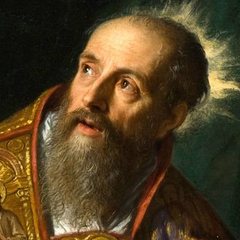
- Carlo Dolci, Saint Philip Neri (1515–1595), 1645 or 1646. The Metropolitan Museum of Art, New York, 2016.507. CC0.