Reformed Baptist (1689)
- 6Axes
- 5Poles named
- 17Others
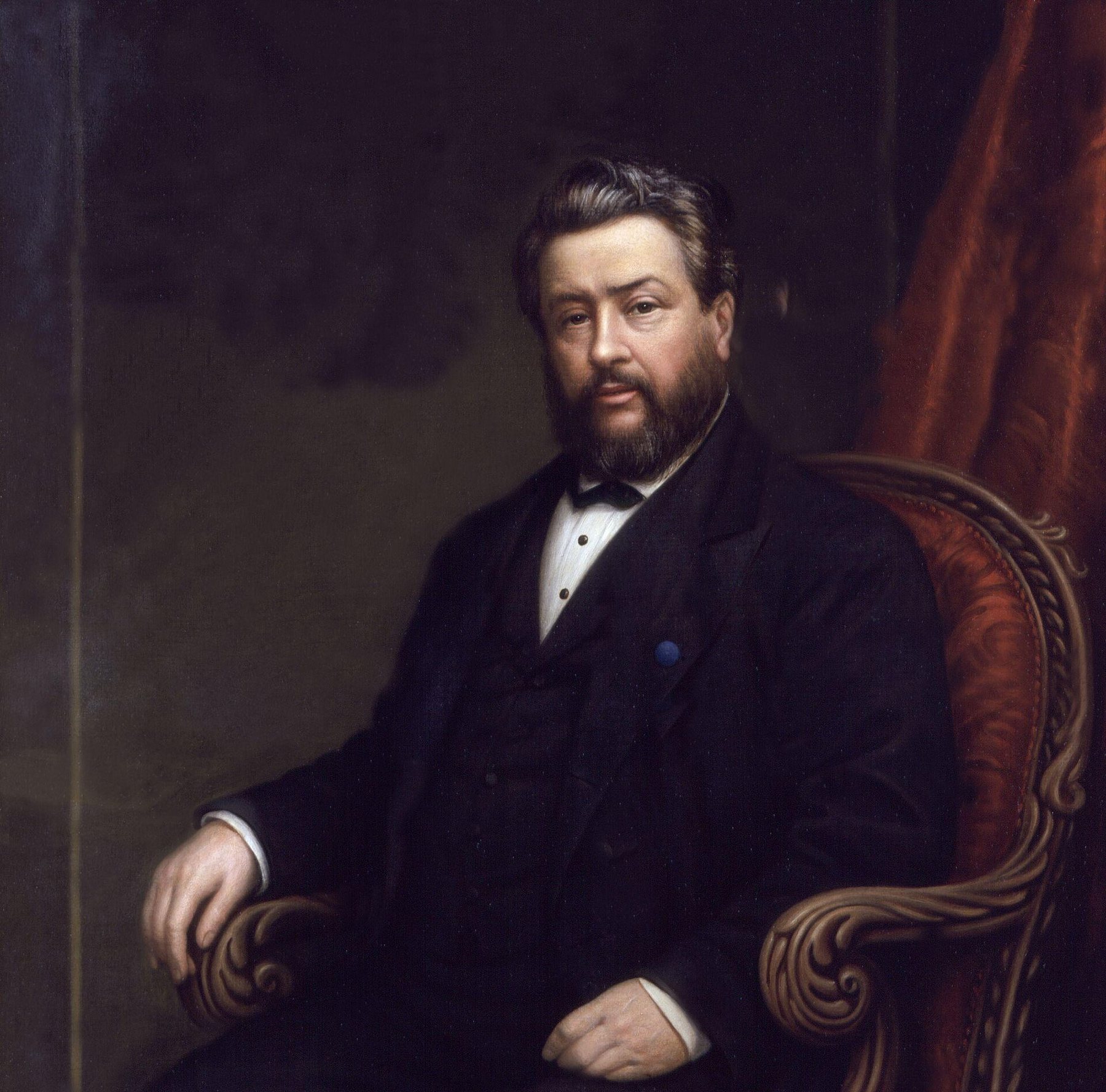
Picture: Charles Haddon Spurgeon, Alexander Melville, 1885. National Portrait Gallery, London.
Reformed Baptist in a sentence
Calvinists who baptize believers rather than babies, holding Westminster’s doctrine of grace, covenant and Scripture. Baptists rewrote that confession in 1677, changing its chapters on baptism and church government and little else.
Firmly monergist, cessationist, one-people-of-God
What marks it out
Four of the six readings here are simply Westminster’s, because the 1689 Confession borrowed Westminster’s words for them: grace monergist to the edge, the gifts ceased, authority Scripture alone, and Israel and the church one people under one covenant of grace.
The Table reading is what makes this tradition itself, and it lands in the middle where the map names nothing. The Confession says believers at the Supper “really and indeed, yet not carnally and corporally, but spiritually, receive and feed upon Christ crucified”, which is Calvin’s language and well above bare remembrance. Yet the same churches baptize only professing believers, and usually preach the Supper as a memorial.
The baptism difference is not a detail bolted onto a Presbyterian frame. Presbyterians baptize infants because believers’ children belong to the covenant as Abraham’s did; the 1689 rewrote that chapter to say the covenant does not pass down by descent. It is entered by faith, and the sign belongs to those who have it.
Worship is free and deliberately so. Nothing enters a service that Scripture does not call for, and each congregation governs itself, so there is no prayer book, no bishop and no imposed order. The result is plain, long on preaching, heavy on singing everyone can join.
The older name for this stream is Particular Baptist, and the word carries the doctrine: particular redemption, the teaching that Christ died to save a particular people rather than to make everyone savable. The General Baptists, who held that He died for everyone, were the other English Baptist family, and the two ran side by side for two centuries. Government is congregational, with elders and deacons and nobody above the local church.
Did you know?
-
The confession was published anonymously in 1677, while Nonconformist meetings were illegal, with no authors’ names and no printer’s name on it. Only after the Toleration Act could thirty-seven ministers sign it, in London in September 1689, which is why it carries the later date.
The 1677 and 1689 editions; Reformation Today, “Baptist Confession Making 1644 and 1689”.
-
Charles Spurgeon reprinted it in October 1855, in his second year in London, telling his congregation it was “not issued as an authoritative rule, or code of faith, whereby you are to be fettered” but as help in an argument.
Spurgeon’s 1855 preface, “To All the Household of Faith”.
Where it came from
English Particular Baptists, out of the same Puritan congregationalism as the Independents, keeping its Calvinism and dropping infant baptism. Its immediate parent is not Westminster but the Savoy Declaration of 1658, the Congregationalists’ revision of Westminster, which supplied most of the 1689’s actual wording. Living relatives: confessional Presbyterians, and today’s Calvinist Southern Baptists.
Where it sits on all six questions
Your answers are marked. From your result on . See your result
In the hatched middle the quiz names neither pole.
Which traditions are closest?
Nearness is not agreement: two families can land in the same band for different reasons.
- Presbyterian / Reformed (confessional) Closest 77%match
- Southern Baptist (Calvinist) 63%match
- Reformed charismatic (Sovereign Grace, Newfrontiers) 53%match
- Churches of Christ / Christian Churches 52%match
- Lutheran (confessional) 52%match
- Bible church (independent, dispensational) 45%match
What we read
Read to place this tradition
Second London Baptist Confession (1689) 1.1 and 1.10, 3, 7, 26.4, 28-30, 31-32.
-
The Second London Baptist Confession (1677/1689)
Chapter 7 on the covenant and chapters 28 to 30 on baptism and the Supper are the whole difference from Westminster.
-
The Savoy Declaration (1658)
The Congregationalist revision most of the 1689’s wording came from. Read side by side to see what Baptists changed.