
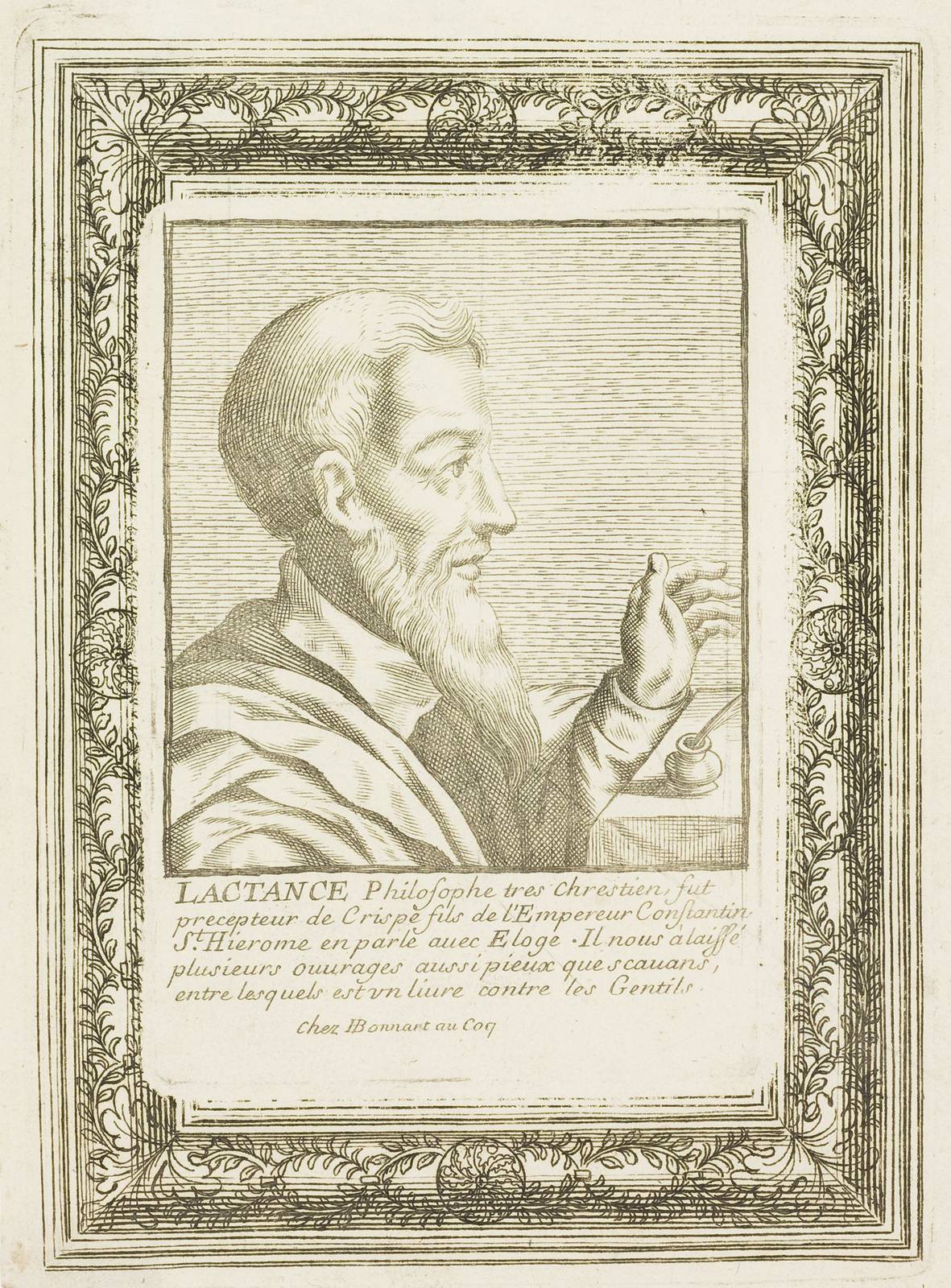
Lactantius
Church Father. Not counted a saint.
A teacher of Latin eloquence who lived through the Great Persecution and wrote that faith cannot be forced.
Picture: Lactance, an engraving by Henri Bonnart, late 1600s or early 1700s. An imagined likeness. KU Leuven Libraries. Public domain.
Who was Lactantius?
Lactantius was a North African teacher of Latin eloquence. He was teaching at Nicomedia, the emperor's city, when the Great Persecution broke out in 303. He wrote the Divine Institutes, which argue that faith cannot be forced. In old age he tutored Constantine's son. He is a Church Father, but not counted a saint.
at a glance
His path, in order
- StudentOf Arnobius, in North Africa
- ProfessorOf Latin rhetoric at Nicomedia
- WriterThe Divine Institutes, 303 to 311
- HistorianOf the Great Persecution
- TutorTo Crispus, Constantine's son
in numbers
- Books of his Divine Institutes7
- The first attempt to set out the whole Christian faith in Latin
- Written between 303 and 311, during the Great Persecution
- Works of his that Jerome lists12
- Only 5 survive
- Among the lost: a book called the Banquet, from his youth, and eight books of letters
- Full copies of his book on the persecutors1
- Its title calls the author only Lucius Caecilius
- It holds the earliest account of Constantine's dream
- Years he thought the world had left200
- At most, counting from his own day
- While Rome stood, he added, the end need not be feared
did you know?
-
Cicero traced the word religion to a word for gathering things up with care. Lactantius disagreed. It comes from a bond, he said, for we are tied to God by a chain of piety.
Divine Institutes, Book 4, chapter 28 -
His book on the persecutors keeps the text known as the Edict of Milan. It is the copy posted at Nicomedia in June 313, which let Christians, and everyone else, worship freely.
On the Deaths of the Persecutors, chapter 48; Britannica
- Born
- About 250, in North Africa. Britannica says 240. He was born a pagan. An inscription found at Cirta, today Constantine in Algeria, has led some to think his family came from there.
- Grew up
- In North Africa. He studied rhetoric under Arnobius, who taught at Sicca Veneria.
- Taught
- Latin rhetoric at Nicomedia, today İzmit in Turkey. The emperor Diocletian asked for him.
- Died
- No one knows when or how. Probably at Trier, today in Germany, about 320 to 325. He was very old.
- Also called
- Firmianus, the name Jerome uses. In full, Lucius Caecilius Firmianus Lactantius. Renaissance humanists called him the Christian Cicero.
- Status
- Church Father. Not counted a saint. No church calendar we checked keeps a day for him.
- In art
- No emblem of his own, and no ancient portrait is surely his. A later engraving shows him as an old, bearded scholar at his inkwell.
- Wrote
- Jerome lists 12 works, and 5 survive: the Divine Institutes in seven books, its Epitome, On the Anger of God, On the Workmanship of God and On the Deaths of the Persecutors. The Catholic Encyclopedia and the Russian Orthodox Encyclopedia also count a poem, The Phoenix, as his. Jerome does not list it.
- Pronounced
- lak-TAN-shee-us.
what was he like?
+blunt about other writers
He judged the Christian writers before him by their style and their method. He found Tertullian “not sufficiently polished, and very obscure”. He said Cyprian should have answered a pagan with reason, not with Scripture the man thought false. He even repeats a scoffer's joke that changed one letter of Cyprian's name to make “Coprianus”. The new name echoed a Greek word for a buffoon. It mocked Cyprian for spending a fine mind on old women's fables.
Divine Institutes, Book 5, chapters 1 and 4+plain words over polish
He was a famous teacher of eloquence. Yet he said God made Scripture plain on purpose. God “wished those things which are divine to be without adornment, that all might understand the things which He Himself spoke to all.” Of himself he said there was in him “but a slight stream of eloquence”.
Divine Institutes, Book 6, chapter 21; On the Workmanship of God, chapter 20+wisdom for everyone
Cicero said philosophy was not for the crowd. Lactantius, the Christian Cicero, disagreed. If people can be wise at all, he wrote, then “workmen, and country people, and women, and all, in short, who bear the human form, should be taught to be wise”.
Divine Institutes, Book 3, chapter 25+poor, and still writing
He lost his post and his pupils, and lived in real want. Jerome says he “generally lacked even the necessities”. He opened one book by telling a former pupil how troubled he was, “and in the greatest necessities”.
Jerome, Chronicle, the year 317; On the Workmanship of God, chapter 1; Catholic Encyclopediawhat others said of him
Jerome read him closely. He praised the style and doubted the teaching. Augustine counted him among the Christians who put pagan learning to God's use.
Lactantius has a flow of eloquence worthy of Tully: would that he had been as ready to teach our doctrines as he was to pull down those of others!
Lactantius, the most eloquent man of his time, educated Crispus in Latin literature
Do we not see with what a quantity of gold and silver and garments Cyprian, that most persuasive teacher and most blessed martyr, was loaded when he came out of Egypt? How much Lactantius brought with him?
his life in five moments
Nicomedia
Under DiocletianCalled to the emperor's city
He studied rhetoric in Africa under Arnobius. Then the emperor Diocletian asked for him as a professor of Latin rhetoric at Nicomedia. He wrote a poem about the journey, now lost. But Nicomedia was a Greek city, and he found few pupils for Latin, so he turned to writing. He probably became a Christian there.
Jerome, Lives of Illustrious Men, chapter 80; Catholic EncyclopediaNicomedia
23 February 303The church torn down
The day chosen for the attack was a pagan feast. At first light, officials forced open the church. They burned the Scriptures and looted the rest. The church stood in view of the palace. The emperors Diocletian and Galerius stood “as if on a watch-tower”, arguing about whether to burn it. Diocletian feared the fire would spread, so guards came with axes instead. In a few hours they levelled it. The next day an edict stripped Christians of their rights.
On the Deaths of the Persecutors, chapters 12 and 13Bithynia
From 303Answering the mockers
While the church at Nicomedia lay in ruins, two men wrote against the Christians. One was a philosopher who praised plain living but dined better at home than in a palace. He “vomited forth three books against the Christian religion”. The other was a judge who had pushed for the persecution. Their books moved Lactantius to write the Divine Institutes. He also saw the prefect of Bithynia rejoice “as though he had subdued some nation of barbarians” when a Christian who had held out for two years seemed at last to give way.
Divine Institutes, Book 5, chapters 2, 4 and 11Near Rome
312Constantine's dream
He wrote the earliest account of the dream Constantine had before the battle at the Milvian Bridge. Constantine “was directed in a dream to cause the heavenly sign to be delineated on the shields of his soldiers”. He marked their shields with the cipher of Christ, and won. Lactantius addressed his Institutes to him, as “the first of the Roman princes to repudiate errors”. Some manuscripts lack those addresses.
On the Deaths of the Persecutors, chapter 44; Divine Institutes, Book 1, chapter 1Trier
About 317Tutor to the emperor's son
Constantine's friendship lifted him out of poverty. Jerome says that in his “extreme old age” he became tutor to Crispus, Constantine's son, in Gaul. Crispus was later put to death by his own father, in 326.
Jerome, Lives of Illustrious Men, chapter 80; Catholic Encyclopedia
his words
These are his own words, from his own books, in William Fletcher's translation of 1886.
Why he wrote
I shall think that I have lived enough, and that I have discharged the duty of a man, if my labour shall have freed some men from errors, and have directed them to the path which leads to heaven.
The last words of his earliest surviving book, written for a former pupil in the first years of the Great Persecution. In Latin, Satis me vixisse arbitrabor, et officium hominis implesse, si labor meus aliquos homines ab erroribus liberatos, ad iter coeleste direxerit.
On the Workmanship of God, chapter 20For religion is to be defended, not by putting to death, but by dying; not by cruelty, but by patient endurance; not by guilt, but by good faith.
There is no occasion for violence and injury, for religion cannot be imposed by force; the matter must be carried on by words rather than by blows, that the will may be affected.
Therefore, with regard to this precept of God, there ought to be no exception at all; but that it is always unlawful to put to death a man, whom God willed to be a sacred animal.
For if God is not angry with the impious and the unrighteous, it is clear that He does not love the pious and the righteous.
Nor is there any other cause why we mutually bestow upon each other the name of brethren, except that we believe ourselves to be equal.
The last and greatest office of piety is the burying of strangers and the poor.
We can take nothing with us, except a well and innocently spent life.
Therefore it is the Catholic Church alone which retains true worship.
where he is criticised
Later Christians kept reading him, but not without objections. Here are the main ones.
The Holy Spirit
In a letter, Jerome charged that he “altogether denies the subsistence of the Holy Spirit”, above all in his letters to Demetrianus, a former pupil. Those letters are lost, so the charge cannot be checked in his own words. Jerome went on reading him anyway. In the same letter he asks:
“But who can forbid me to read his Institutes — in which he has written against the Gentiles with much ability — simply because this opinion of his is to be abhorred?”Jerome, Letter 84, to Pammachius and Oceanus
The shape of the earth
He mocked the idea of people living on the far side of a round earth. Copernicus singled him out in 1543, in the preface of his great book. He called Lactantius a famous writer but little of a mathematician: “Lactantium, celebrem alioqui scriptorem, sed Mathematicum parum”. He said Lactantius spoke quite childishly about the shape of the earth.
“Or is there any one so senseless as to believe that there are men whose footsteps are higher than their heads?”Divine Institutes, Book 3, chapter 24; Copernicus, On the Revolutions, preface
The end of the world
He expected six thousand years of history, then a thousand-year reign of the just on earth. He thought the end was at most two hundred years off. Jerome lists him with those who held this thousand-year view: “Tertullian also in his work On the hope of the faithful, Victorinus of Petau and Lactantius follow this view.”
“At the end of the six thousandth year all wickedness must be abolished from the earth, and righteousness reign for a thousand years.”Divine Institutes, Book 7, chapters 14 and 25; Jerome, Lives of Illustrious Men, chapter 18
The persecutors' deaths
He wrote a whole book on how the emperors who persecuted Christians died, and he lingers over the details. Of Galerius's last illness he writes that “the stench was so foul as to pervade not only the palace, but even the whole city”. The Catholic Encyclopedia notes “the manifest bias of the author”. It still calls the book a source “of prime importance” for the persecution. He says he wrote “on the authority of well-informed persons”.
“Of the end of those men I have thought good to publish a narrative, that all who are afar off, and all who shall arise hereafter, may learn how the Almighty manifested His power and sovereign greatness in rooting out and utterly destroying the enemies of His name.”On the Deaths of the Persecutors, chapters 1, 33 and 52; Catholic Encyclopedia
A shallow theologian?
The Catholic Encyclopedia of 1910 calls him “polished rather than profound”. It says his fine style “cannot hide the author's lack of grasp of Christian principles and his almost utter ignorance of Scripture”. Britannica speaks of his “unprofound view of religion as popular morality”. Yet Jerome kept reading and praising his books, and Augustine named him with honour beside Cyprian.
Catholic Encyclopedia (1910); Britannicaoften misquoted
The riddle of evil, in Epicurus's own words: “Is He willing to prevent evil, but not able? then is He impotent.”
What the sources sayThose are David Hume's words, from 1779. Lactantius reports the riddle as Epicurus's, in a longer form, so that he can answer it. The closing line often added, asking why we should call Him God, is in neither. His own answer: God could take evils away, but does not, “because He at the same time gives wisdom”.
On the Anger of God, chapter 13; David Hume, Dialogues Concerning Natural Religion, Part 10“Devils so work that things which are not, appear to men as if they were real.”
What the sources sayNot his words, but a later paraphrase of them. The same line, in Latin, heads H. P. Lovecraft's story The Festival (1925), credited to Lactantius. His real line says demons deceive people “so that they do not see those things which exist, and think that they see those things which do not exist”.
Divine Institutes, Book 2, chapter 15; Weird Tales, January 1925“Where is the marvel of the Hanging Gardens of Babylon if we are to allow of a hanging world at the Antipodes?”
What the sources sayThe idea is his, but not these words. He does joke that philosophers “make hanging fields, and seas, and cities, and mountains”. But he never names Babylon. Quote sites print a looser version of the whole passage.
Divine Institutes, Book 3, chapter 24Lactantius tells of the cross in the sky, with the words “Conquer by this”.
What the sources sayIn Lactantius it is a dream, and Constantine is told to mark “the heavenly sign” on his soldiers' shields. The cross of light in the noon sky comes from Eusebius's later Life of Constantine. Eusebius says the emperor told him so himself, and swore to it.
On the Deaths of the Persecutors, chapter 44; Eusebius, Life of Constantine, Book 1, chapters 28 and 29“Memory tempers prosperity, mitigates adversity, controls youth, and delights old age.”
What the sources sayQuote sites print this under his name. We could not find it anywhere in his surviving works.
AZ Quotes; his five surviving workswhere he stood
Each line is his own, from William Fletcher's translation of 1886. TapClick “Show his line” to read it.
Your answers are next to his. From your result on . See your result
“Anger at real wrongdoing can be a good thing.”
Lactantius strongly agrees.
You
Show his line
The anger which relates to the correction of vices ought not to be taken away from man.On the Anger of God, chapter 17
“If you had to choose, you'd grow closer to God alone in quiet than among other people.”
Lactantius disagrees.
You
Show his line
But he who withdraws and separates himself from the body at large, must live not after the custom of men, but after the manner of wild beasts.Divine Institutes, Book 6, chapter 10
“There's nothing wrong with being rich, as long as you use it well.”
Lactantius strongly agrees.
You
Show his line
For insolence and injustice being taken from the rich, it will make no difference whether some are rich and others poor, since they will be equal in spirit, and nothing but reverence towards God can produce this result.Divine Institutes, Book 3, chapter 22
“Lying can be the right thing to do if it protects someone.”
Lactantius disagrees.
You
Show his line
In this path of justice and all the virtues there is no place for falsehood.Divine Institutes, Book 6, chapter 18
“Nature can teach you as much about God as the Bible can.”
Lactantius disagrees.
You
On record in the Divine Institutes. Not quoted here.
“The best way to live is free of strong emotions, with only a steady peace inside.”
Lactantius strongly disagrees.
You
Show his line
For as water which is always still and motionless is unwholesome and more muddy, so the soul which is unmoved and torpid is useless even to itself.Divine Institutes, Book 6, chapter 17
“Miracles still happen today, just as they did in the Bible.”
Lactantius strongly agrees.
You
Show his line
So now His followers, in the name of their Master, and by the sign of His passion, banish the same polluted spirits from men.Divine Institutes, Book 4, chapter 27
“Some questions about God are better left alone.”
Lactantius strongly disagrees.
You
Show his line
It is therefore right, especially in a matter on which the whole plan of life turns, that every one should place confidence in himself, and use his own judgment and individual capacity for the investigation and weighing of the truth.Divine Institutes, Book 2, chapter 8
“A Christian can fight in a just war with a clear conscience.”
Lactantius strongly disagrees.
You
Show his line
Thus it will be neither lawful for a just man to engage in warfare, since his warfare is justice itself.Divine Institutes, Book 6, chapter 20
“Becoming a better person is mostly down to your own effort.”
Lactantius agrees.
You
Show his line
Knowledge therefore consists in a benefit derived from another; for it depends upon hearing. Virtue is altogether our own; for it depends upon the will of doing that which is good.Divine Institutes, Book 6, chapter 5
“In the end, God will save everyone.”
Lactantius strongly disagrees.
You
Show his line
The same divine fire, therefore, with one and the same force and power, will both burn the wicked and will form them again.Divine Institutes, Book 7, chapter 21
See where you stand beside him. Take the quiz
friends, family and rivals
 Tertullian
 A fellow African who wrote before him. Lactantius granted he was skilled in every kind of literature, but found his style unpolished and obscure.
Divine Institutes, Book 5, chapter 1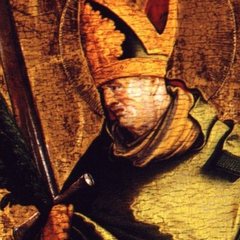 Cyprian of Carthage
 Lactantius called him the most renowned of the Christian writers before him. He praised his style, but faulted his way of arguing with pagans.
Divine Institutes, Book 5, chapters 1 and 4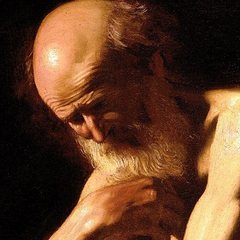 Jerome
 He praised Lactantius's eloquence and kept reading his books. He also wished Lactantius had been as good at teaching the faith as at tearing down other beliefs. And he said Lactantius denied the Holy Spirit.
Jerome, Letters 58 and 84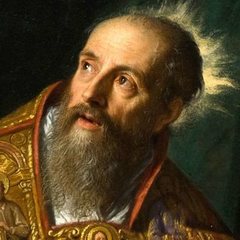 Augustine of Hippo
 He named Lactantius among the Christians who carried the best of pagan learning into the Church.
On Christian Doctrine, Book 2, chapter 40His teacher of rhetoric in Africa. Arnobius also wrote seven books against the pagans.
Jerome, Lives of Illustrious Men, chapters 79 and 80; Letter 70A former pupil, and a rich Christian. Lactantius wrote On the Workmanship of God for him, and two books of letters. Jerome says those letters denied the Holy Spirit.
On the Workmanship of God, chapter 1; Jerome, Letter 84A confessor. Lactantius addressed On the Deaths of the Persecutors to him. Donatus was put on the rack nine times and never gave way.
On the Deaths of the Persecutors, chapters 1 and 16Diocletian brought him to Nicomedia. Later the two emperors watched the church there torn down. He tells how each of them died.
On the Deaths of the Persecutors, chapters 12, 33 and 42The emperor he addressed the Institutes to. Constantine's friendship lifted him out of poverty and made him tutor to his son.
Divine Institutes, Book 1, chapter 1; Catholic EncyclopediaConstantine's son, whom Lactantius taught Latin in Gaul. Constantine had Crispus put to death in 326.
Jerome, Lives of Illustrious Men, chapter 80; Catholic Encyclopediahow he died
Nobody knows how or when he died.
He was very old when he died, and probably still at Trier. The sources date his death about 320 to 325. The Catholic Encyclopedia says it plainly: “when Lactantius died and in what circumstances is not known.”
No last words are recorded, and no later story fills the gap.
is he a saint?
No. He is counted a Church Father, but not a saint.
- CatholicNot a saintNot in the Roman Martyrology
- OrthodoxNot a saintNo day in the OCA calendar
- AnglicanNot rememberedNot in Common Worship or Lesser Feasts and Fasts
- LutheranNot rememberedNot in the Missouri Synod or ELCA calendars
No calendar we checked keeps a day for him. The Russian Church's Orthodox Encyclopedia calls him an early Christian apologist and gives him no saint's title. In the same article it calls Augustine Blessed and Constantine a saint.
Doubts about his teaching came early. An early list of books, known as the Gelasian Decree, puts his works among the books Catholics should avoid. It names Tertullian, Arnobius and Eusebius's History too. Its date and author are disputed.
Yet Christians never stopped reading him. Britannica calls him “one of the most reprinted of the Latin Church Fathers”. His collected works were the first dated book printed in Italy, in 1465.
what to read first
On the Deaths of the Persecutors
Lactantius
Short and vivid: the Great Persecution as he lived it, and Constantine's dream. Biased, and he makes no secret of it.
Read it freeThe Divine Institutes, Book 5
Lactantius
Why he wrote, what he saw in Bithynia, and his case that faith cannot be forced.
Read it freeThe Epitome of the Divine Institutes
Lactantius
His own shorter version of the whole argument.
Read it freeOn the Anger of God
Lactantius
Why a loving God must be angry at evil, and his answer to Epicurus's riddle.
Read it freeLives of Illustrious Men, chapter 80
Jerome
The oldest account of his life. One paragraph, with the list of his books.
Read it freetake the quizzes
 Quiz Which early Christian thinks like you? And which would argue with you? See where you stand beside Lactantius. Start
  Quiz Christian Personality Test Which of eight types are you? Find your own. Start
 sources
His words, and his life
- Lactantius, The Divine Institutes. Tr. William Fletcher, 1886, in the Ante-Nicene Fathers, volume 7.
- Lactantius, The Epitome of the Divine Institutes. Same edition.
- Lactantius, On the Anger of God. Same edition.
- Lactantius, On the Workmanship of God. Same edition.
- Lactantius, On the Deaths of the Persecutors. Tr. Lord Hailes, in the same volume.
- The Ante-Nicene Fathers, volume 7, the text as printed in 1886, with A. Cleveland Coxe's notes.
- Jerome, Lives of Illustrious Men, chapters 18, 79 and 80. Tr. Ernest Cushing Richardson, 1892.
- Jerome, Letter 58, to Paulinus. Tr. W. H. Fremantle, 1893.
- Jerome, Letter 70, to Magnus. Same edition.
- Jerome, Letter 84, to Pammachius and Oceanus. Same edition.
- Jerome, Chronicle, the year 317. Tr. Roger Pearse and others, 2005.
- Augustine, On Christian Doctrine, Book 2. Tr. J. F. Shaw, 1887.
- Eusebius, Life of Constantine, Book 1. Tr. Ernest Cushing Richardson, 1890.
- The Gelasian Decree. Tr. Roger Pearse.
- Copernicus, On the Revolutions, preface, in Latin, 1543.
- David Hume, Dialogues Concerning Natural Religion, Part 10, 1779.
- H. P. Lovecraft, The Festival, Weird Tales, January 1925.
Reference
- Catholic Encyclopedia, 1910, “Lucius Caecilius Firmianus Lactantius”
- Catholic Encyclopedia, 1908, “Constantine the Great”
- Britannica, “Lactantius”
- Britannica, “Edict of Milan”
- Orthodox Encyclopedia, volume 39, 2020, in Russian
- The Century Cyclopedia of Names, 1894, for how to say it
- Sotheby's, on the Subiaco edition of 1465
- AZ Quotes, for the lines wrongly given to him
Calendars
- The Roman Martyrology, 1916 edition
- OCA, lives of the saints, every day of the year
- Church of England, Common Worship calendar
- The Episcopal Church, Lesser Feasts and Fasts 2022
- The Lutheran Witness, LCMS, November 2008
- Evangelical Lutheran Worship, ELCA, the church year
Pictures
- Lactance, Henri Bonnart, late 1600s or early 1700s. KU Leuven Libraries. Public domain.
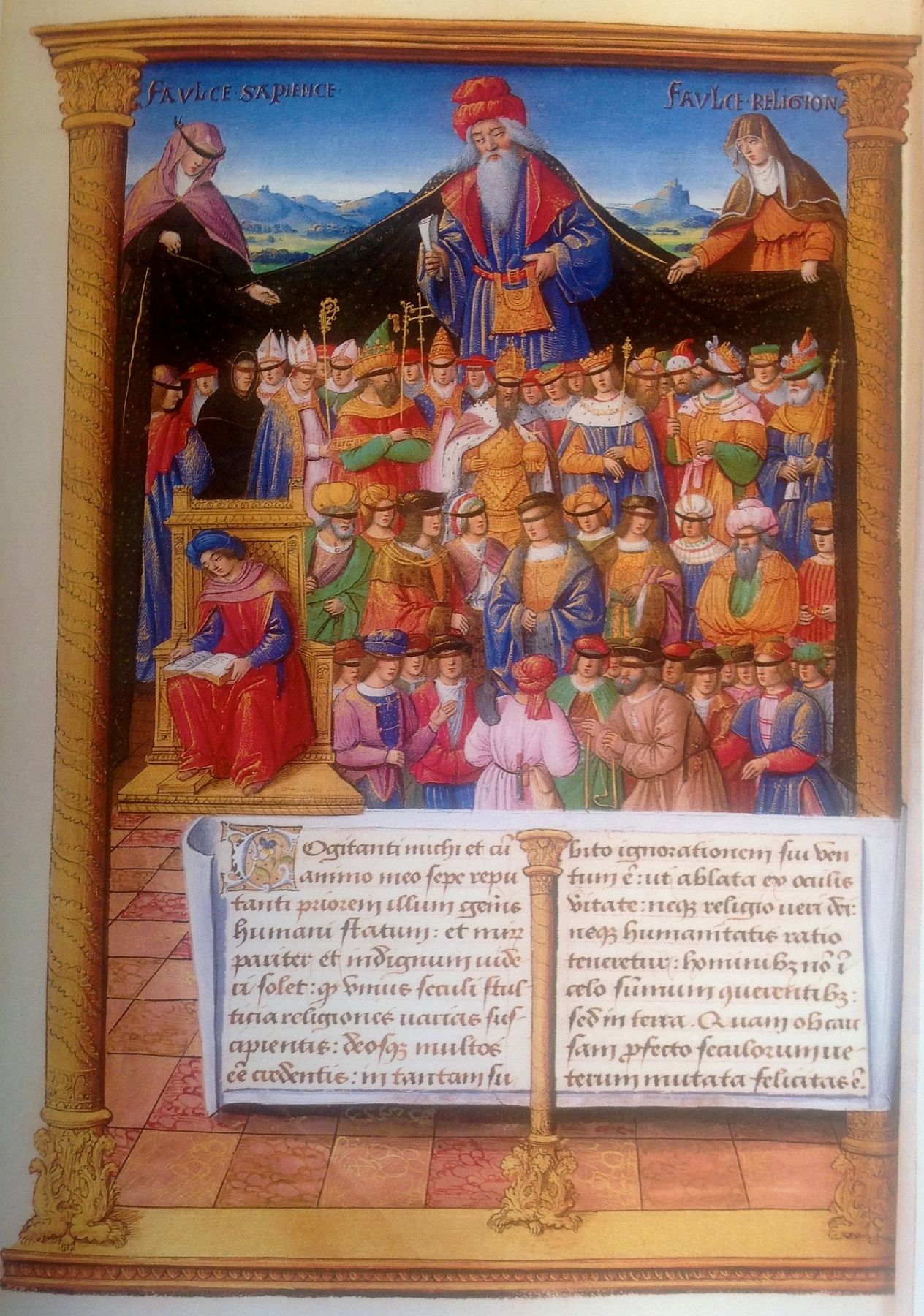
- Divine Institutes, the opening of Book 4, Master of the Chronique scandaleuse, about 1502 to 1505. Bibliothèque nationale de France, Latin 1671. Public domain.
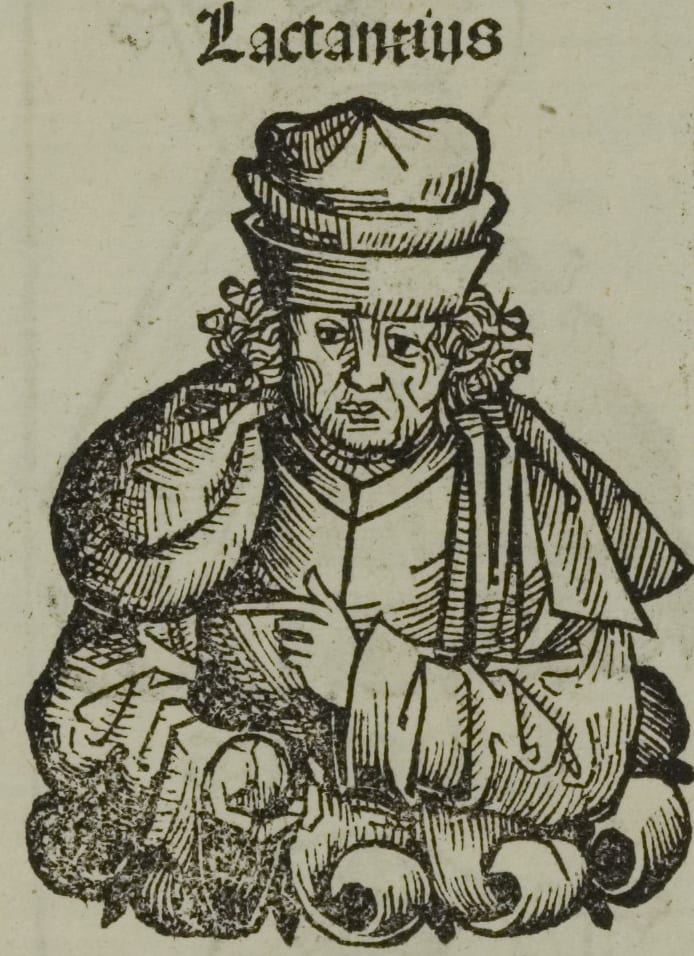
- Liber chronicarum (the Nuremberg Chronicle), Hartmann Schedel, folio 128, woodcuts from the workshop of Michael Wolgemut and Wilhelm Pleydenwurff, Nuremberg, 1493. National Library of Poland, Warsaw. Public domain.