
Tertullian
Church Father. Not counted a saint.
The first great theologian to write in Latin, who defended the Christians and then broke with the Church.
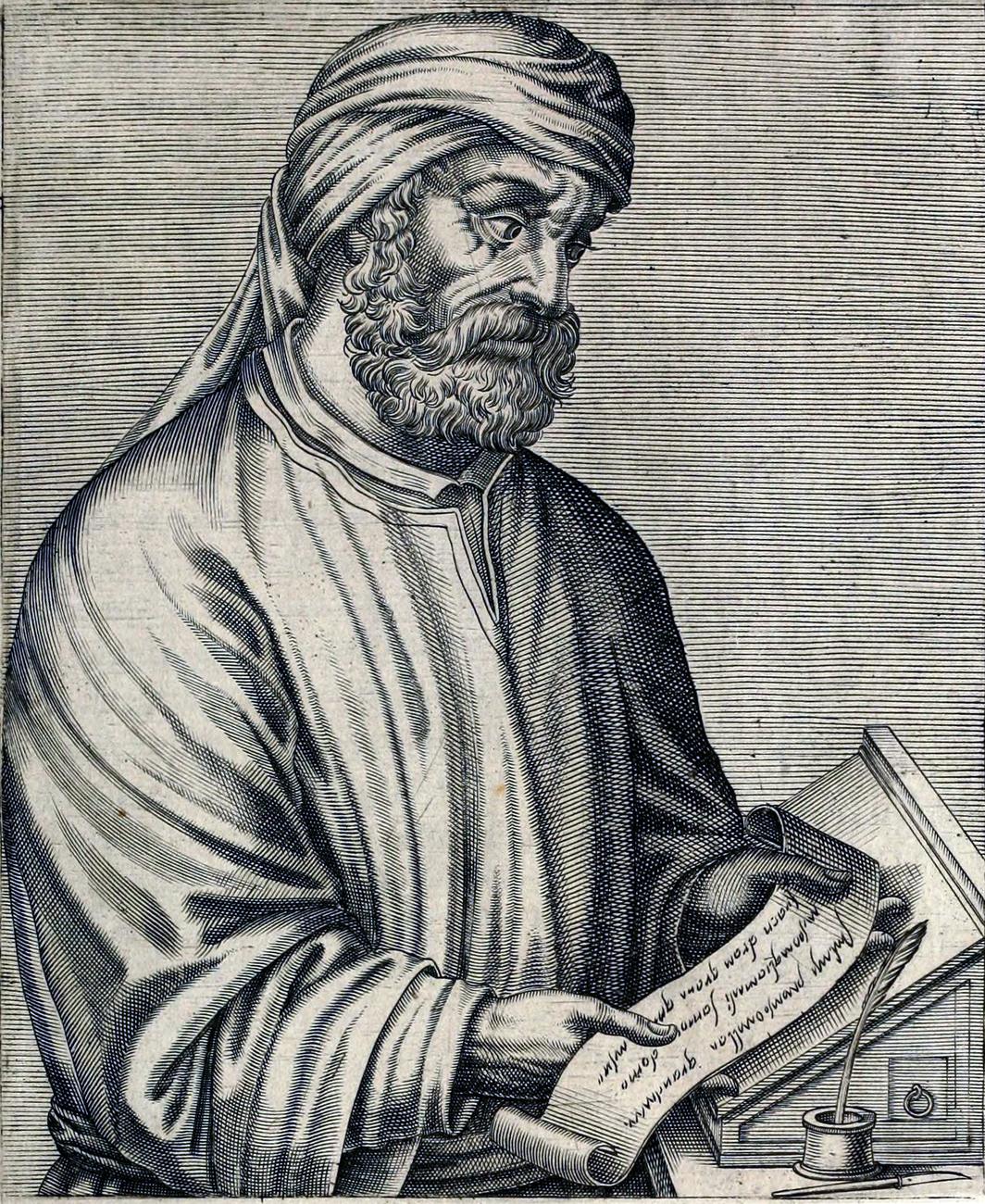
Picture: Tertullian, an imagined portrait, from André Thevet, Les vrais pourtraits et vies des hommes illustres, 1584. Public domain.
Who was Tertullian?
Tertullian grew up a pagan in Carthage, in Roman Africa. He became a Christian about 195. He was the first great theologian to write in Latin, and the first known to call God the Trinity in Latin. He defended Christians under persecution. Later he joined the New Prophecy movement and broke with the Church. No church counts him a saint.
at a glance
His path, in order
- ConvertAbout 195, as a grown man
- DefenderThe Apology, 197
- TheologianThe first to write theology in Latin
- MontanistThe New Prophecy, after 206
- FounderOf the Tertullianists
in numbers
- His books that survive31
- Five more under his name are not his
- Words first found in him1,000
- Almost a thousand Latin words
- One is trinitas, the Trinity
did you know?
-
Christians in his day traced the cross on their foreheads at every turn: going out, coming in, dressing, bathing, at table. No Scripture commands it, he says. Tradition began it, and custom kept it.
The Chaplet, chapters 3 and 4 -
Christians were blamed for every disaster. If the Tiber flooded or the Nile did not, if the rain failed or the earth shook, the crowd cried for the Christians to be thrown to the lion. Could one beast eat so many? he asked.
Apology, chapter 40 -
A man paid to dodge beasts in the arena paraded a picture of the God of the Christians, with donkey's ears and one hoof, holding a book and wearing a toga. The Christians laughed, he says.
Apology, chapter 16 -
Carthage mocked him for swapping the toga for a philosopher's cloak, so he wrote a witty book in its defence. The toga needs its folds set the day before, he says. The cloak goes on in one throw.
On the Pallium, chapters 1 and 5; Catholic Encyclopedia
- Born
- About 160. Some say 155. At Carthage in Roman Africa, today near Tunis in Tunisia.
- Grew up
- A pagan, at Carthage. His father was a centurion. He was well schooled, above all in rhetoric and law.
- Became a Christian
- By 197, and perhaps about 195.
- Died
- After 220. The year is not known. Britannica says at Carthage, but no early source says where. Jerome heard that he lived to a great old age.
- Also called
- His Latin name is Quintus Septimius Florens Tertullianus. He signs one of his books Septimius Tertullianus.
- Status
- No church counts him a saint. He left the Church for the New Prophecy, also called Montanism.
- Feast day
- None. No Catholic, Orthodox, Anglican, Episcopal or Lutheran calendar keeps one for him.
- In art
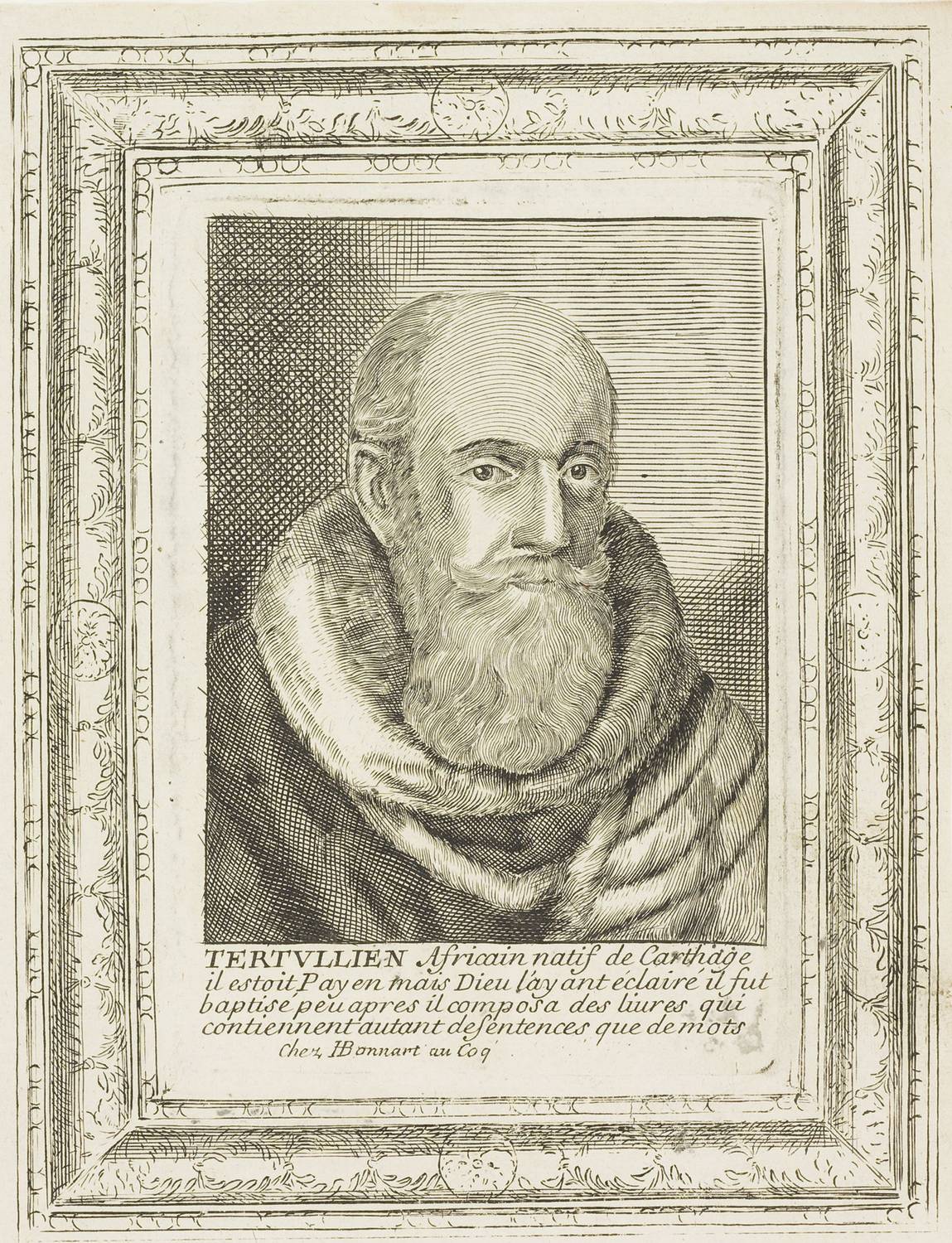
- No likeness from his own time is known. Later engravers imagined him: as a writer in a turban in 1584, or as a bald old man with a long beard.
- Wrote
- Thirty-one works survive, all in Latin. At least twelve more are lost, some of them written in Greek. The longest is Against Marcion, in five books.
- Pronounced
- ter-TULL-ee-un, or ter-TULL-yun.
what was he like?
+a mocking wit
Some ideas, he held, deserve laughter more than an answer. “Even the truth may indulge in ridicule, because it is jubilant.” Marcion came from Pontus. So he asked what Pontic mouse ever gnawed as hard as Marcion, the man “who has gnawed the Gospels to pieces”.
Against the Valentinians, chapter 6; Against Marcion, Book 1, chapter 1+impatient, and said so
He wrote a whole book on patience. In its first chapter he admits he has none. He is “ever sick with the heats of impatience”, he says, and pleads for “that health of patience which I possess not”.
Of Patience, chapter 1+tender at home
He wrote to his own wife about the happiness of a marriage shared in faith. Of such a husband and wife he says: “Together they pray, together prostrate themselves, together perform their fasts; mutually teaching, mutually exhorting, mutually sustaining.”
To His Wife, Book 2, chapter 8+not ashamed to change
He knew his critics would call him fickle for leaving his old, milder views. He was glad to have changed: “No one blushes at his own improvement.” And he was proud to stand with the few, since “it is in the company of the few that truth is loved!”
On Modesty, chapter 1what others said of him
No early writer told his life story. Beyond his own books, we have one short sketch by Jerome. Later writers admired his genius and grieved over his break with the Church.
…Cyprian was accustomed never to pass a day without reading Tertullian, and that he frequently said to him, “Give me the master,” meaning by this, Tertullian.
Every word almost was a sentence; every sentence a victory.
Can anything be more learned or more pointed than the style of Tertullian? His Apology and his books Against the Gentiles contain all the wisdom of the world.
his life in seven moments
Carthage
Before about 195A pagan who laughed
He grew up a pagan in Carthage, well schooled in rhetoric and law. He shared the pagan prejudice against the Christians. Years later he told the pagans: “Once these things were with us, too, the theme of ridicule. We are of your stock and nature: men are made, not born, Christians.”
Apology, chapter 18; Catholic EncyclopediaCarthage
197The Apology
Christians were being tried and killed for the name of Christian alone. He wrote to the Roman governors to defend them. He answered the rumours about them one by one. He ended with a warning: killing Christians only makes more of them.
Apology, chapters 1 and 50Carthage
About 197To the martyrs in prison
He wrote a short letter to Christians in prison, waiting to die. He told them to think of it as a retreat: “Let us drop the name of prison; let us call it a place of retirement.”
To the Martyrs, chapter 2Carthage
After 206The New Prophecy
He came to believe that the Holy Spirit spoke through three prophets from Phrygia: Montanus, Prisca and Maximilla. In his own church a woman had visions during Sunday worship, and he trusted them. Rome turned against the prophets, and he and his friends broke with the rest of the Church. He began to call other Christians Psychici, the unspiritual. In his own words: “We indeed, on our part, subsequently withdrew from the carnally-minded on our acknowledgment and maintenance of the Paraclete.”
Against Praxeas, chapter 1; On the Soul, chapter 9; Catholic EncyclopediaCarthage
211The soldier's crown
The emperors gave the army a bonus, and the soldiers came up wearing laurel crowns. One carried his in his hand. Asked why, he said, “I am a Christian.” He put down his cloak, his boots and his sword, and went to prison. Then people began to call him headstrong and rash, and too eager to die. Tertullian says he cannot tell whether these critics were Christians, since the pagans said the same. He wrote a book to defend the soldier. Of the Christians who shrank from martyrdom he wrote: “their pastors are lions in peace, deer in the fight.”
The Chaplet, chapter 1; Catholic Encyclopedia (date)Carthage
212A warning to the governor
Scapula, the governor of Africa, was persecuting Christians. Tertullian wrote to warn him. No one should be forced into a religion: “It is assuredly no part of religion to compel religion.” He reminded Scapula what Christians had done for emperors. The emperor Severus kept in his palace a Christian who had once cured him by anointing. And when the army of Marcus Aurelius was suffering from thirst, it got rain “by the prayers his Christian soldiers offered to God”.
To Scapula, chapters 2 and 4Carthage
Later yearsA group of his own
In time he parted from the Montanists as well, and led his own followers, the Tertullianists. Jerome heard that he lived to a great old age. His group lasted about two hundred years. In Augustine's day its last few members joined the Catholic Church, and handed over their church building.
Jerome, Illustrious Men, chapter 53; Augustine, On Heresies, chapter 86; New Catholic Encyclopedia
his words
His surviving books are in Latin. These lines are from the Ante-Nicene Fathers, in the translations of S. Thelwall and Peter Holmes (American edition, 1885).
To the Roman governors, 197
The oftener we are mown down by you, the more in number we grow; the blood of Christians is seed.
The last chapter of the Apology. The saying about the blood of the martyrs comes from here. In Latin, Plures efficimur, quotiens metimur a vobis: semen est sanguis Christianorum.
Apology, chapter 50What indeed has Athens to do with Jerusalem? What concord is there between the Academy and the Church? what between heretics and Christians?
O noble testimony of the soul by nature Christian!
We are but of yesterday, and we have filled every place among you
It is peculiar to Christians alone to love those that hate them.
The leg does not feel the chain when the mind is in the heavens.
If I should offer you a rose, you will not disdain its Maker.
Prayer is alone that which vanquishes God.
Only, I pray that, when you are asking, you be mindful likewise of Tertullian the sinner.
his hardest words
He could be very harsh, and his critics have long said so. Here are the lines they point to, in his own words, beside what they say.
No pardon for adultery
A bishop announced that adultery would be forgiven after penance. The Catholic Encyclopedia thinks it was probably Pope Callistus. Tertullian mocked him as “the bishop of bishops”. The Church could forgive such sins, he said, but should not. He says the line below came from the Paraclete, the Holy Spirit, speaking through the new prophets he followed. Years before, in his book On Repentance, he had allowed one more repentance after baptism. Baptism shuts the gate of forgiveness, he wrote then, but God “has permitted it still to stand somewhat open”.
“The Church has the power to forgive sins; but I will not do it, lest they commit others withal.”On Modesty, chapters 1 and 21; On Repentance, chapter 7
Joy at the Judgment
His book The Shows warns Christians away from the games. It ends with a greater show to come: the Last Judgment. In his picture of it, rulers who had been declared gods groan in the darkness, and governors who persecuted Christians burn in the fire. His critics have long held lines like this against him. The New Catholic Encyclopedia notes that the historian Edward Gibbon judged him little better than a sadist. The same article calls such verdicts exaggerations.
“How vast a spectacle then bursts upon the eye! What there excites my admiration? what my derision? Which sight gives me joy? which rouses me to exultation?”The Shows, chapter 30
On women
In a book urging Christian women to dress plainly, he tells each of them she is an Eve, and still bears Eve's guilt. In On Baptism he says a woman may not teach or baptize. Yet he trusted a woman prophet in his own church, and praised “the most heroic martyr Perpetua”.
“You are the devil's gateway: you are the unsealer of that (forbidden) tree: you are the first deserter of the divine law”On the Apparel of Women, Book 1, chapter 1; On Baptism, chapter 17
No running from persecution
In his Montanist years he taught that a Christian must never flee persecution, because God wills the suffering. The Catholic Encyclopedia calls it “This intolerable doctrine”, and notes he had not held it before.
“He who fears to suffer, cannot belong to Him who suffered.”On Flight in Persecution, chapter 14; Catholic Encyclopedia
often misquoted
He said “I believe because it is absurd”, in Latin Credo quia absurdum.
What the sources sayNot in those words. Arguing against Marcion that Christ's flesh was real, he wrote of His death: “it is by all means to be believed, because it is absurd.” The Latin word is ineptum, foolish, not absurdum. The Australian scholar Peter Harrison finds the “I believe” form first in Voltaire, in 1767. Voltaire credited it to Augustine.
On the Flesh of Christ, chapter 5; Peter Harrison, Church History, 2017He wrote, “The blood of the martyrs is the seed of the Church.”
What the sources sayA later smoothing of his words. He wrote “the blood of Christians is seed”. The words martyrs and Church are not in it.
Apology, chapter 50The pagans praised the Christians: “See how they love one another!”
What the sources sayHe does report pagans saying it, but he does not call it praise. He says this love gives Christians a bad name: it leads many “to put a brand upon us”. And he adds why it struck them: they themselves hated one another. “See, they say, how they love one another, for themselves are animated by mutual hatred”.
Apology, chapter 39St Tertullian.
What the sources sayHe is not a saint. The Roman Martyrology does keep a St Tertullian, on 27 April. That is another man, a bishop of Bologna.
The Roman Martyrology (1916), 27 AprilHe was a priest of Carthage.
What the sources sayAmong early writers, only Jerome says so. In his own books he writes as a layman: “Are not even we laics priests?” The Catholic Encyclopedia says he became a priest. The Encyclopedia of Religion says he was never ordained.
On Exhortation to Chastity, chapter 7; Jerome, Illustrious Men, chapter 53He was a Roman lawyer, the jurist Tertullianus quoted in the Roman law books.
What the sources sayPossible, not proven. The church historian Eusebius calls him “a man well versed in the laws of the Romans”. On whether he was the jurist, the reference books disagree. The Catholic Encyclopedia doubts it. The New Catholic Encyclopedia accepts it. The Encyclopedia of Religion rejects it.
Eusebius, Church History, Book 2, chapter 2He invented the word Trinity.
What the sources sayHe is the first known writer to use it in Latin, trinitas. But Theophilus of Antioch had already used the Greek word. Theophilus writes of “the Trinity, of God, and His Word, and His wisdom”.
New Catholic Encyclopedia; Theophilus, To Autolycus, Book 2, chapter 15He came back to the Church before he died.
What the sources sayNo ancient source says so. The New Catholic Encyclopedia finds no evidence that he did.
New Catholic Encyclopediawhere he stood
Each line is his own, in the Ante-Nicene Fathers translation. The free copies online misprint one word in the line on war. So its link goes to the printed book of 1869, which reads “unbelted”. TapClick “Show his line” to read it.
Your answers are next to his. From your result on . See your result
“Wisdom is worth learning from anyone, even people who don't share your faith.”
Tertullian strongly disagrees.
You
Show his line
What indeed has Athens to do with Jerusalem? What concord is there between the Academy and the Church?The Prescription against Heretics, chapter 7
“Anger at real wrongdoing can be a good thing.”
Tertullian agrees.
You
On record in Against Marcion. Not quoted here.
“If you had to choose, you'd grow closer to God alone in quiet than among other people.”
Tertullian disagrees.
You
Show his line
We are not Indian Brahmins or Gymnosophists, who dwell in woods and exile themselves from ordinary human life.Apology, chapter 42
“If someone you know is doing wrong, it's your job to tell them.”
Tertullian agrees.
You
On record in the Apology. Not quoted here.
“Even if you believe you'll see them again, it's right to weep openly for someone you've lost.”
Tertullian strongly disagrees.
You
Show his line
He who goes before us is not to be lamented, though by all means to be longed for.Of Patience, chapter 9
“Nature can teach you as much about God as the Bible can.”
Tertullian disagrees.
You
On record in the Apology. Not quoted here.
“The best way to live is free of strong emotions, with only a steady peace inside.”
Tertullian disagrees.
You
On record in On the Soul. Not quoted here.
“God still speaks to people through dreams.”
Tertullian strongly agrees.
You
Show his line
It was, indeed by an inspiration from God that Nebuchadnezzar dreamt his dreams; and almost the greater part of mankind get their knowledge of God from dreams.On the Soul, chapter 47
“Miracles still happen today, just as they did in the Bible.”
Tertullian strongly agrees.
You
Show his line
How many men of rank (to say nothing of common people) have been delivered from devils, and healed of diseases!To Scapula, chapter 4
“Some questions about God are better left alone.”
Tertullian strongly agrees.
You
Show his line
To know nothing in opposition to the rule (of faith), is to know all things.The Prescription against Heretics, chapter 14
“In many Bible stories, the deeper meaning matters more than the history.”
Tertullian strongly disagrees.
You
Show his line
And, indeed, if all are figures, where will be that of which they are the figures?On the Resurrection of the Flesh, chapter 20
“If you believe God is calling you, follow, even if your family begs you not to.”
Tertullian strongly agrees.
You
Show his line
Parents, wives, children, will have to be left behind, for God's sake. Do you hesitate about arts, and trades, and about professions likewise, for the sake of children and parents?On Idolatry, chapter 12
“A church should keep out people who openly live in serious wrongdoing.”
Tertullian strongly agrees.
You
Show his line
Far, far from Christ's betrothed be such a proclamation! She, the true, the modest, the saintly, shall be free from stain even of her ears.On Modesty, chapter 1
“A Christian can fight in a just war with a clear conscience.”
Tertullian strongly disagrees.
You
Show his line
The Lord afterward, in disarming Peter, unbelted every soldier.On Idolatry, chapter 19
“Governments should use their laws to promote the Christian faith.”
Tertullian disagrees.
You
On record in the Apology. Not quoted here.
“In the end, God will save everyone.”
Tertullian strongly disagrees.
You
On record in the Apology. Not quoted here.
See where you stand beside him. Take the quiz
friends, family and rivals
 Cyprian of Carthage
 Bishop of Carthage a generation later. He read Tertullian every day and called him “the master”. But, says Jerome, he did not follow him into the New Prophecy.
Jerome, Illustrious Men, chapter 53; Letter 84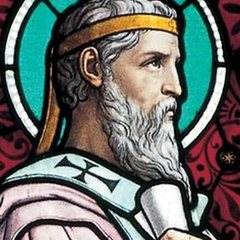 Irenaeus of Lyons
 Tertullian names Irenaeus among the writers he wished to follow closely: “Irenæus, that very exact inquirer into all doctrines”.
Against the Valentinians, chapter 5He wrote her two books. He asked her not to marry again after his death. If she did, she should marry only a Christian. Her name is not recorded.
To His Wife, Books 1 and 2A martyr of Carthage. Tertullian calls her “the most heroic martyr Perpetua”, and cites her vision of Paradise.
On the Soul, chapter 55Tertullian's great opponent. He rejected the God of the Old Testament and cut down the Gospels, and Tertullian wrote five books against him.
Against Marcion, Books 1 to 5A teacher who brought to Rome the idea that the Father Himself was born and suffered. Tertullian says he also turned the bishop of Rome against the new prophets: “he put to flight the Paraclete, and he crucified the Father.”
Against Praxeas, chapter 1A painter who taught that matter had always existed alongside God. Tertullian wrote a book against him, and says he “mistakes loquacity for eloquence”.
Against Hermogenes, chapter 1is he a saint?
No. No church counts him a saint. He left the Church for the New Prophecy, and later led a group of his own.
- CatholicNot a saintNot in the calendar or the Roman Martyrology
- OrthodoxNot a saintA great church writer, but not a Father
- AnglicanNot keptNot in the Church of England or Episcopal calendars
- LutheranNot keptNot in the Missouri Synod or ELCA calendars
Jerome says he went over to Montanus “driven by the envy and abuse of the clergy of the Roman church”. The Catholic Encyclopedia doubts that he left by his own act. When Rome rejected Montanus and his fellow prophets, it says, the Church of Carthage put out at least the most violent of their followers.
Augustine counts him a heretic. Not for teaching that the soul and even God are bodies, he says. It was for going over to the Montanists he had once attacked, and for condemning second marriages as fornication.
A later list of books to receive and to reject, the Gelasian Decree, names his works among the books the Church does not receive.
Is he a Church Father? Many call him one, and the Ante-Nicene Fathers series prints his books. But the New Catholic Encyclopedia says he cannot be given a place among the Fathers. The Russian Orthodox site azbyka.ru calls him an outstanding church writer, but not a Father of the Church, because he fell away.
In the case of Tertullian we praise his great talent, but we condemn his heresy.
…this Tertullian, I say, too little tenacious of Catholic doctrine, that is, of the universal and ancient faith, more eloquent by far than faithful, changed his belief.
what to read first
The Apology
Tertullian
His defence of the Christians, written to the Roman governors in 197. This is where “the blood of Christians is seed” comes from.
Read it freeTo His Wife
Tertullian
Two short books to his wife. The second ends with his picture of a Christian marriage.
Read them freeThe Prescription against Heretics
Tertullian
Where “What indeed has Athens to do with Jerusalem?” comes from. It also makes his case that the Scriptures belong to the Church.
Read it freetake the quizzes
 Quiz Which early Christian thinks like you? And which would argue with you? See where you stand beside Tertullian. Start
  Quiz Christian Personality Test Which of eight types are you? Find your own. Start
 sources
His life, and his words
- Ante-Nicene Fathers, volume 3. Tr. S. Thelwall and Peter Holmes; Against the Valentinians tr. Alexander Roberts. American edition, 1885.
- Ante-Nicene Fathers, volume 4. Same edition.
- Ante-Nicene Christian Library, volume 11. Edinburgh, 1869. The printed text of On Idolatry.
- The Latin of the Apology. The Latin Library.
- The Latin of The Prescription against Heretics. tertullian.org.
- Jerome, Lives of Illustrious Men, chapter 53. Tr. E. C. Richardson. Nicene and Post-Nicene Fathers, second series.
- Jerome, Apology against Rufinus, Book 3. Same series.
- Jerome, Letter 70, to Magnus, and
- Letter 84. Same series.
- Vincent of Lérins, Commonitory, chapter 18. Same series.
- Eusebius, Church History, Book 2, chapter 2. Same series.
- Augustine, On Heresies, chapter 86. The Latin text.
- Theophilus of Antioch, To Autolycus, Book 2. Tr. Marcus Dods. Ante-Nicene Fathers, volume 2.
- The Gelasian Decree. Roger Pearse's English, from von Dobschütz's Latin edition of 1912.
Reference
- Catholic Encyclopedia, 1912, “Tertullian”
- New Catholic Encyclopedia and Encyclopedia of Religion, “Tertullian”, on Encyclopedia.com
- Peter Harrison, on “I believe because it is absurd”. His full study is in Church History 86, 2017.
- Encyclopaedia Britannica, “Tertullian”, for the birth year 155/160
- Dictionary.com, “Tertullian”, for how to say it
Calendars
- The Roman Martyrology, 1916 edition
- azbyka.ru, Russian
- Church of England, Common Worship calendar
- The Episcopal Church, Lesser Feasts and Fasts 2022
- Lutheran Church–Missouri Synod, Commemorations
- Evangelical Lutheran Worship, ELCA, the church year
Pictures
- Tertullian, an imagined portrait from André Thevet, Les vrais pourtraits et vies des hommes illustres, 1584. Public domain.
- Tertullien, an engraving published by Henri Bonnart, Paris, undated. KU Leuven. Public domain.
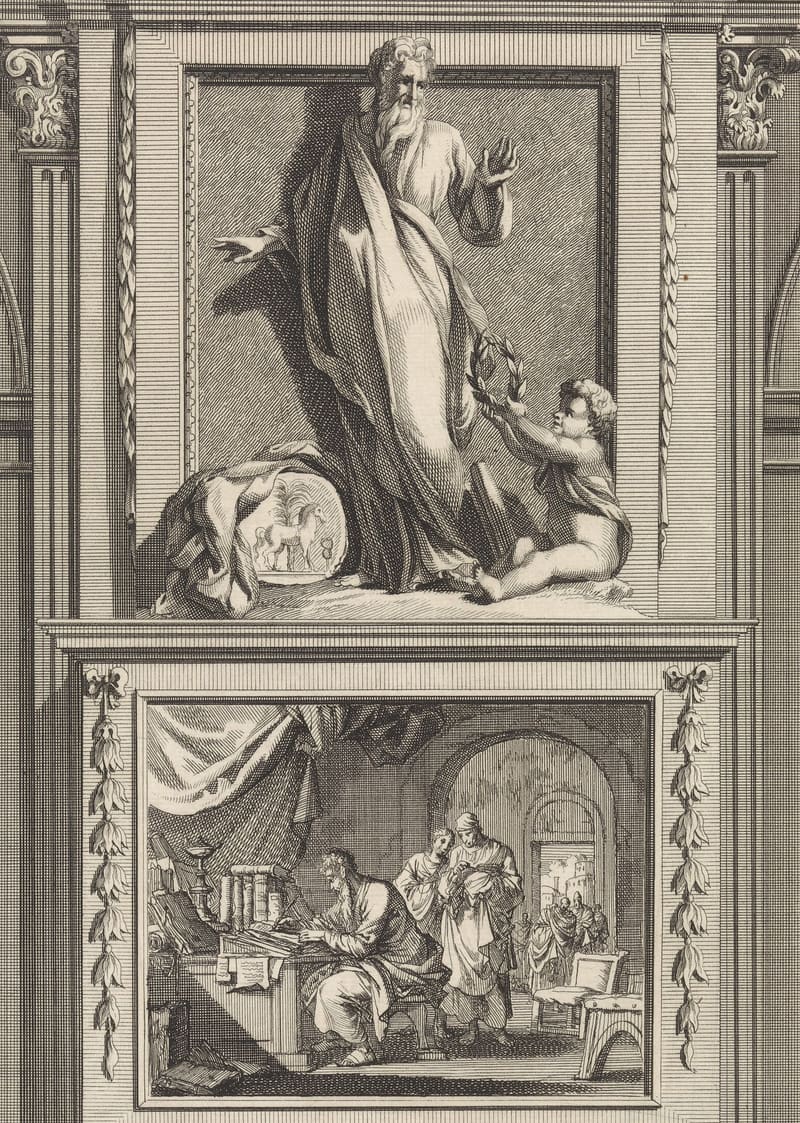
- Kerkvader Tertullianus van Carthago, Jan Luyken after Jan Goeree, 1698, for William Cave's lives of the Fathers in Dutch. Rijksmuseum, Amsterdam. CC0.