Catholic (Roman and Eastern)
- 6Axes
- 6Poles named
- 17Others
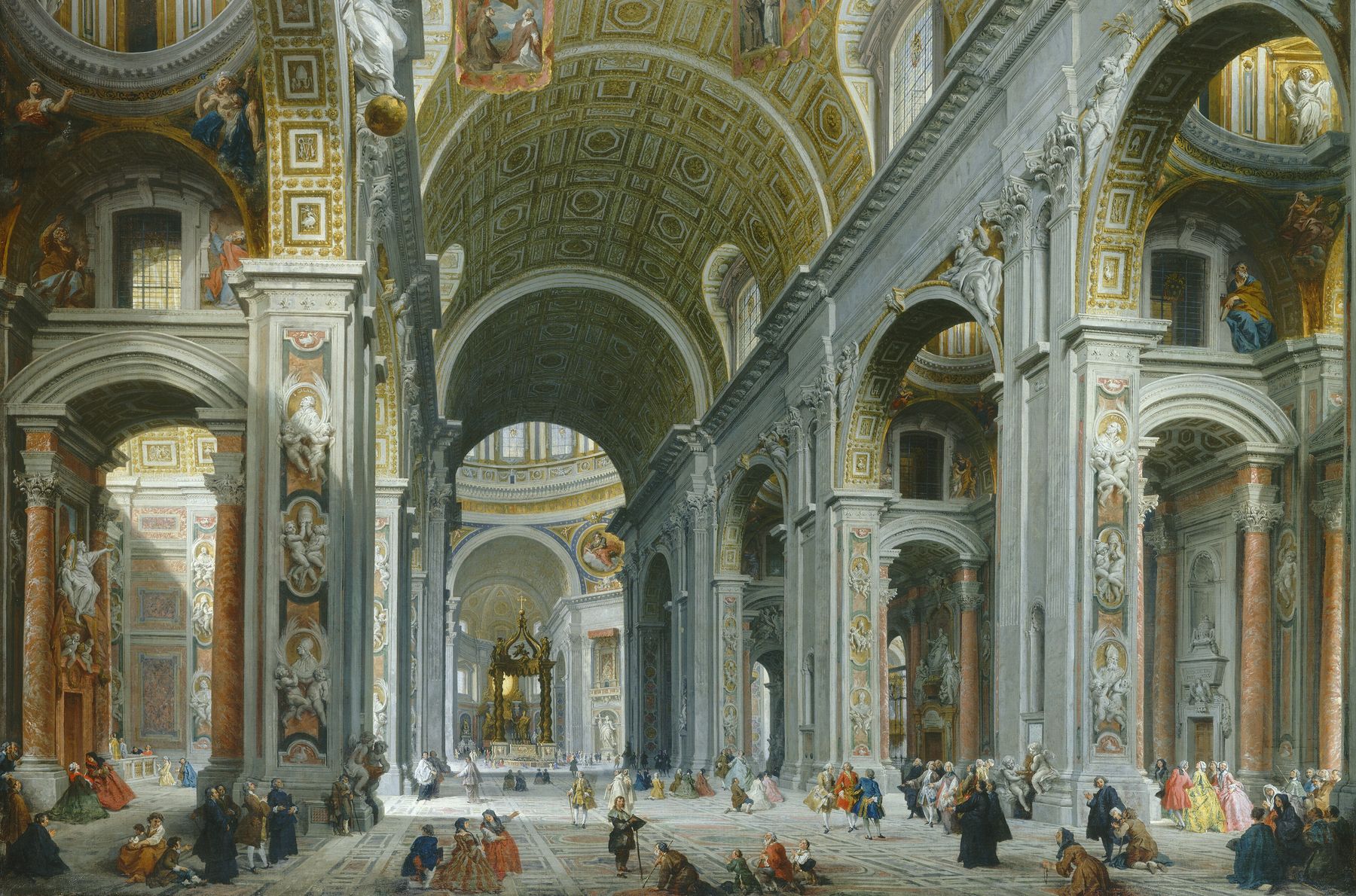
Picture: Interior of Saint Peter’s, Rome, Giovanni Paolo Panini, about 1754. National Gallery of Art, Washington.
Catholic in a sentence
The largest body of Christians on earth, governed from Rome, holding that Christ is truly present in the Eucharist. Scripture here is read inside the church’s living tradition, never apart from it.
Sacramental, rooted in Scripture and tradition, liturgical
What marks it out
Catholics do not set Scripture against tradition. They deny that the question makes sense. Dei Verbum, the Second Vatican Council’s document on revelation, says Scripture and tradition flow from the same divine wellspring, and that the job of interpreting them authentically belongs to the church’s teaching office. So a Catholic meeting a hard passage asks what the church has understood it to mean, and experiences that as the way the Bible is heard rather than as a fence around it.
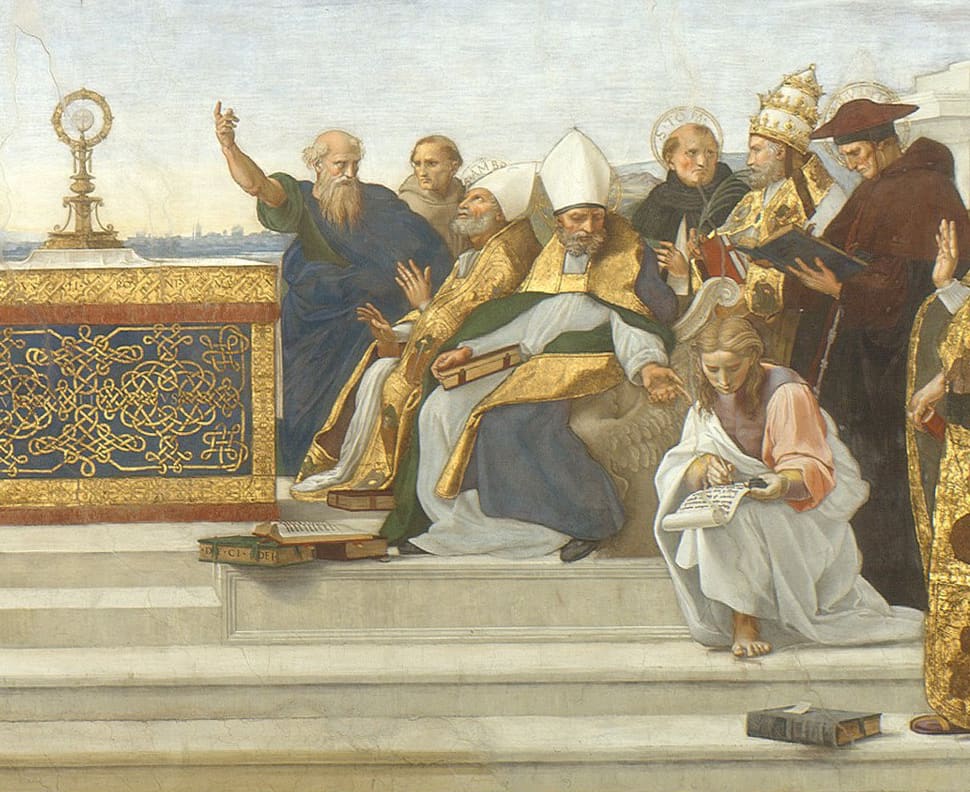
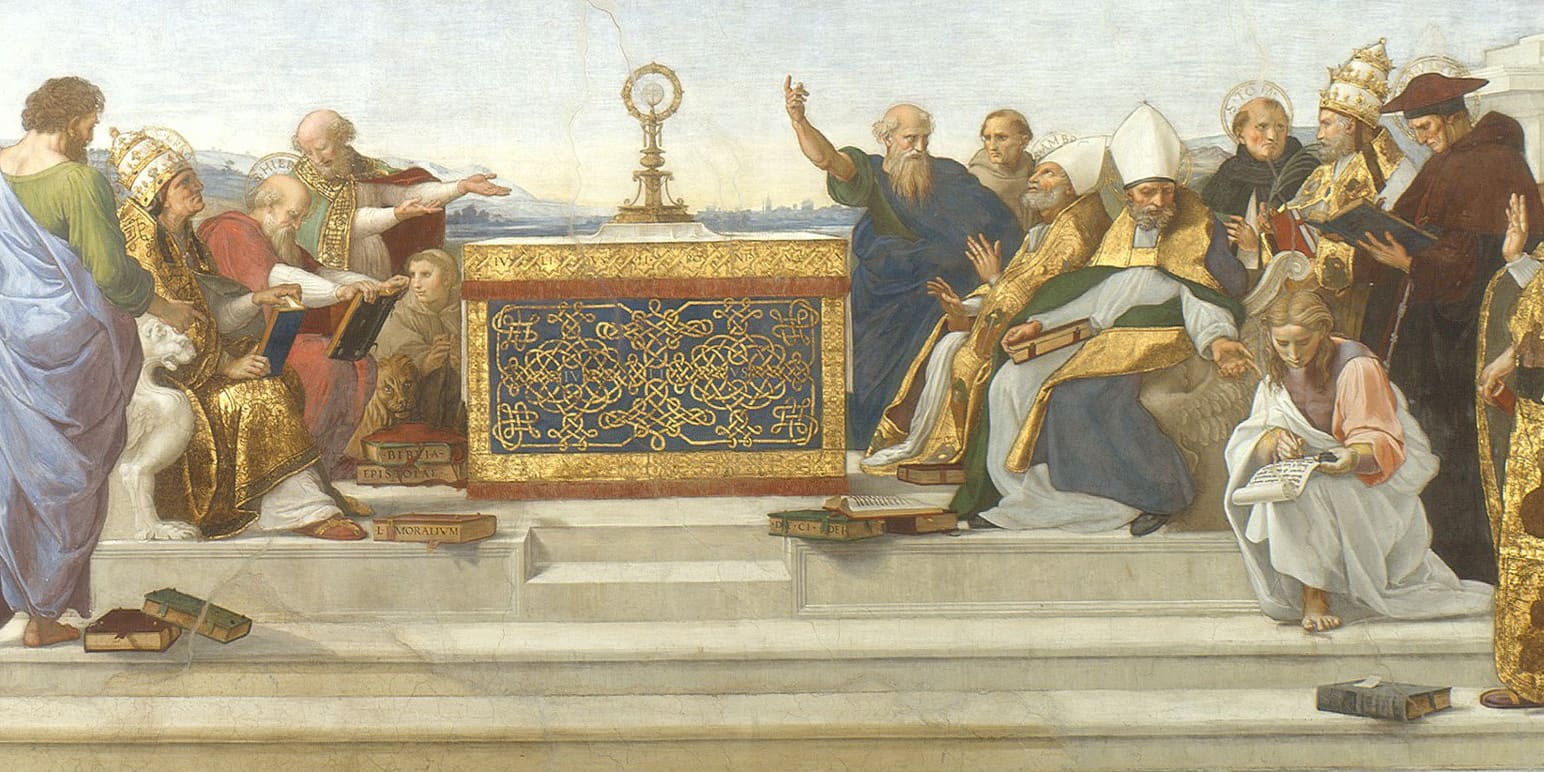
At Mass the bread and wine become the body and blood of Christ. The word for it is transubstantiation: what the elements look like, taste like and are chemically stays the same, what they are does not. Trent said so in 1551 and the Catechism repeats it at paragraphs 1374 to 1376. This is the deepest sacramental position on the map, and everything else in a Catholic church is arranged around the altar where it happens.
On grace the sketch surprises people by leaning to the cooperating side, so it is worth being exact. Catholic teaching is emphatic that nothing whatever is earned at the start: the Catechism calls grace the free and undeserved help God gives us, and Trent taught that justification begins with grace that runs ahead of anything a person does. But Trent also condemned the idea that the human will is merely passive and cannot refuse its consent, and refusal is precisely what this axis measures. God moves first, and the person can still say no.
Worship is liturgical at the deepest end: a fixed order, a calendar running from Advent around to Christ the King, and readings set years in advance, so Roman-rite parishes in Manila and in Munich hear the same Gospel on the same Sunday. Israel and the church are one people of God across both Testaments. And on the gifts of the Holy Spirit the sketch leans continuationist, which startles Protestants: Lumen Gentium says the Spirit hands out special graces among the faithful of every rank, and charismatic renewal has been at home in Catholic parishes since 1967.
Did you know?
-
Catholic does not mean Latin. The church is made of twenty-four self-governing churches: the Latin one most Westerners picture, and twenty-three Eastern Catholic churches with their own liturgies, their own canon law and, in many of them, married priests, all in full communion with the pope.
24 sui iuris churches: the Latin Church and 23 Eastern Catholic Churches.
-
The council blamed for abolishing Latin did not abolish it. Sacrosanctum Concilium opens its article on language by saying the use of Latin is to be preserved in the Latin rites, then permits wider use of the local tongue. The bishops’ conferences took that permission a great deal further than the text expected.
Sacrosanctum Concilium 36 (1963).
Where it came from
Catholics trace their communion to the apostles without a break, and historically the Western church is the parent of nearly everything else on this map. East and West broke communion in 1054; the Protestants left in the sixteenth century. The nearest relative here is the Eastern Orthodox church, which shares the sacraments, the liturgy and much of the reading of grace, and differs about the pope and about how doctrine may develop. Anglicans and confessional Lutherans stand next, each having kept more of the old shape than they usually get credit for.
Where it sits on all six questions
Your answers are marked. From your result on . See your result
In the hatched middle the quiz names neither pole.
Which traditions are closest?
Nearness is not agreement: two families can land in the same band for different reasons.
- Eastern Orthodox Closest 91%match
- Mainline Protestant (PCUSA / ELCA / UMC) 69%match
- Wesleyan / Methodist 64%match
- Anglican (broad) 64%match
- Lutheran (confessional) 43%match
- Presbyterian / Reformed (confessional) 27%match
Side by side
Four pages put this tradition next to another: what they share, where they part, and how it came to be.
What we read
Read to place this tradition
Catechism 1996-2001, 1257, 1374-1376; Trent Sess. VI ch. 5 and can. 4, Sess. XIII can. 1; Lumen Gentium 12; Dei Verbum 9-10; Sacrosanctum Concilium 22 and 102.
-
The Catechism of the Catholic Church (1992)
Free online and numbered by paragraph, so a reference lands you exactly where it says. 1996 to 2001 is grace; 1374 to 1376 the Eucharist.
-
Dei Verbum (1965)
Vatican II on where revelation comes from. Six short chapters, and section 9 is the one Protestants and Catholics argue over.