You and a friend have fallen out, and neither of you knows how to start again. As students at Athens, Gregory of Nazianzus and Basil the Great became so close that they seemed “to have one soul, inhabiting two bodies.” Years later Basil was an archbishop, and a rival bishop claimed half of his newly divided province. To strengthen his hand, Basil all but forced Gregory to become bishop of Sasima, a poor village on the border. Gregory felt deceived and never served there, and Basil called him lazy and unfriendly for refusing. Gregory wrote that all he would gain from their friendship was to “learn not to trust in friends.” Yet the friendship outlived the quarrel. In a speech after Basil’s death, Gregory admitted the hurt had never left him, but he said Basil had set friendship aside only when it clashed with his duty to God. He ended hoping they would live together in heaven.
What did the Church Fathers teach about friendship?
The monk John Cassian spent years among the desert monks of Egypt with his friend Germanus. When the two came to the abbot Joseph, he first asked whether they were brothers. They told him they were brothers in spirit, not by birth, and had kept together since the day they gave up the world to become monks. Joseph then spoke to them about friendship. Cassian later wrote the talk down in his Conferences.
Joseph taught that most friendships rest on something outside the friends, such as a favour, a shared trade or family ties. Distance and time can break those. The friendship that lasts rests on a likeness in goodness, which no distance can part: “with God the union of character, not of place, joins brethren together.” Joseph named the habits that keep it whole. Care nothing for possessions, and put nothing ahead of love and peace, even what seems useful. Don’t prefer your own opinion to your friend’s. Never be angry “for any reason good or bad.” Remember every day that you must leave this world, because that thought lets no grudge linger in the heart.
The bishop Ambrose of Milan closed his handbook for his clergy, On the Duties of the Clergy, with a chapter on friendship. He told them that nothing in the world is more beautiful than friendship, and that it is a comfort in this life to have a friend “to whom you can open your heart.” Ambrose wanted no one to desert a friend in time of need, or to change friends “in childish fashion at some idle fancy.”
A friendship that was never mended
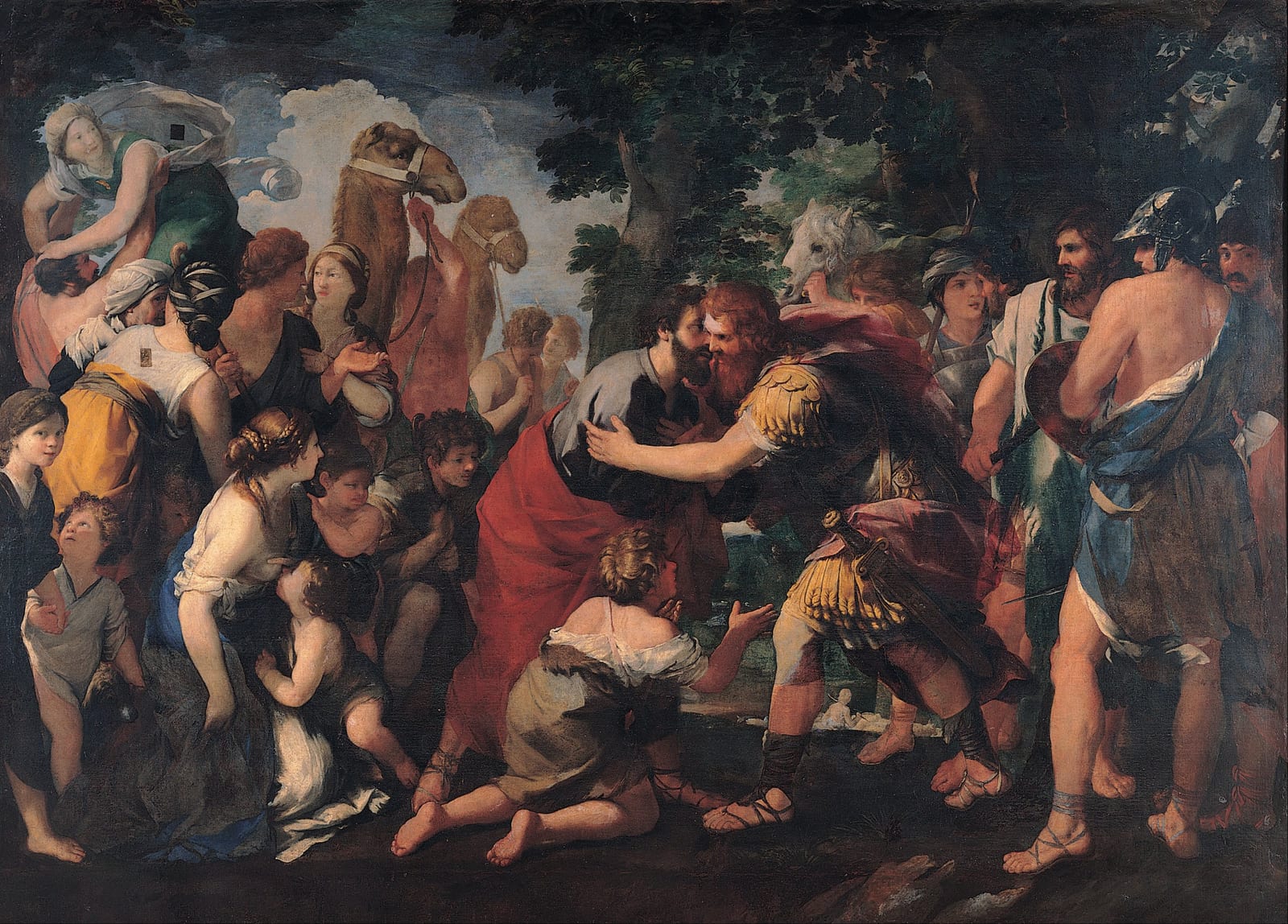
The Bible translator Jerome and his friend Rufinus had been close since their years at Aquileia, in northern Italy. In the Holy Land they lived near each other, Jerome at Bethlehem and Rufinus on the Mount of Olives. In the 390s they fell out over the writings of Origen, a Bible scholar of the 200s whose teaching had come under attack. In AD 397 they made peace. They took Communion together in the Church of the Resurrection in Jerusalem and joined hands. When Rufinus left for Italy, Jerome went part of the way with him. Within two years the peace was broken. In Rome Rufinus translated a book of Origen’s with a preface that praised Jerome as a translator of Origen who had gone before him. Because Origen’s teaching was now suspect, Jerome took the praise as an attack on himself, and the two wrote whole books against each other.
In North Africa the bishop Augustine read the answer to Rufinus that Jerome had sent him. In AD 404 he wrote back, grieved that a friendship “well known in almost all the Churches” had come to this. “Where is the friend who may not be feared as possibly a future enemy,” he asked, “if the breach that we deplore could arise between Jerome and Rufinus?” The two never made peace again. Rufinus died in Sicily in 411, and even after his death Jerome called him “the scorpion.”
How do you make peace with a friend?
Go first, even if you think your friend is upset for no good reason. Jesus asks anyone who remembers at the altar “that your brother has something against you” to “first go and be reconciled to your brother” (Matthew 5:23-24). Joseph pointed out that Jesus doesn’t say “if your brother has a true ground for complaint against you.” You go to remove the grievance your friend feels, “whether rightly or wrongly.”
Say sorry out loud. Joseph had hard words for monks who knew a brother was angry with them and went off alone to sing psalms instead of making up. They thought they were calming their own bitterness. Instead they fed it, though “a well-timed expression of regret would cure their own feelings and soften their brother’s heart.” He warned too that a scornful silence can provoke a friend more than angry words.
If your friend has wronged you, tell them. Ambrose wanted a friend’s faults raised in private and gently: “Let not your warning be harsh, nor your rebuke bitter.”
Keep the quarrel between the two of you. Augustine wrote that, if he could, he would throw himself at the feet of Jerome and Rufinus and beg them to stop spreading hard words about each other. Even if they were reconciled, they could never take those words back. The same is true of a post online or a message to a friend.
While you’re still angry, speak as someone who expects the friendship to come back. Joseph’s advice was to think, even in the hour of anger, of the love you’ve shared and the peace still to come. Your answers will then leave nothing to regret once love returns.
Pray for your friend. Job’s three friends told him he must have sinned to suffer so much. God said they hadn’t spoken the truth about Him, and He sent them to Job, who prayed for the men who had accused him (Job 42:7-10). Ambrose saw God pardoning them through Job, “so that the prayer of friendship might win remission of sins.” In the Liturgy of St James the priest prays the prayer before the kiss of peace, asking that we may be “united with one another by the bond of peace and love.” On Easter night Orthodox Christians sing Let us embrace one another, a hymn whose first lines come from an Easter sermon of Gregory’s. You’ll find more prayers for a broken friendship on their own page.
What if the friendship can’t be mended?
The book of Sirach, found in Orthodox and Catholic Bibles, draws a line between the quarrels a friendship can survive and those it can’t. In Brenton’s old English translation from the Greek, even drawing a sword on a friend or speaking against him need not end a friendship, “for there may be a reconciliation” (Sirach 22:21-22). But it names insults, pride, betraying a friend’s secrets and a treacherous blow as four things that end one.
Joseph also knew that one friend can’t hold a friendship up alone. A friendship kept by the patience of one friend will in time be broken by the other, “however carefully it may be guarded by one of them.” Paul asks only what is yours to give when he writes, “If it is possible on your part, live at peace with everyone” (Romans 12:18). You can offer peace, but you can’t make your friend take it.
Forgiving a friend isn’t the same as trusting them again. Making peace never means staying close to someone who abuses you. If a friend has harmed you, or you’re not sure what peace asks of you, bring it to your priest.
A friendship can outlive a quarrel and still keep the hurt, as Gregory’s did. For the moment an old hurt comes back, the monk Dorotheos of Gaza taught a one-line prayer to say for the friend who caused it.